 Skip to content
The short version
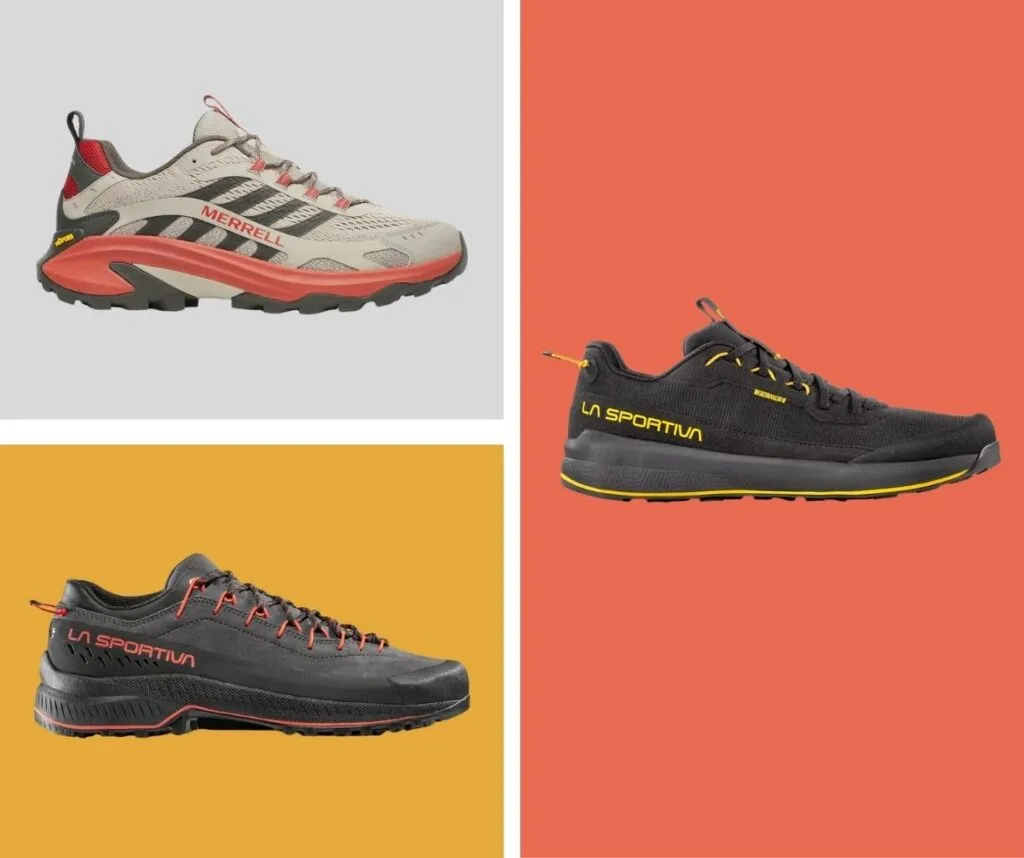
An approach shoe was invented for the walk in. You park, you've got forty minutes of steep dirt, loose scree and slabby rock between you and the bottom of a climb, and you don't want to do it in climbing shoes or in boots. So somebody put climbing rubber on a hiking shoe, flattened the front of the sole so you could stand on an edge, and kept the whole thing low and stiff.
Then the silhouette got out. Low, a bit chunky, technical without being loud, a webbing loop on the heel, laces that run right to the toe. It's a good-looking shoe and it reads as capable, which is why you've been seeing it on people who have never touched a rock. That crossover is fine. What isn't fine is that the phrase now gets stuck on almost any low hiking shoe, and the shoes that genuinely are one cost about the same as the ones that aren't.
So we did the boring version of this. We took the eight pairs worth owning, read what each brand actually publishes about the outsole, the toe and the platform, and sorted them into the ones that pass and the ones that just look the part. Both halves are worth buying. You just want to know which half you're in before you spend $189.
Start here
What are you actually going to do in them?
This is the only question that decides whether climbing rubber is worth paying for. Pick the honest answer, including the first one.
Pick the one that sounds like you
Each answer opens with what's really going on, what should decide the purchase, and the pairs on this page that do that job.
That's a real answer and it deserves a real recommendation
The silhouette is the reason this whole category crossed over. Low, technical, a bit chunky, a webbing pull on the heel. If that's what you're buying, paying for climbing rubber you'll never put on rock is money in the wrong place.
Buy for the look and buy the comfortable one. A hiking shoe with a good outsole will be softer underfoot, last longer on pavement and cost less than a technical approach shoe, because sticky rubber wears out fast on concrete. The four in the second half of this page are all better city shoes than the four in the first half.
The decoder
What the spec sheet is telling you, and what it's hiding
Four lines on a product page decide whether a shoe can do this job. Most brands print one or two of them and leave you to guess the rest.
The rubber compound
The single most important line on the page
What it actually does
Climbing rubber is softer and stickier than hiking rubber. It grips smooth rock by friction rather than by biting into dirt, and it wears out faster because of it. That trade is the whole reason approach shoes exist.
How to spot it
Look for a named compound. Vibram Megagrip is the high-friction outdoor standard. Vibram XS Edge, XS Grip and Idrogrip come from the climbing-shoe side. Five Ten's Stealth is the other climbing lineage. A generic in-house rubber tells you nothing.
Worth knowing
A mud compound is the opposite of what rock wants. One pair on this page has one, and it's the shoe most people would guess is an approach shoe.
One scale, eight shoes
How far off the pavement each pair will take you
Nothing here is being graded. The left end is a city shoe and the right end is a tool for standing on rock, and the gold line is the La Sportiva TX4 Evo, which is the shoe this category gets defined against.
The gold marker is the reference point
Dots to the right of it give up comfort for precision. Dots to the left give up precision for comfort, distance and sole life.
The scale is ours. It combines the outsole compound, whether there's a climbing zone at the toe, and how low and stiff the platform is.
The picks
Eight pairs, and an honest label on each
Everything here was in stock at full price when we checked, and every price is the one on the page we link. The numbers count down from the pair that will take you furthest off the pavement to the one that belongs on it.
The four that actually are one
Each of these has a named grippy outsole, a low stiff platform and, in two cases, a climbing zone the brand publishes by name. All four are in stock at full price, and all four come from La Sportiva or Scarpa, which isn't laziness on our part. It's the current state of the category, and there's a note further down about why.
The most shoe for the least compromise
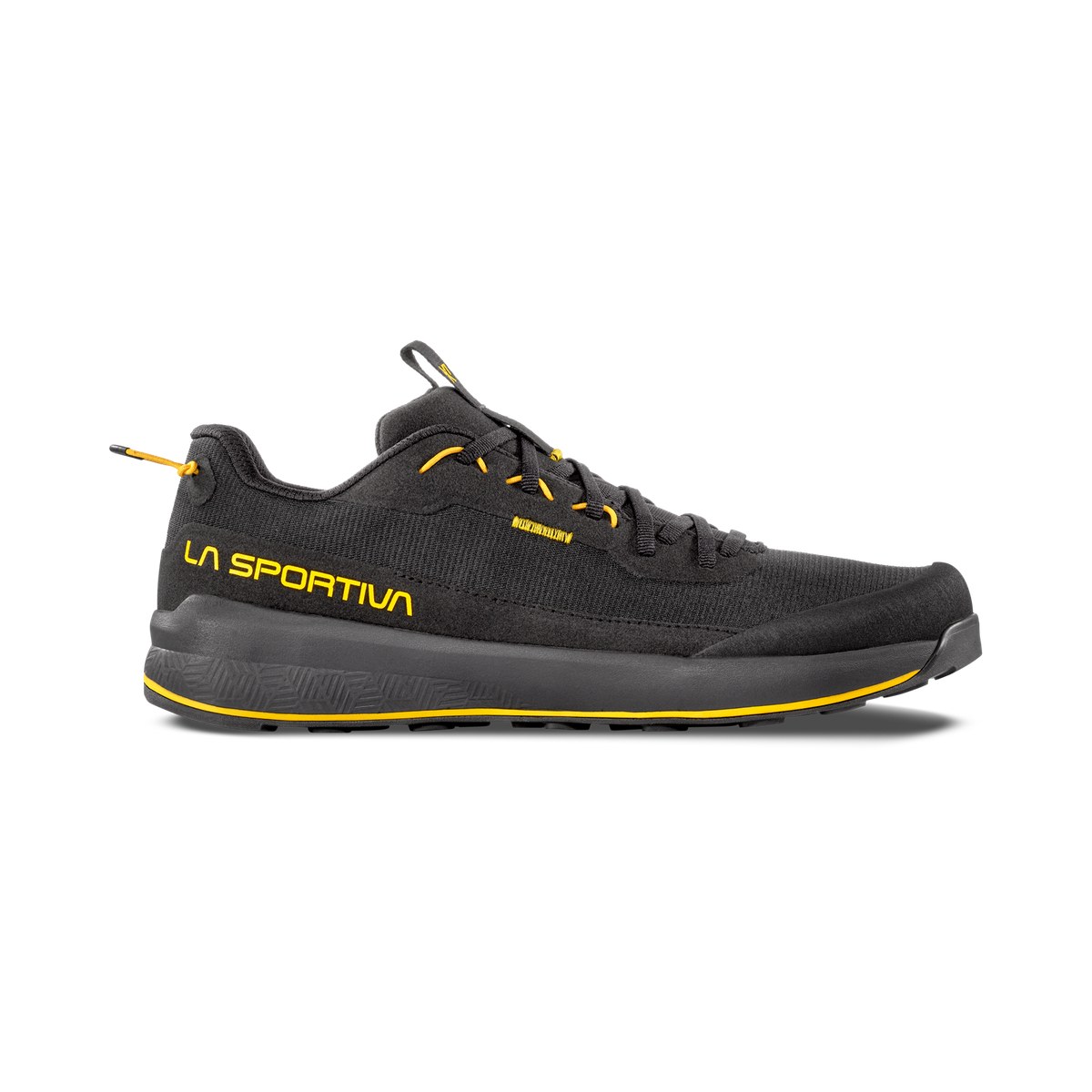
La Sportiva TX1
La Sportiva's own copy calls this a lightweight technical approach shoe with a dedicated climbing zone at the toe, and it's built on a flat rocker and a low-profile sole specifically for ground feel and climbing sensitivity. That's the definition, stated by the brand, without hedging.
It's also the only genuine approach shoe we found across two rounds of research with every single size in stock in more than one color, and it's thirty dollars less than the flagship. If you want one pair off this page, this is it.
That's the point on rock and it's a real adjustment on pavement. There's very little cushioning under you compared with any of the hiking shoes further down, so a long day of city walking in these is noticeably harder work than a day on a trail.
You want a real approach shoe and you'd like it to be in stock in your size.
These will mostly see sidewalks. You're buying precision you'll never use.
The spec sheet
The spec sheet
Every figure here comes from La Sportiva. Where a line is absent from this rail, the brand doesn't publish it.
Every size in stock, and the same price as the TX1
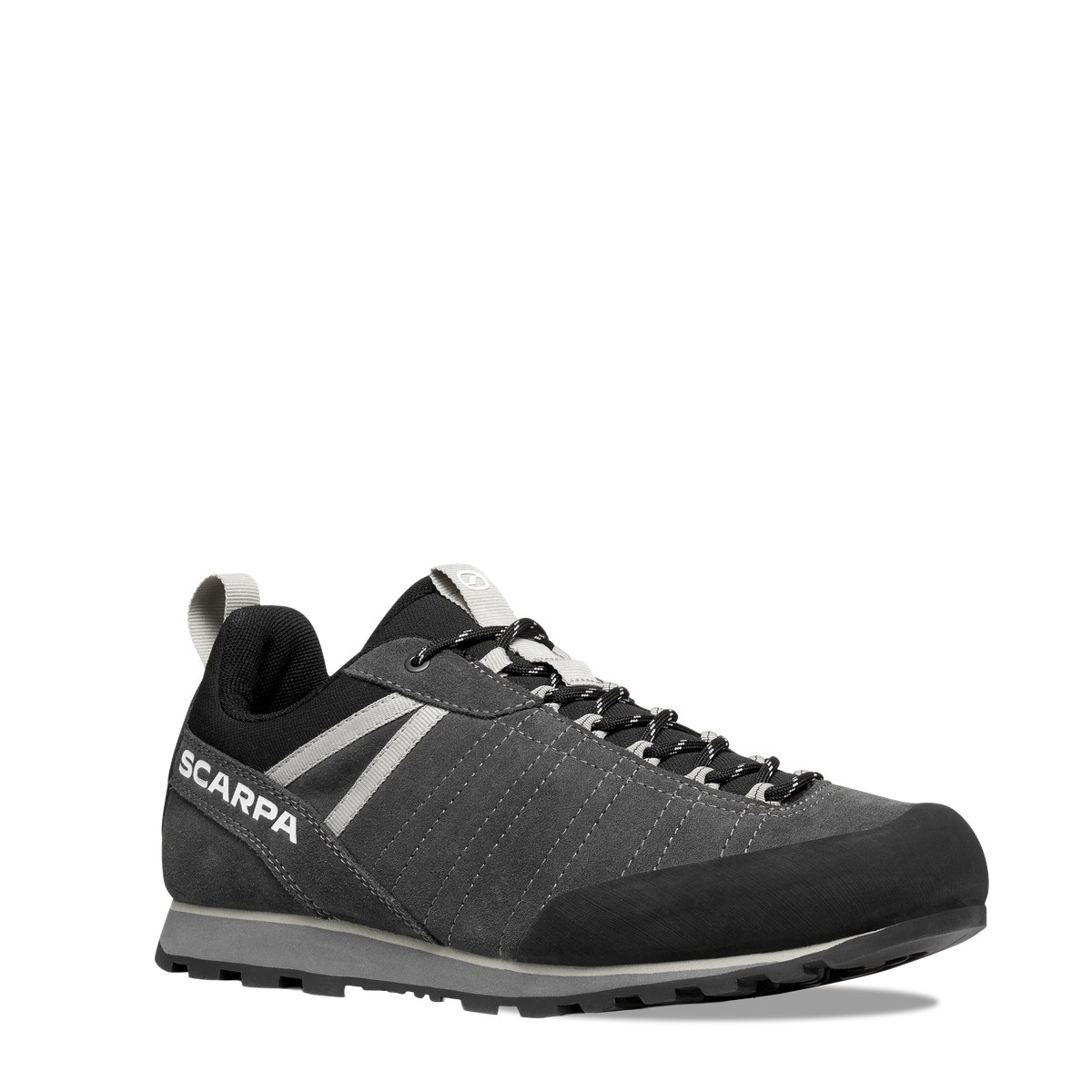
Scarpa Crux 2
Scarpa call the Crux the evolution of their legendary best-selling approach shoe, and the Crux 2 is the current one. Vibram Megagrip underfoot, a 1.8 mm suede and mesh upper, and a lace-to-toe closure that pulls the whole front of the shoe tight around your foot rather than just the middle.
That lacing is the detail worth paying for. On a traverse where your foot is loaded sideways on a small edge, a shoe that slips even slightly inside is the shoe that ends the day early.
The Crux 2 is unambiguously an approach shoe by category and construction, and Scarpa's own page never uses the words climbing zone. Two of the four in this group do publish it. If that specific detail is what you're buying, the two La Sportivas are the ones that say so in writing.
You want the category's other classic, at the same price, fully stocked.
You want the climbing zone named on the spec sheet rather than inferred.
The spec sheet
The spec sheet
Every figure here comes from Scarpa. Where a line is absent from this rail, the brand doesn't publish it.
The shoe this whole category is measured against
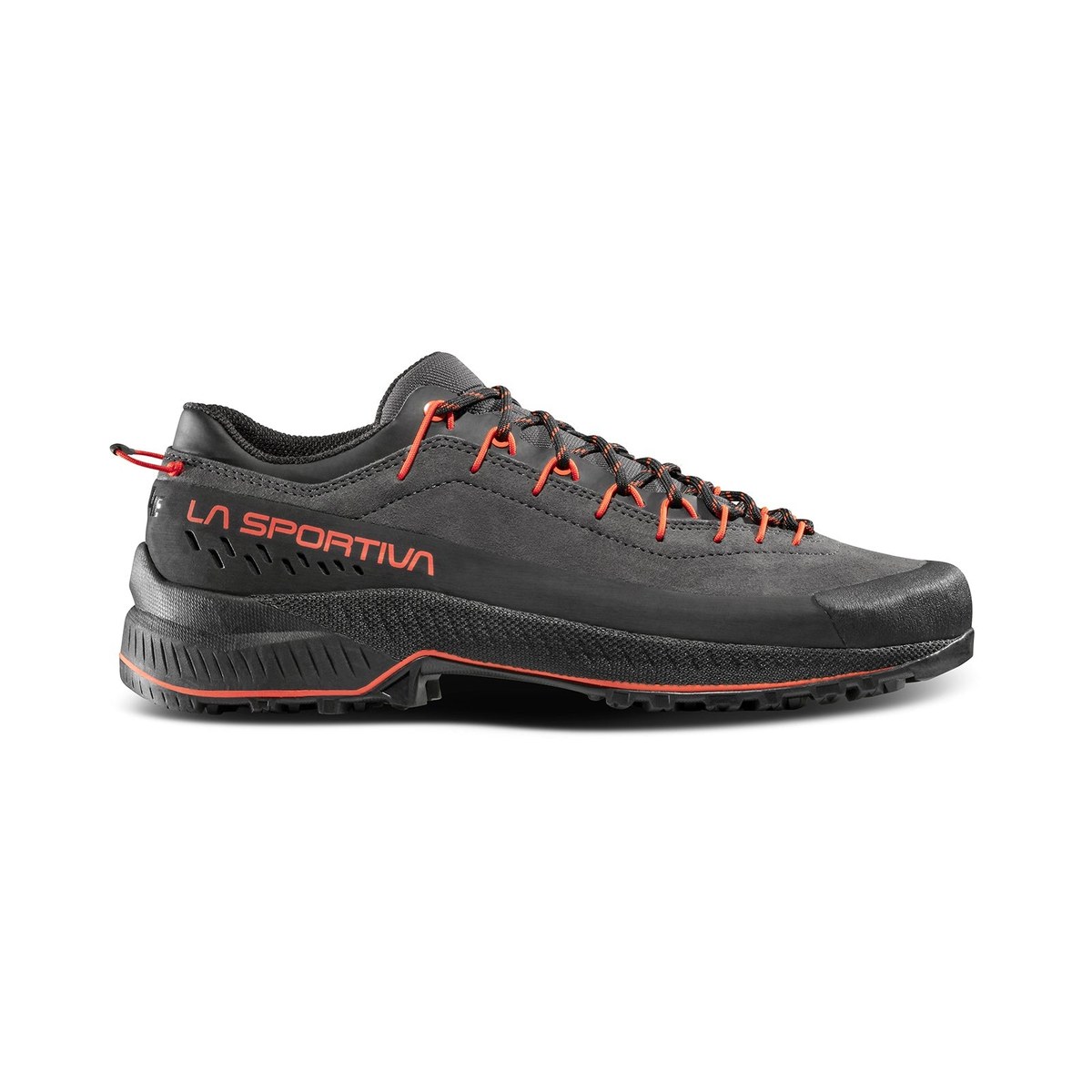
La Sportiva TX4 Evo
The TX4 is the reference point. Ask anyone who climbs what an approach shoe is and they'll describe this one, which is exactly why we've made it the marker on the scale above. Leather upper, Vibram Megagrip with the Impact Brake System tread, a published Climbing Zone Platform at the toe and a published 3 mm lug depth.
It's also the only shoe on this page that publishes both a lug depth and a climbing zone. That isn't a coincidence. It's the one that has nothing to hide about either.
Roughly twenty of fifty-two size and color combinations are left, and both colorways are about half gone. If yours is there, it's a great shoe. If it isn't, the TX1 at the top of this page is fully stocked, thirty dollars cheaper and has the same climbing zone.
You want the definitive one and your size is still there.
You'd rather not gamble on a size run that's already half gone.
The spec sheet
The spec sheet
Every figure here comes from La Sportiva. Where a line is absent from this rail, the brand doesn't publish it.

The one that crosses over on purpose
Scarpa Rapid LT
Scarpa describe this as a true technical hybrid, approach capable and trail ready, which is unusually straight talk from a brand that could easily have just called it an approach shoe and let you assume the rest.
The knit upper is what makes it work in a city. It doesn't read as gear the way a leather approach shoe does, it packs flatter, and it breathes in a way suede never will. Underneath it's still Vibram Megagrip on a Scarpa approach last.
This is the softest and most forgiving of the four real ones and the least precise on rock. That's the trade, the brand states it, and it's the right trade if these are going to spend more days on pavement than on granite.
You want one pair that genuinely works in a city and on a scramble.
The scrambling is the main event. Go up this page, not down it.
The spec sheet
The spec sheet
Every figure here comes from Scarpa. Where a line is absent from this rail, the brand doesn't publish it.
The four that look the part, and that's fine
Not one of these is an approach shoe, and every one of them is a good shoe. Three are hiking shoes and one is a sneaker that the internet decided was outdoor gear. If you want the silhouette rather than the rock performance, these will be more comfortable, last longer on pavement and cost you less.
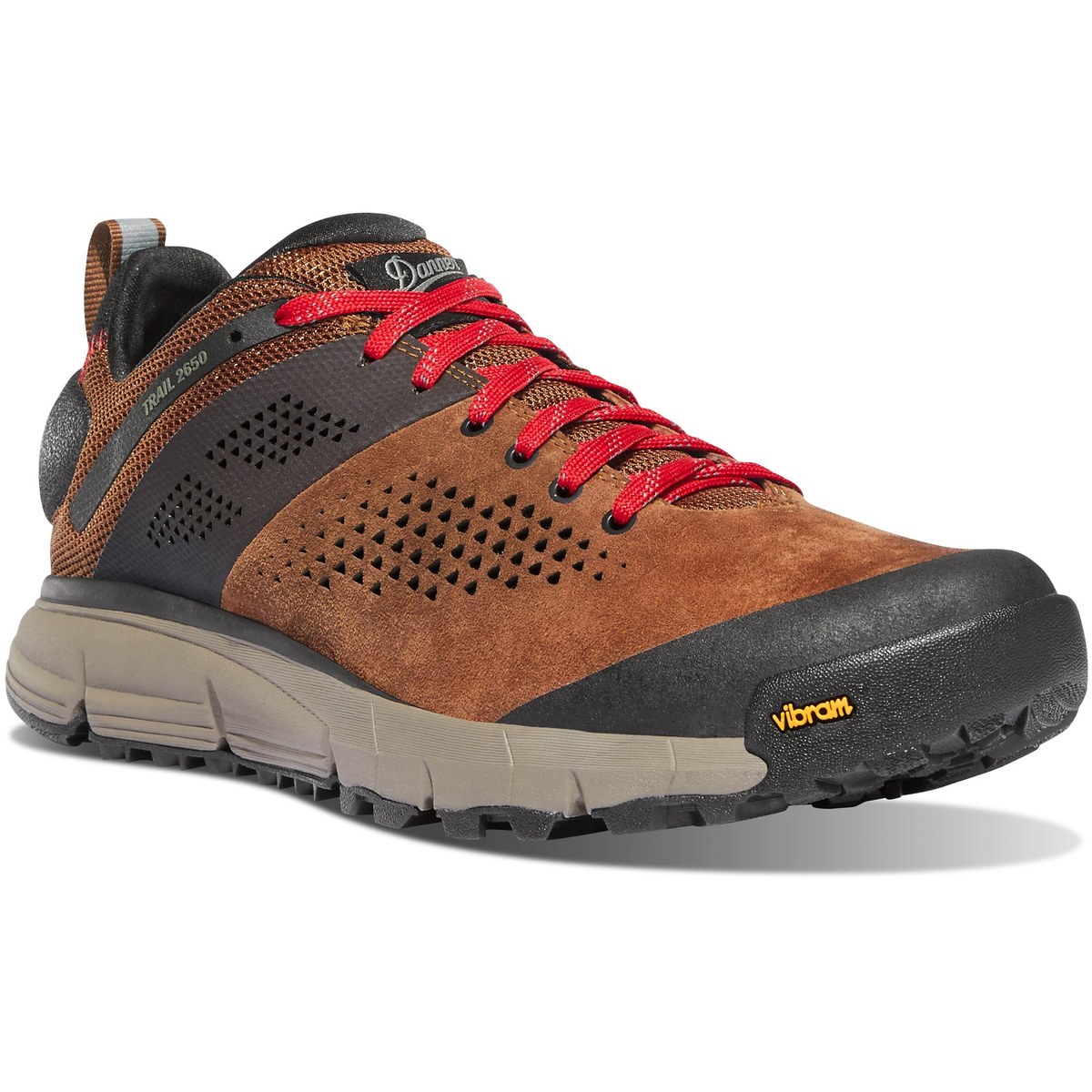
The best-looking shoe on this page, and a hiker
Danner Trail 2650
Danner file this under hiking and they're right to. It's named after the mileage of the Pacific Crest Trail, it has an 8 mm drop, and it's built for covering ground rather than standing on edges.
It also happens to be the most handsome thing here by a distance, and the Vibram Megagrip compound means it genuinely does grip wet rock. If the look is what brought you to this page, start with this one and stop reading.
Vibram Megagrip is a high-friction outdoor compound, not a climbing rubber, and it turns up on plenty of hiking shoes. Sharing a sole compound with an approach shoe doesn't make a shoe one. The climbing zone and the low stiff platform are the parts this hasn't got.
You want the look, you hike sometimes, and you want it to last.
You're going to be scrambling. There's no climbing zone under the toe.
The spec sheet
The spec sheet
Every figure here comes from Danner. Where a line is absent from this rail, the brand doesn't publish it.
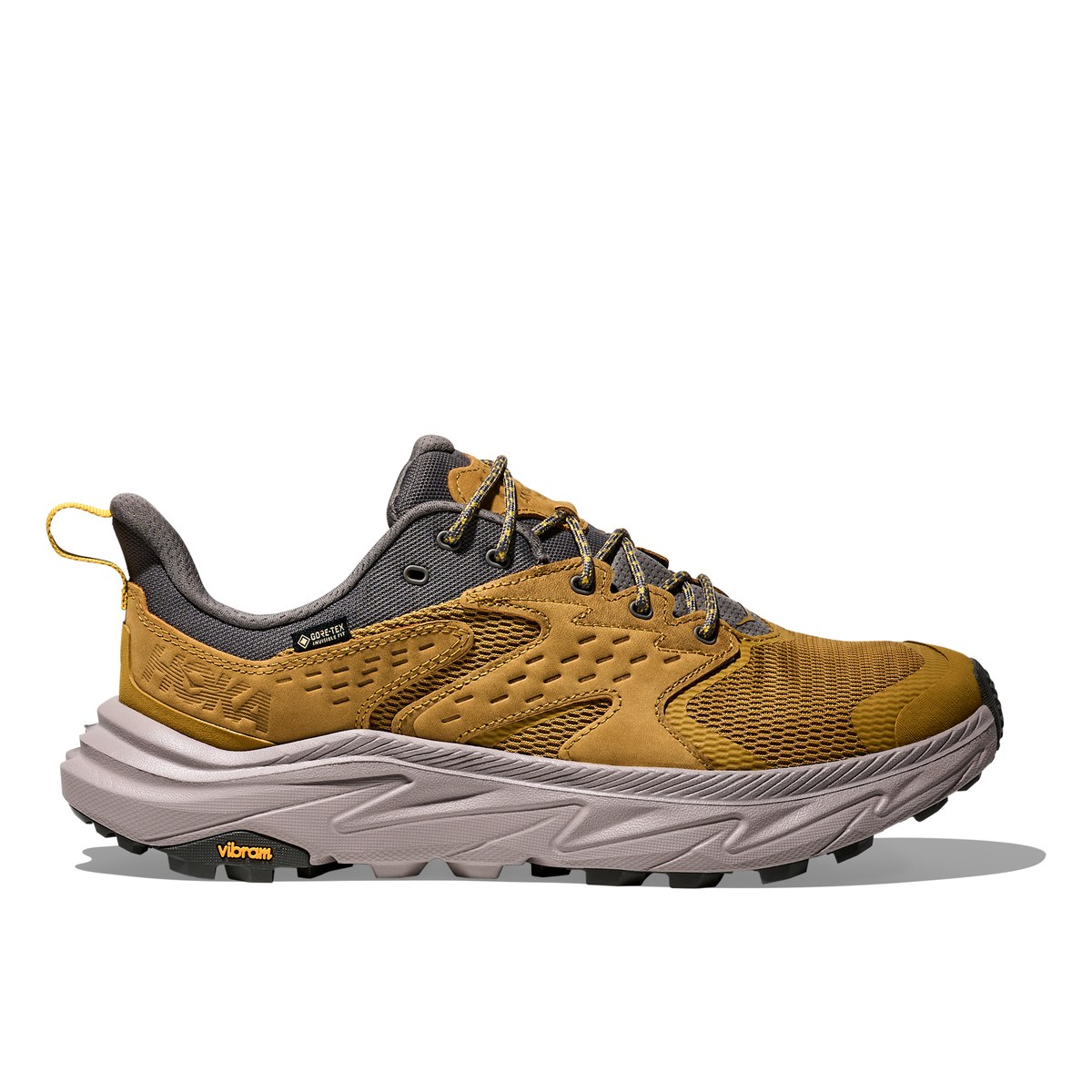
Maximum cushion, minimum precision
Hoka Anacapa 2 Low GTX
Hoka's whole proposition is stack height, and the Anacapa is a hiking shoe with a lot of foam under it and a Gore-Tex membrane over it. On a long day of walking it's the most comfortable thing on this page and it isn't close.
It has Vibram Megagrip, which is the reason it keeps getting called an approach shoe in places it shouldn't be. Everything else about it points the other way.
Every millimetre of foam between your foot and the ground is a millimetre you can roll off when you're standing on an edge. That's not a flaw in the Anacapa, it's the deliberate design of a distance hiking shoe, and it's the clearest reason this isn't an approach shoe.
Comfort over distance is the thing you actually care about.
You want to feel the ground. This is engineered to stop you feeling it.
The spec sheet
The spec sheet
Every figure here comes from Hoka. Where a line is absent from this rail, the brand doesn't publish it.
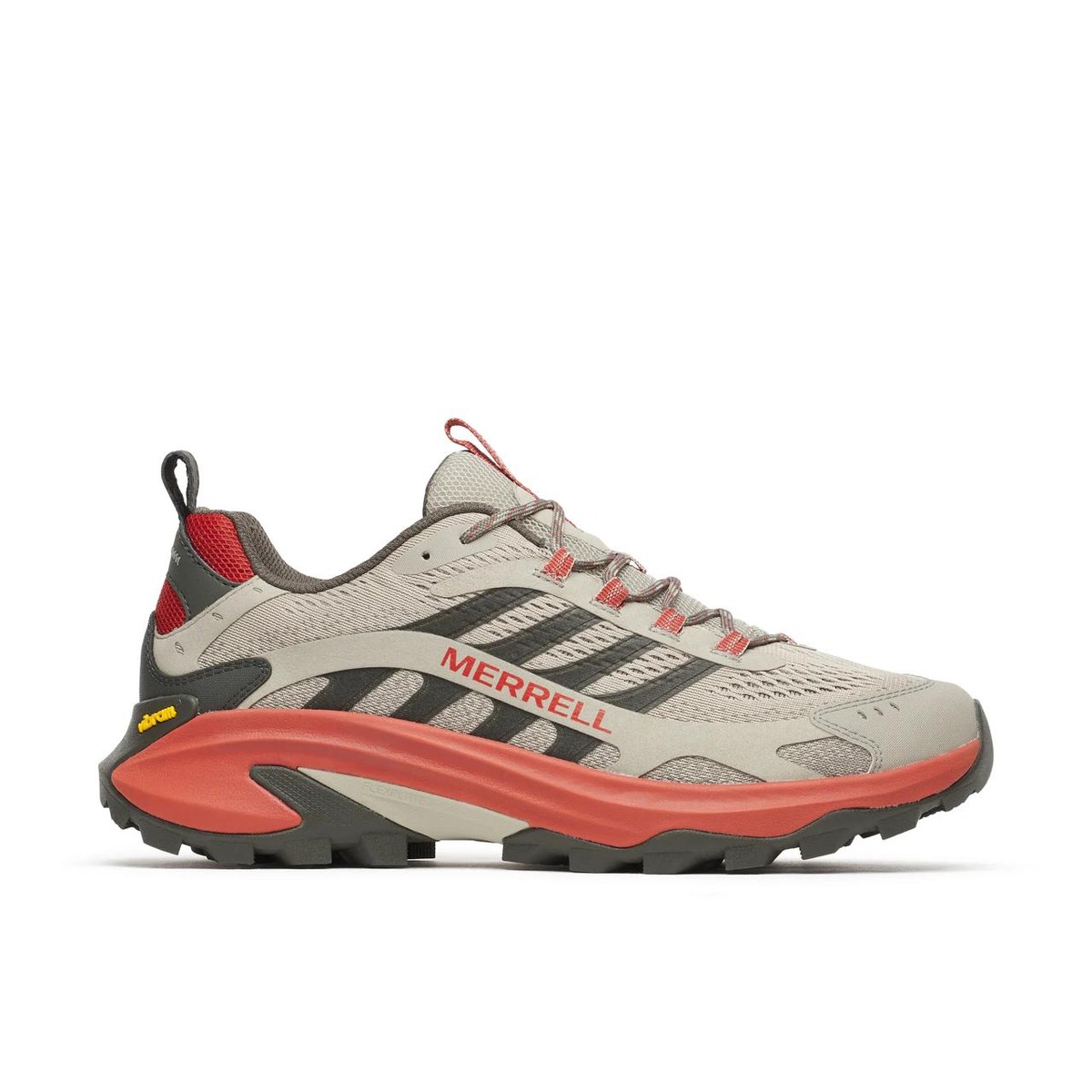
The cheapest way in, and the most honest spec sheet
Merrell Moab Speed 2
Merrell publish more numbers than anyone else here: a 4 mm lug, a 34 mm heel and 24 mm forefoot, a 10 mm drop, and a per-shoe weight. For a hiking shoe at a hundred and forty-five dollars that's an unusually open spec sheet and it deserves credit.
Read those numbers and the answer is obvious. A 34 mm stack with a 10 mm drop and a 4 mm lug is a trail shoe. Merrell file it under hiking and never claim otherwise.
It's made for Merrell specifically and it's good at what it does, which is grip dirt and gravel. It isn't a climbing rubber and Merrell have never said it was. This is the one shoe on this page where the outsole alone settles the question.
You want a light, well-documented hiking shoe and you'd rather spend less.
You wanted an approach shoe. This is a trail shoe and its own numbers say so.
The spec sheet
The spec sheet
Every figure here comes from Merrell. Where a line is absent from this rail, the brand doesn't publish it.
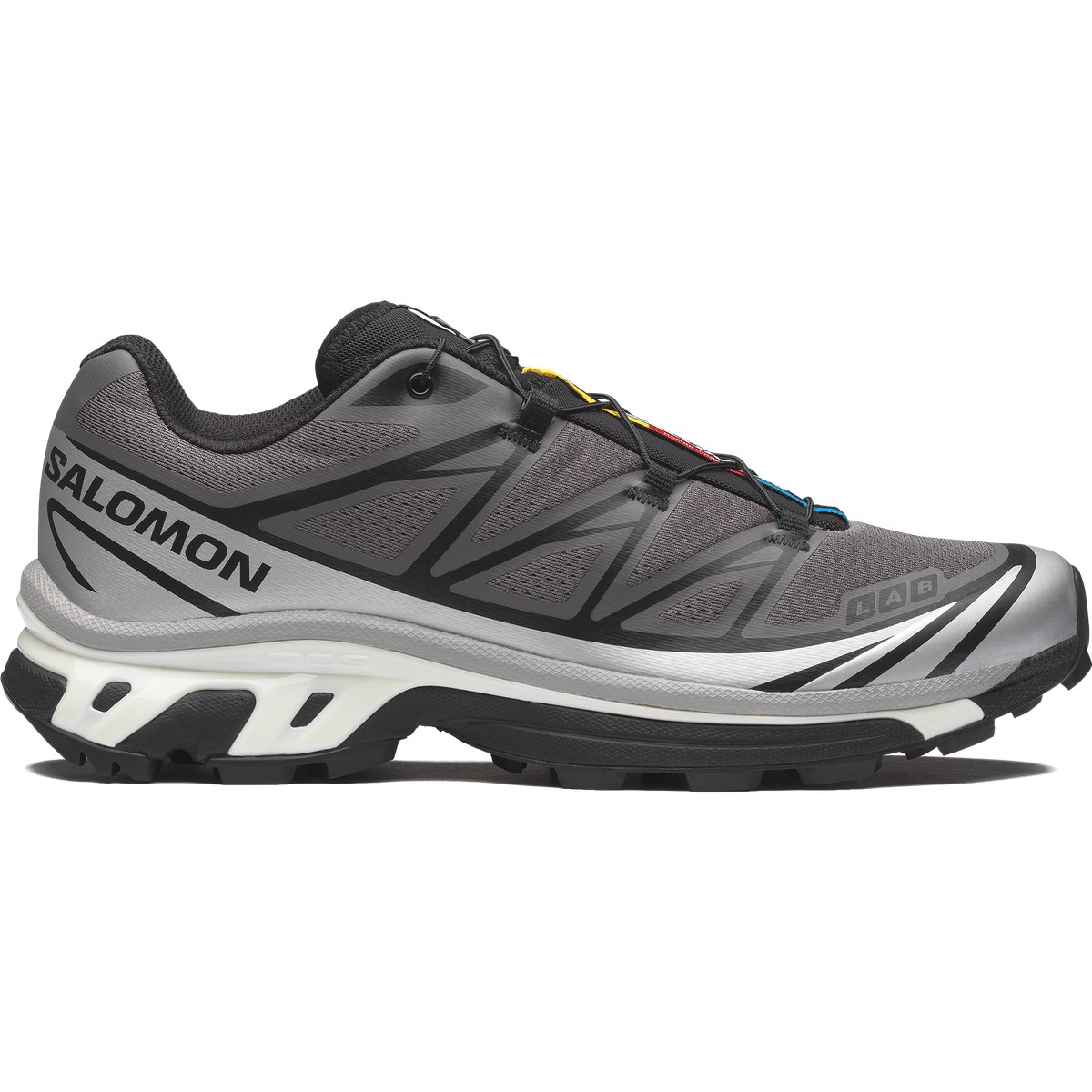
The shoe that started this, and a sneaker
Salomon XT-6
This is the pair that made the whole category cross over, and it isn't an approach shoe by any definition including Salomon's. Their own page is titled XT-6 Sneakers, the product sits in Sportstyle rather than in any outdoor category, and the copy says it's adapted for the city.
None of which is a criticism. It's a great-looking, comfortable sneaker with real trail-running heritage behind the design, and it's the single most influential shoe in men's footwear of the last five years. Just buy it knowing what it is.
Mud Contagrip is built for soft, wet ground, with deep sharp lugs that bite into terrain that gives way. On smooth rock that's close to the worst thing you could choose, because there's nothing for the lugs to sink into and very little rubber actually touching the surface. It's the most useful single fact on this page.
You want the look, and you want the shoe that defined the look.
You were planning to take these anywhere near actual rock.
The spec sheet
The spec sheet
Every figure here comes from Salomon. Where a line is absent from this rail, the brand doesn't publish it.
The receipts
Who publishes what
Three spec lines settle almost every argument in this category, and this is exactly how many of the eight are willing to print each one.
The rubber compound6 of 8
The single most important line on the page. Look for a named compound. Vibram Megagrip is the high-friction outdoor standard. Vibram XS Edge, XS Grip and Idrogrip come from the climbing-shoe side. Five Ten's Stealth is the other climbing lineage. A generic in-house rubber tells you nothing.
A climbing zone at the toe2 of 8
The detail that actually defines the category. Turn the shoe over. If the tread runs all the way to the toe in the same pattern, there's no climbing zone. If there's a smooth flat area at the front, there is.
Lug depth in millimetres2 of 8
Deeper isn't better here, it's just different. Roughly 3 mm to 4 mm is the approach and light-hiking range. Anything at 5 mm or more is built for trail and soft ground, whatever else the marketing says.
Side by side
All eight, in one table
Every column is either a brand figure or our one scale. There's nothing scored, weighted or averaged.
| Shoe ▲▼ | Price ▲▼ | Outsole ▲▼ | Climbing zone ▲▼ | Off pavement ▲▼ | Verdict ▲▼ |
|---|---|---|---|---|---|
| La Sportiva TX1 | $159 | Vibram MegaGrip | Published | 84 of 100 | A real one |
| Scarpa Crux 2 | $159 | Vibram Megagrip | Not claimed | 80 of 100 | A real one |
| La Sportiva TX4 Evo | $189 | Vibram Megagrip with Impact Brake System | Published | 76 of 100 | A real one |
| Scarpa Rapid LT | $169 | Vibram Megagrip | Not claimed | 62 of 100 | A real one |
| Danner Trail 2650 | $190 | Vibram 460 with Megagrip | Not claimed | 40 of 100 | Looks the part |
| Hoka Anacapa 2 Low GTX | $180 | Vibram Megagrip | Not claimed | 34 of 100 | Looks the part |
| Merrell Moab Speed 2 | $145 | Vibram TC5+ | Not claimed | 30 of 100 | Looks the part |
| Salomon XT-6 | $185 | Mud Contagrip | Not claimed | 12 of 100 | Looks the part |
Tap any column heading to sort. Off pavement is our scale, not a brand figure, and the La Sportiva TX4 Evo sits at 76 because it's the shoe the rest of the category gets described against.
Before you buy
Four things worth checking in the next five minutes
- Turn the shoe over in the photo. If the tread runs all the way to the front in one pattern, there's no climbing zone, whatever the listing calls the shoe.
- Find the compound by name. A named rubber tells you what it was made to grip. A house rubber with no name tells you nothing at all.
- Read the drop if there's one. Anything at 8 mm or more with a tall stack was designed for walking distance, and that's a real thing to want, just not this thing.
- Size snug if you're buying a real one. The whole point is that your foot doesn't move inside the shoe when it's loaded sideways on an edge.
Questions
The ones we get asked
What actually makes a shoe an approach shoe?
Three things together. A soft, high-friction rubber that grips smooth rock by friction rather than by biting into it. A flat climbing zone at the front of the sole with no lugs in it, so you can stand on a small edge and smear against slab. And a low, stiff platform that keeps your foot close to what you're standing on. Miss any one of the three and you have a hiking shoe with a good outsole, which is a fine thing to own and a different thing to buy.
Can I just wear approach shoes every day?
You can, and plenty of people do. The cost is the sole. Sticky rubber works by being soft, and soft rubber on abrasive pavement wears visibly fast, so a $189 shoe can look tired after a season of commuting. If the plan is sidewalks, the four in the second half of this page will be more comfortable, last longer and cost less.
Is the Salomon XT-6 an approach shoe?
No, and Salomon have never said it was. Their own page calls it a sneaker, it sits in their sportstyle range rather than an outdoor one, and the outsole is a mud compound with deep lugs, which is close to the opposite of what smooth rock wants. It's a great sneaker and it's the shoe that made this whole look cross over. It's just not the thing people keep calling it.
Why is Vibram Megagrip on both the real ones and the lookalikes?
Because Megagrip is a general high-friction outdoor compound, not a climbing rubber, and it turns up on everything from approach shoes to trail runners. Sharing a sole compound with a technical shoe doesn't make a shoe technical. The climbing zone and the low stiff platform are the parts that separate them, and those are structural rather than chemical.
How should these fit compared with my running shoes?
Snugger, and usually a touch smaller. A real approach shoe is meant to hold your foot still when it's loaded sideways on an edge, so a little room in the toe box that you'd want on a long hike is exactly what you don't want here. The hiking shoes in the second half fit the way you expect a hiking shoe to fit.
Are any of these waterproof?
One is. The Hoka Anacapa 2 Low has a Gore-Tex membrane, which is genuinely useful if you hike in the wet and a small breathability cost every other day of the year. The rest are unlined, which is the norm in this category, because the terrain it was built for is dry rock and the priority is that the shoe breathes.
How we did this
Our method, in full
Brand copy decides the label
A pair is only called a real approach shoe if the brand's own copy and the construction both support it. Where a brand doesn't publish a claim, we say the call rests on category and construction rather than pretending the claim exists.
Stock checked at the size level
Every price and every availability line was read off the page we link, at the size level wherever the store exposes one. Nothing on this page is on markdown.
One scale, no scores
We don't rate shoes out of ten. There's a single scale, how far off the pavement a pair will take you, and everything is placed on it against the same reference shoe.
