 Skip to content

Start here
Walk into any store and the face wash is split down the middle. Black bottles with words like charcoal and fuel on one side, pastel bottles with words like glow and radiance on the other. It's a tidy way to lay out a shelf and it has almost nothing to do with what's in the bottles.
Your skin doesn't know which aisle you shopped in. It knows whether it's oily, whether it's reacting to something, and whether the last thing you used left it feeling tight. So that's how this page is sorted. Pick the thing your face is actually doing and we'll tell you what causes it and which of these fourteen helps.
The other thing we've done is throw out the chemistry. There's no pH here and no surfactant names. Every wash is placed on one scale instead: how tight your face feels after you rinse it, measured against the CeraVe Foaming Cleanser, because that's the bottle more American bathrooms contain than any other.
Asked and answered
We put the gender question to an expert
I've consulted with Cecily Braden, famed Esthetician and Founder of Cecily Braden Spa & Wellness in NYC, about the differences between face washes for men vs. women and if there really was a difference at all. According to Cecily,
While there may be products made and marked to men, the skin functions the same whether you're male or female. What's important is providing products that address their specific skin type and concerns, not their gender. With that said, men tend to be attracted to products that are not heavily scented and lean more towards earthy, natural aromas. They want simple and are less likely to use products that require multiple steps and while they want to feel it working, they shy away from products that feel heavy or greasy.
Cecily Braden
The second half of that answer is the useful half, and it's why two facts appear on every card below: what the scent is doing, and how heavy the wash feels on your face. Those are the two things people actually choose on, so we've printed them rather than implied them.
Where this guide landed
Start with the problem
What is your skin actually doing
Not skin types and not brands. Pick the thing that's true of your face and we'll tell you what causes it and which of these helps.
5 complaints cover almost everybody
Every one has a cause you can name and something you can buy about it. Start with whichever one you've been putting up with.
That squeak is the sound of too much coming off
You rinse, you towel off, and for the next ten minutes your face feels a size too small. Most people read that as clean. It's the opposite: it's the feeling of a wash that took the oil your skin uses to hold water in.
Drop the foam. A cream, a balm or a low-detergent gel cleans exactly as well and leaves your face feeling like nothing happened, which is what you want. If you like the ritual of a lather, keep it for the evening and use something quiet in the morning.
The words on the bottle
What cream, gel, foaming and balm actually mean
Five formats in plain words: what each one does at the sink, who it suits, and the thing about it nobody tells you.
Foaming
Works up a real lather in your hands
What it does at the sink
Higher detergent content, so it foams properly and strips oil more thoroughly. That's genuinely useful if your face produces a lot of oil and genuinely too much if it doesn't.
Who it suits
Oily skin, humid weather, and anyone who finishes a shower feeling like the last wash left something behind.
Worth knowing
Foam is the single biggest reason people end up with tight, irritated skin, because it feels like proof. If your face squeaks, you've gone too far, not far enough.
The measuring stick
All fourteen on the squeak scale
One line each, from the softest rinse here to the firmest. The CeraVe is marked, and everything to the left of it leaves your face feeling more comfortable afterwards. Left isn't better. It's just quieter, and which end you want depends entirely on your face.
The placing comes from format, detergent load and what else is in the bottle, read off published ingredient lists. It's a judgment rather than a lab number, and it's the same judgment applied fourteen times.
The shortlist
Fourteen washes, grouped by what your skin is doing
Everything here is in stock at full price and currently made. Prices are the ones published on the page each button sends you to, and where a brand publishes no price of its own, the spec rail names the retailer that does.
When your face feels tight after you rinse
The quiet end of the page. Five washes that clean properly and leave your face feeling like nothing much happened, which is what a cleanser is supposed to do. Start here if you've been chasing the squeak and wondering why your skin keeps fighting back.
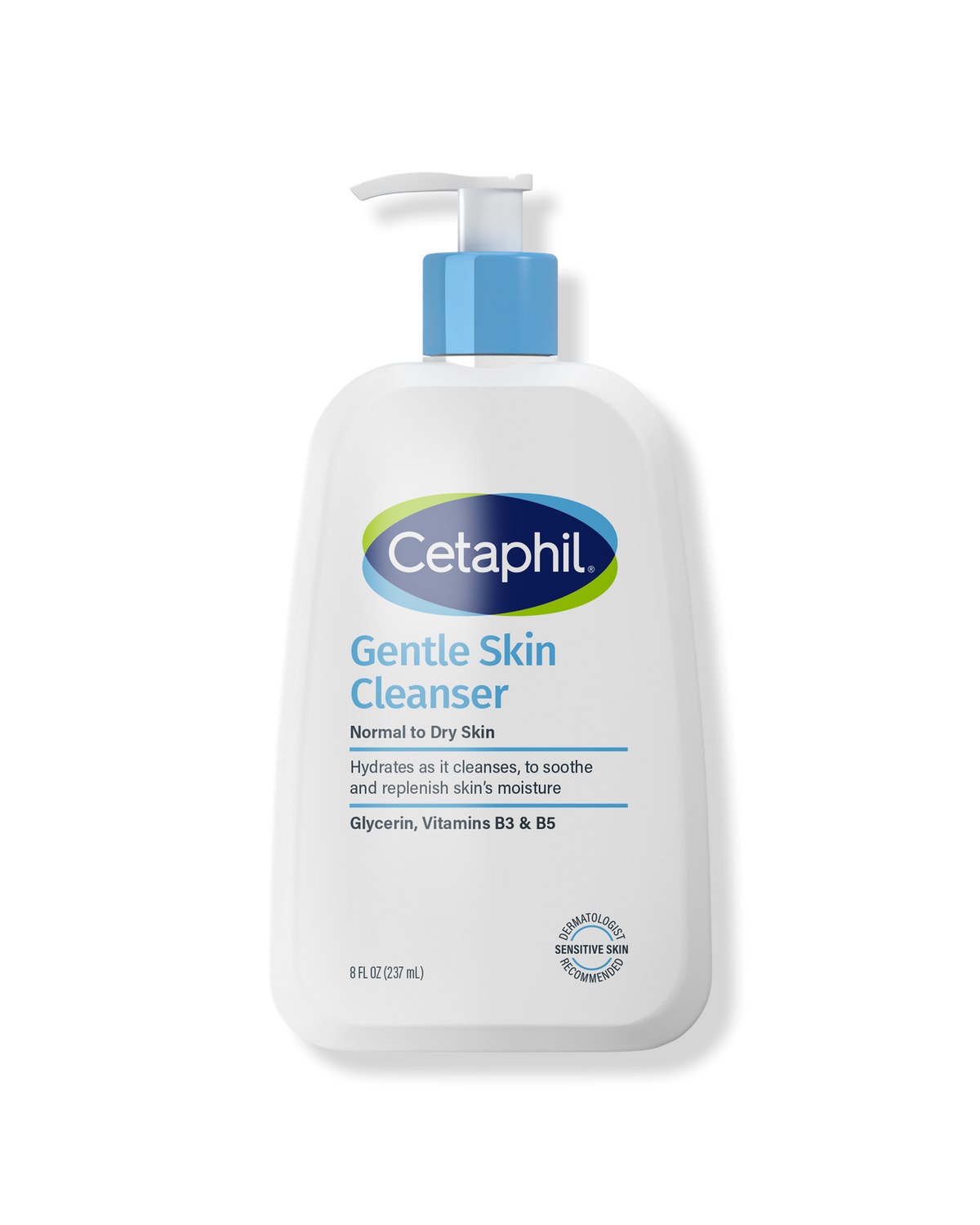
The one dermatologists have handed out for forty years
Cetaphil Gentle Skin Cleanser
There's a reason this bottle turns up in every dermatologist's office in the country. It's a non-foaming cream that you can use with water or wipe off without any, the ingredient list runs to ten things, and none of them is going to argue with a prescription you're already on.
It also does the thing this whole page is about. You rinse and your face feels like a face, not like a windscreen. Nothing is pulled off that your skin needed, so nothing has to be put back.
No lather, no tingle, no squeak. The first week with a cream cleanser feels like you skipped a step, and then your skin settles down and you stop noticing it, which is the whole idea.
Your face has felt tight after washing for years and you assumed that was normal.
You have oily skin and you finish washing feeling like there's still a layer on.
The details, if you want them
What the brand publishes
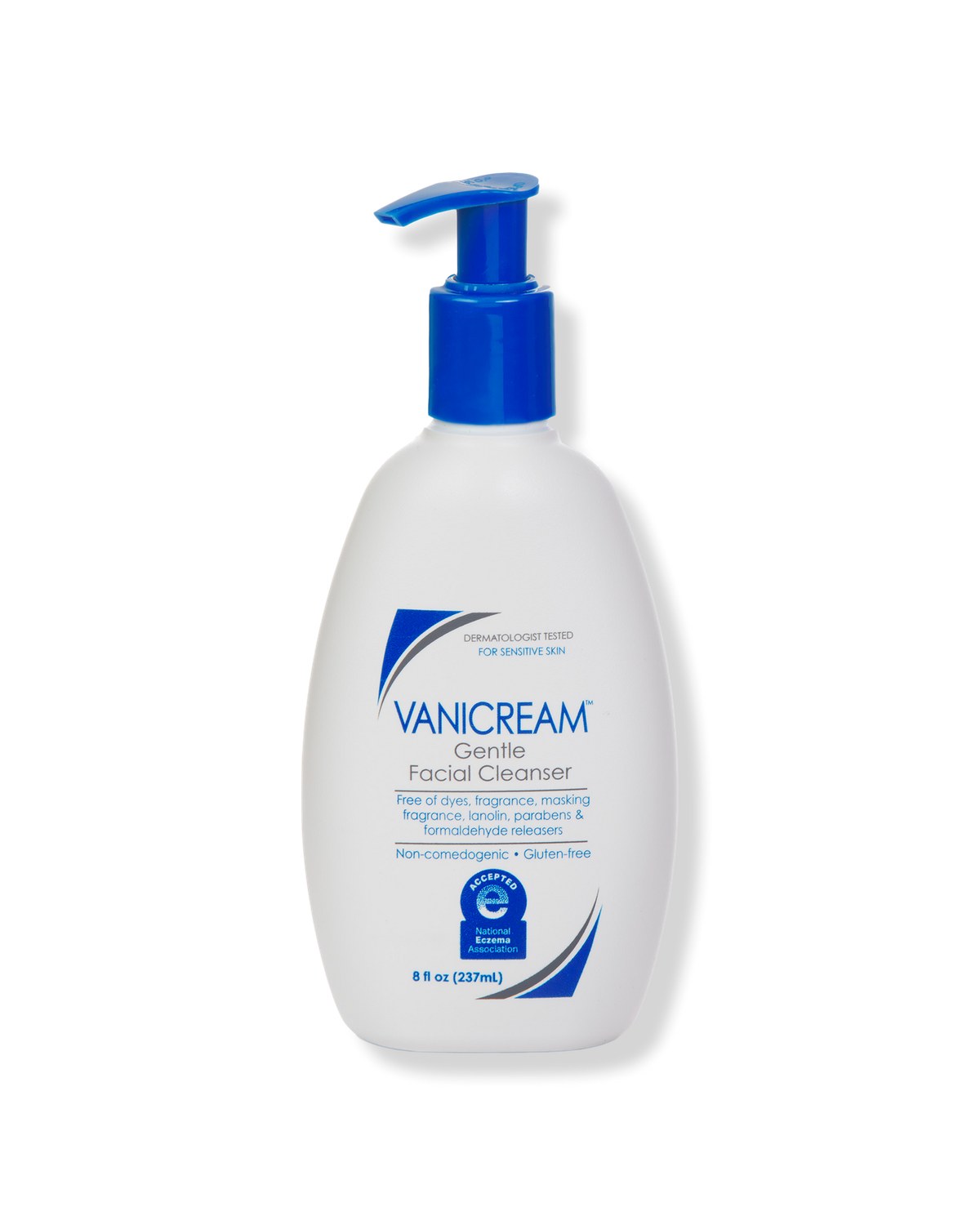
The shortest ingredient list here
Vanicream Gentle Facial Cleanser
Vanicream built the brand on leaving things out. No fragrance, no dye, no lanolin, no formaldehyde releasers, no botanical extracts, no parabens. Twelve ingredients in the whole bottle, and every one of them has a job.
What you get is a light gel that lathers a little, rinses completely and leaves nothing behind in either direction. If you've been reacting to things and you can't work out which thing, this is the bottle to reset with.
If you react to a lot of products, wash with this and nothing else for two weeks, then add one thing back at a time. It's the closest thing to a control in a category that makes controls very hard.
Your skin reacts to things and you've stopped being able to predict which.
You want the wash to feel like an experience. This one deliberately doesn't.
The details, if you want them
What the brand publishes
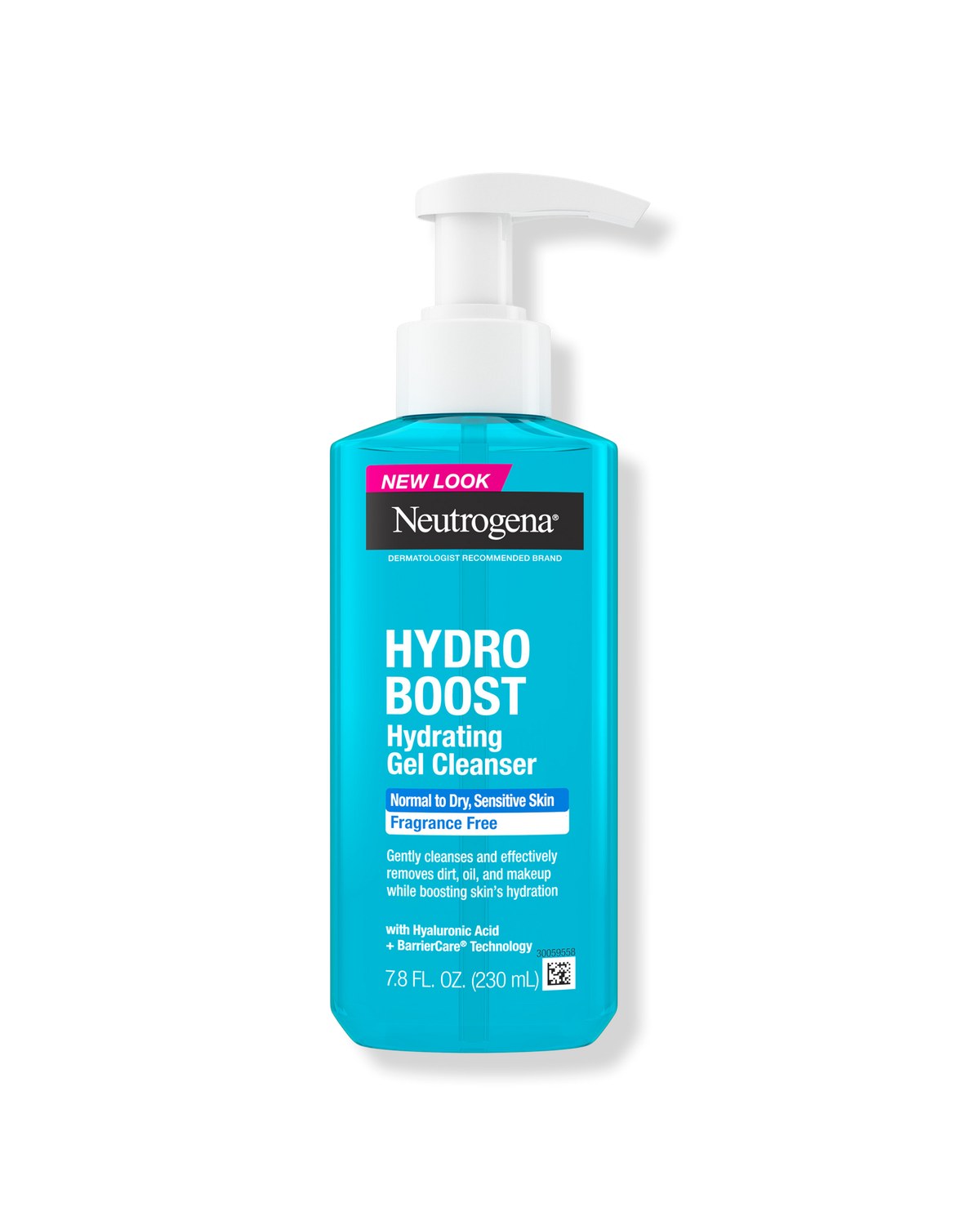
A gel that lathers just enough
Neutrogena Hydro Boost Fragrance-Free Cleansing Gel
Most washes that work up a real lather get there by turning the detergent up, and your face pays for it. This one raises a light foam and still lands near the gentle end of our scale, which is unusual at any price and rare at sixteen dollars.
Get the fragrance-free version specifically. The original Hydro Boost cleanser is scented, sits right next to it on the shelf in near-identical packaging, and is the single most common mix-up in this part of the aisle.
Neutrogena sells this in a scented and a fragrance-free version, and the bottles look very similar. The words Fragrance-Free are printed on the front of the one you want.
You like a bit of lather and your skin doesn't love what most lathers do to it.
You'd rather have no foam at all. The two above are quieter still.
The details, if you want them
What the brand publishes
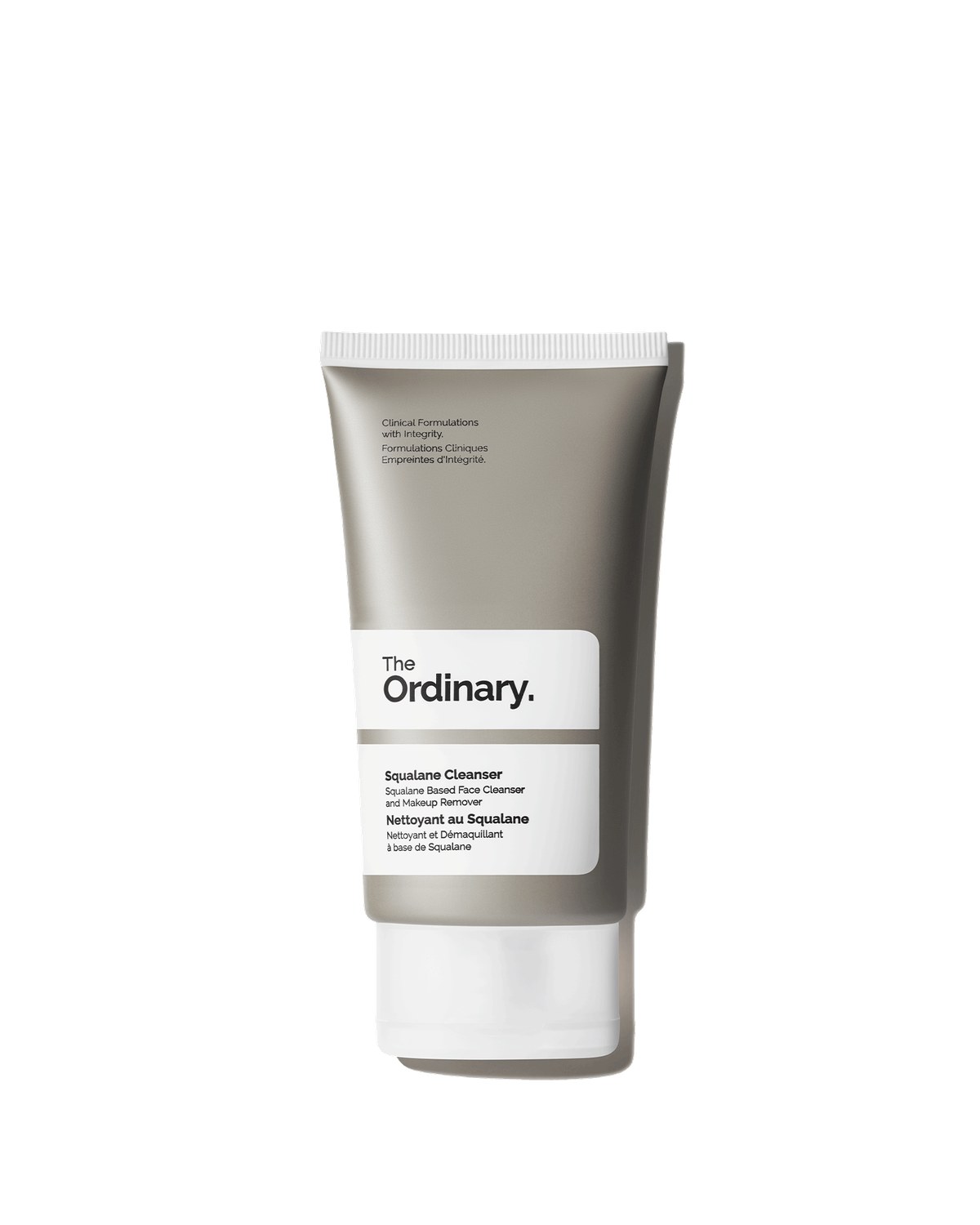
The gentlest thing on the whole page
The Ordinary Squalane Cleanser
It comes out of the tube as a soft balm, melts to an oil the moment it touches your face, and then turns milky and rinses off when you add water. Sunscreen, sweat and a day's grime all come away with it, and nothing gets scoured.
Squalane is the same molecule your own skin makes, which is why a cleanser built on it leaves so little behind in the wrong direction. This is the lowest reading on our squeak scale and it isn't close.
Fifty milliliters looks tiny next to an eight ounce bottle, and a balm needs far less per wash than a gel does, so it lasts longer than the number suggests. Sephora carries the 150 mL tube if you already know you like it.
You wear sunscreen or spend the day outdoors, and foam has never suited you.
You want the smallest number of steps possible. A balm sometimes wants a rinse and a wipe, and water alone won't shift a modern sunscreen.
The details, if you want them
What the brand publishes
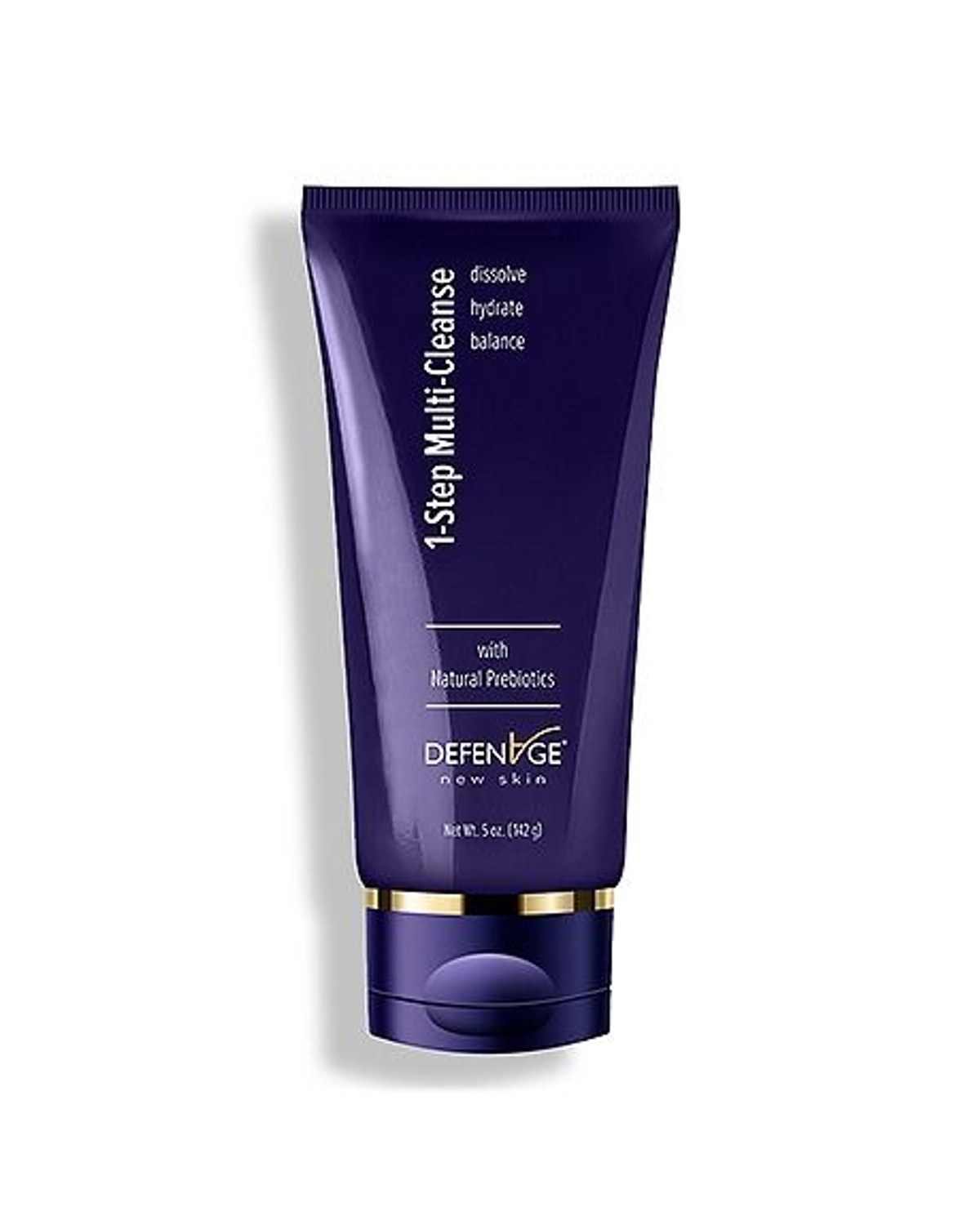
The one that does three jobs in one pass
DefenAge 1-Step Multi-Cleanse
It goes on as a gel and turns to a cleansing milk as you work it in, which is how it manages to take off sunscreen, clean the skin underneath and leave a face that feels conditioned rather than stripped, all in one pass at the sink.
The formula leans on prebiotics and humectants rather than on detergent, so it lands near the gentle end of our scale despite being a proper cleanser. If you want one bottle to do everything and you'd rather it were a good one, this is that bottle.
Fifty two dollars for five ounces is a real number and it buys a genuinely good cleanser, not a miracle. If the budget matters more than the experience, the Cetaphil at the top of this group gets you most of the way for a quarter of the price.
You want one bottle that removes everything and still leaves your face comfortable.
You're happy with a supermarket cleanser. This is a considerable step up in price.
The details, if you want them
What the brand publishes
When you're shiny by noon, or breaking out
Six washes for skin that makes a lot of oil, gets congested, or does both. Three of them carry an acid, one carries charcoal, and two are just very good at clearing oil without scouring. None of them is the harshest thing on the shelf, and that's deliberate.

The measuring stick for this whole page
CeraVe Foaming Facial Cleanser
This is the wash more American bathrooms contain than any other, which is exactly why we've made it the reference. When we say something is gentler or tighter, this is what we mean by the middle.
It earns the spot on merit too. It foams like a foaming cleanser is supposed to, it clears oil, and it has three ceramides and niacinamide in it putting back some of what the detergent takes off. Twelve ounces for sixteen dollars is the best value here.
CeraVe sells this and a Hydrating Cleanser in near-identical bottles. The Foaming one, this one, is for oily and combination skin. The Hydrating one is a lotion for dry skin. Buying the wrong one of the pair is the most common CeraVe mistake there is.
You want the sensible default and you'd like it to cost sixteen dollars.
Your face already feels tight after washing. This is the middle, not the gentle end.
The details, if you want them
What the brand publishes
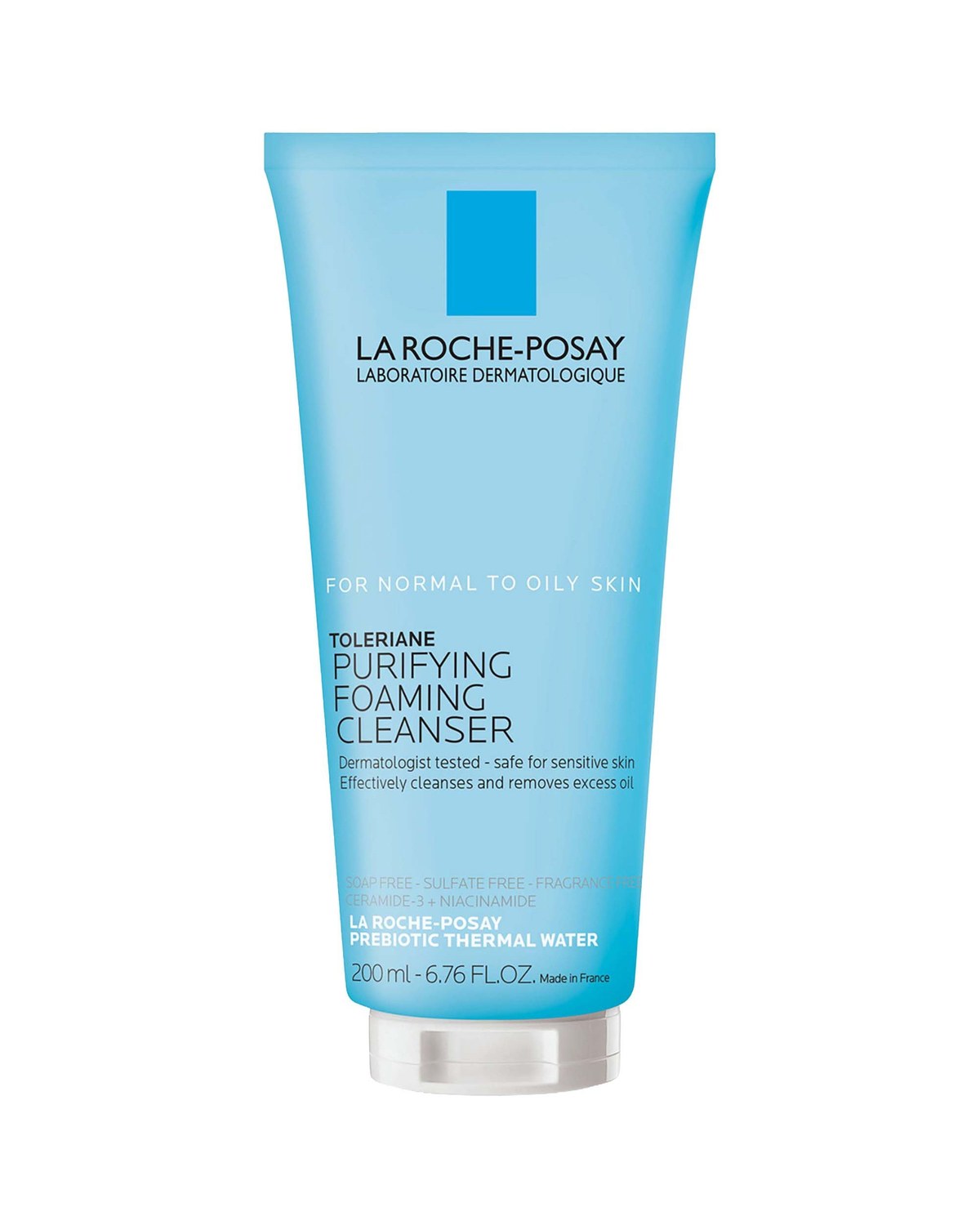
French pharmacy, sold at a supermarket price
La Roche-Posay Toleriane Purifying Foaming Cleanser
Toleriane is the range La Roche-Posay built for skin that reacts, and the Purifying version is the one for faces that also make a lot of oil. Getting both of those in one bottle is harder than it sounds and this is the cleanest execution of it we found.
It foams, it clears a shiny forehead, and it still reads gentler than the CeraVe on our scale because there's a ceramide and niacinamide in there doing repair work while the detergent does the cleaning.
La Roche-Posay puts several Toleriane cleansers in similar packaging. Purifying Foaming is the oily-skin one. Hydrating Gentle is the dry-skin one. Check the second word before you get to the till.
You're oily and reactive at the same time, which is a genuinely annoying combination.
You want an acid in your cleanser. There isn't one in here.
The details, if you want them
What the brand publishes
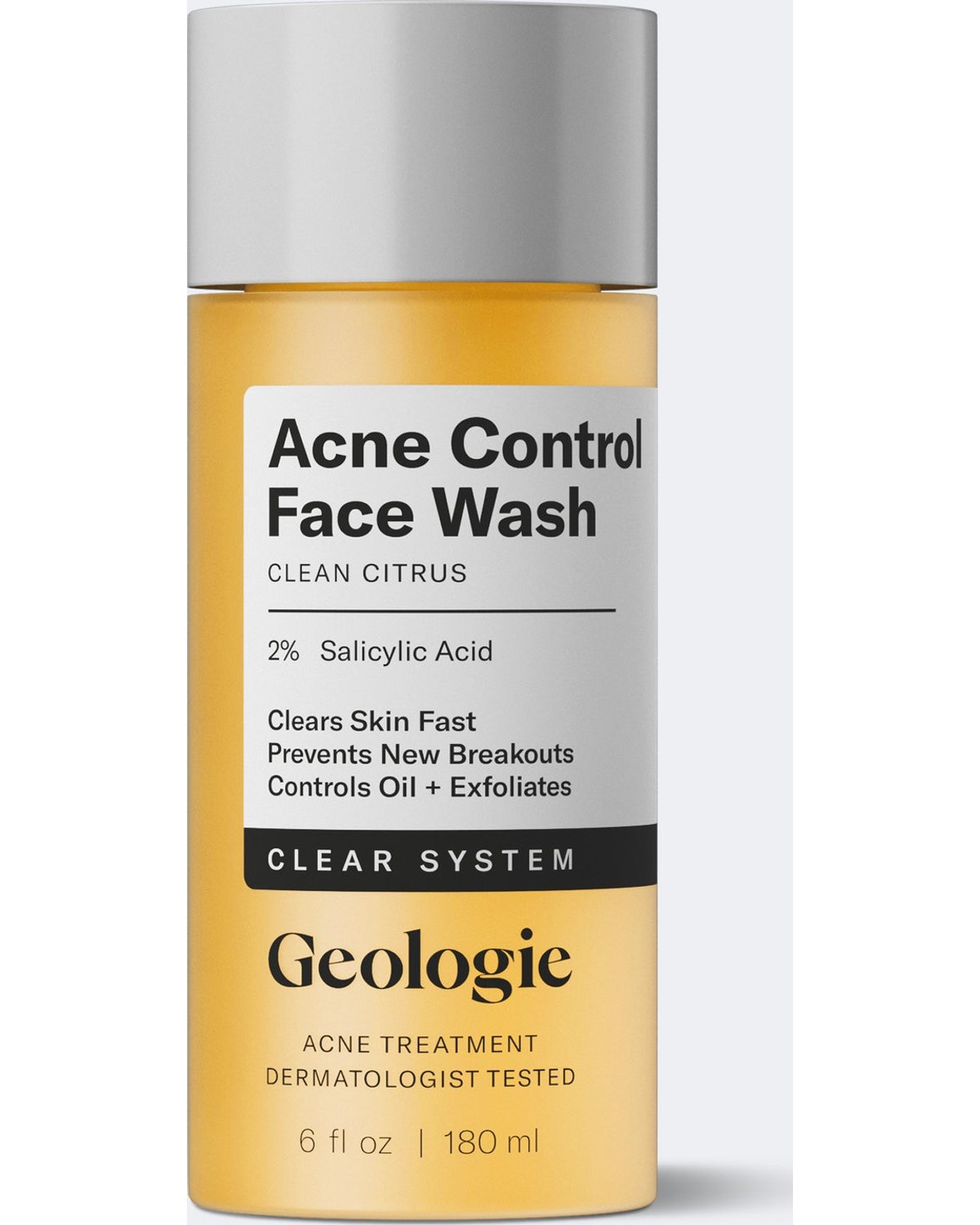
The most acid for the least money
Geologie Acne Control Face Wash
Salicylic acid at 2% is the strongest concentration sold over the counter, and six ounces of it for fifteen dollars is the lowest cost per ounce of anything on this page that contains an active at all.
It's a straightforward gel that does one job hard. If you break out along the jaw and chin and you want to find out whether a salicylic wash helps you before spending real money on the question, this is the cheapest honest way to run that experiment.
A 2% acid plus a fragrance blend plus two dyes is a lot to put on your face twice a day. Start with once a day, in the evening, and see how the skin around the spots behaves before you go to twice.
You break out, you've never tried salicylic acid, and you want to test it cheaply.
Your skin reacts to fragrance. The fragrance-free acid option is two cards down.
The details, if you want them
What the brand publishes
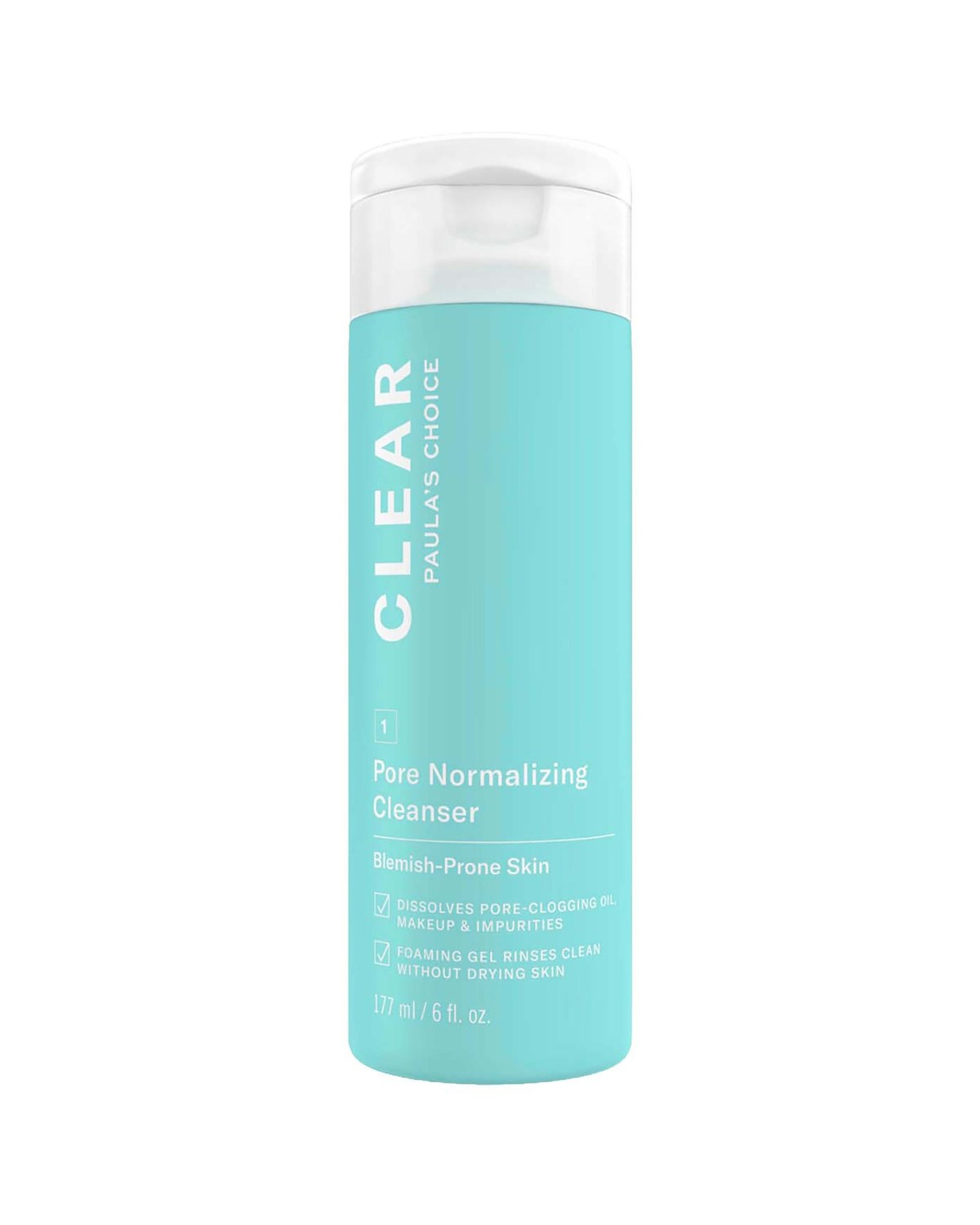
An acid wash with nothing else going on
Paula's Choice CLEAR Pore Normalizing Cleanser
Salicylic acid at 0.5% rather than 2%, no fragrance, no dye, no essential oils, and a short list behind it. In a wash that spends thirty seconds on your face before you rinse it, the lower strength costs you less than the label suggests.
What you're buying is the ability to use an acid every single day without the skin around the spots getting angry about it. That's a real trade and for a lot of people it's the better one.
Acids work on a schedule rather than on a dose. A wash you can use every day at 0.5% will do more over six weeks than a 2% one you have to keep backing off from. Consistency is the active ingredient.
You break out and fragrance is the thing that always sets you off.
Fifteen dollar bottles do the job for you. This costs nearly twice that.
The details, if you want them
What the brand publishes
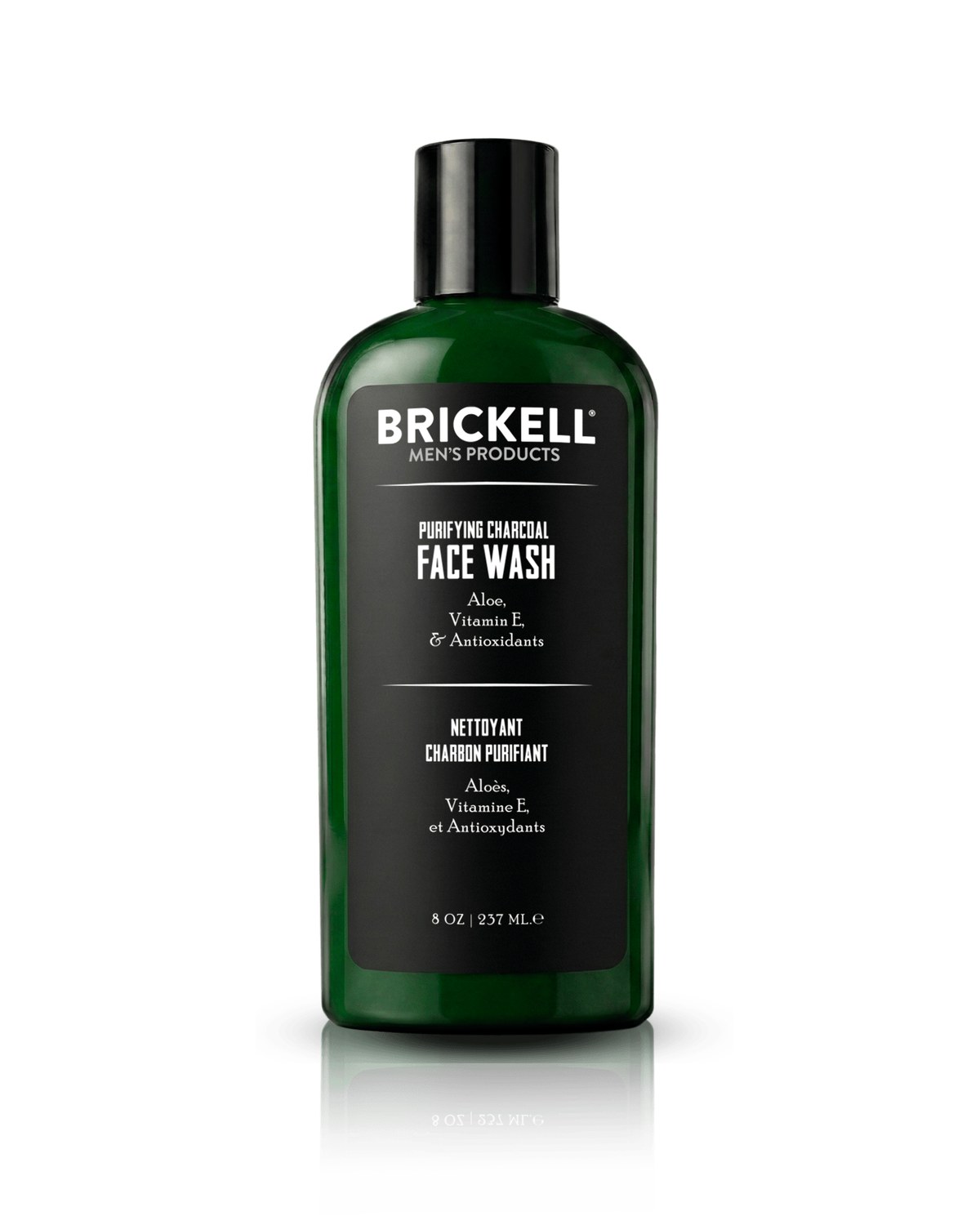
The one that smells like a good barbershop
Brickell Purifying Charcoal Face Wash
Charcoal binds oil on the surface and takes it away with the rinse, and on a face that gets genuinely greasy by midday the difference is obvious the first time. This lands on the firmer half of our scale and that's the point of it.
The eucalyptus, peppermint and lemongrass are the reason people buy it twice. It smells like something rather than like nothing, and there's no fragrance blend behind it, just three oils you can read off the label.
Brickell sells this in scented and unscented at twenty five dollars either way. If you like the idea and not the eucalyptus, or your skin reacts to essential oils, the unscented one is the same wash with the oils left out.
You get oily and you want washing your face to smell like a barbershop.
You want the acid rather than the charcoal. Two cards up is the fragrance-free one.
The details, if you want them
What the brand publishes
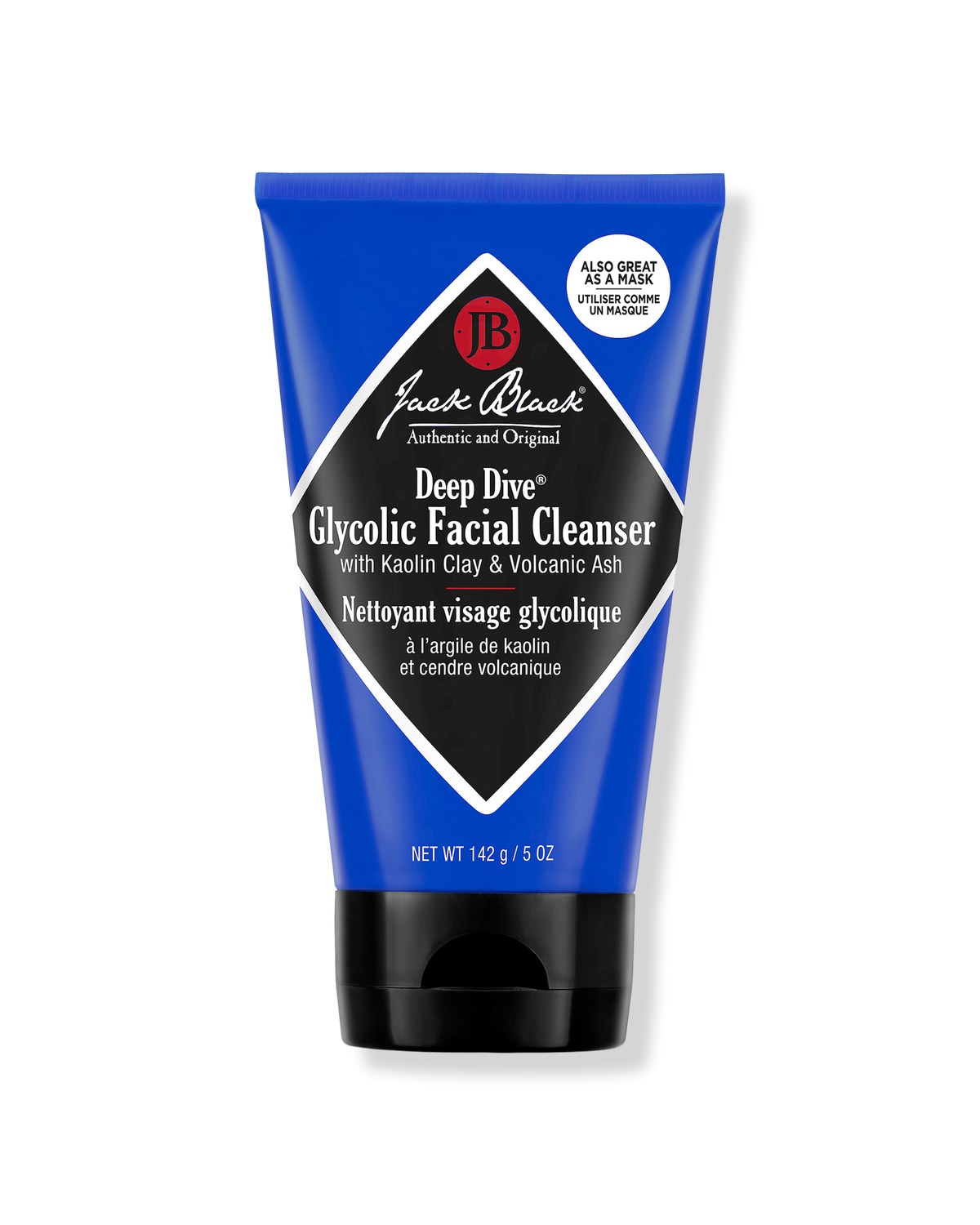
A wash and a clay mask in one tube
Jack Black Deep Dive Glycolic Facial Cleanser
Glycolic acid works on the surface, loosening the dead cells that make a face look flat and feel rough, and the kaolin and volcanic ash in here pull oil at the same time. Leave it on for a few minutes and it works as a mask instead.
It's also fragrance-free, which is rare in a men's grooming product that clearly wants to feel like an event. You get the clay, the grit and the acid without the smell carrying any of it.
Glycolic acid every single day is how people end up with skin that looks shiny and feels tight and takes a month to settle. Two or three times a week is where the benefit is, and a gentler wash from the top of this page covers the other days.
Your skin looks dull and feels rough and you want one product to fix that.
You want something you can use every morning. This isn't a daily wash.
The details, if you want them
What the brand publishes
When you want it to feel like something
Cecily's point about men wanting to feel a product working is the most honest line on this page, so here are the three that deliver on it. All three are scented, all three are a bit of an event, and none of them is a compromise on the actual washing.

The one that wakes you up at the sink
Kiehl's Facial Fuel Energizing Face Wash
The menthol is doing most of the work you can feel, and it works. Splash this on at six in the morning and the cold, sharp lift is real, which is why this tube has been a fixture in men's bathrooms for twenty years.
Underneath the theatre it's a proper foaming wash that clears oil well. It sits on the firmer half of our scale, so it's a morning product for skin that makes oil, rather than an all-purpose one.
Nothing about the cold feeling tells you the wash is working. It's a sensation added on purpose because people like it, and there's nothing wrong with liking it. Just don't read it as a measure of how clean you got.
You want washing your face in the morning to actually wake you up.
Menthol and fragrance are exactly what your skin objects to.
The details, if you want them
What the brand publishes
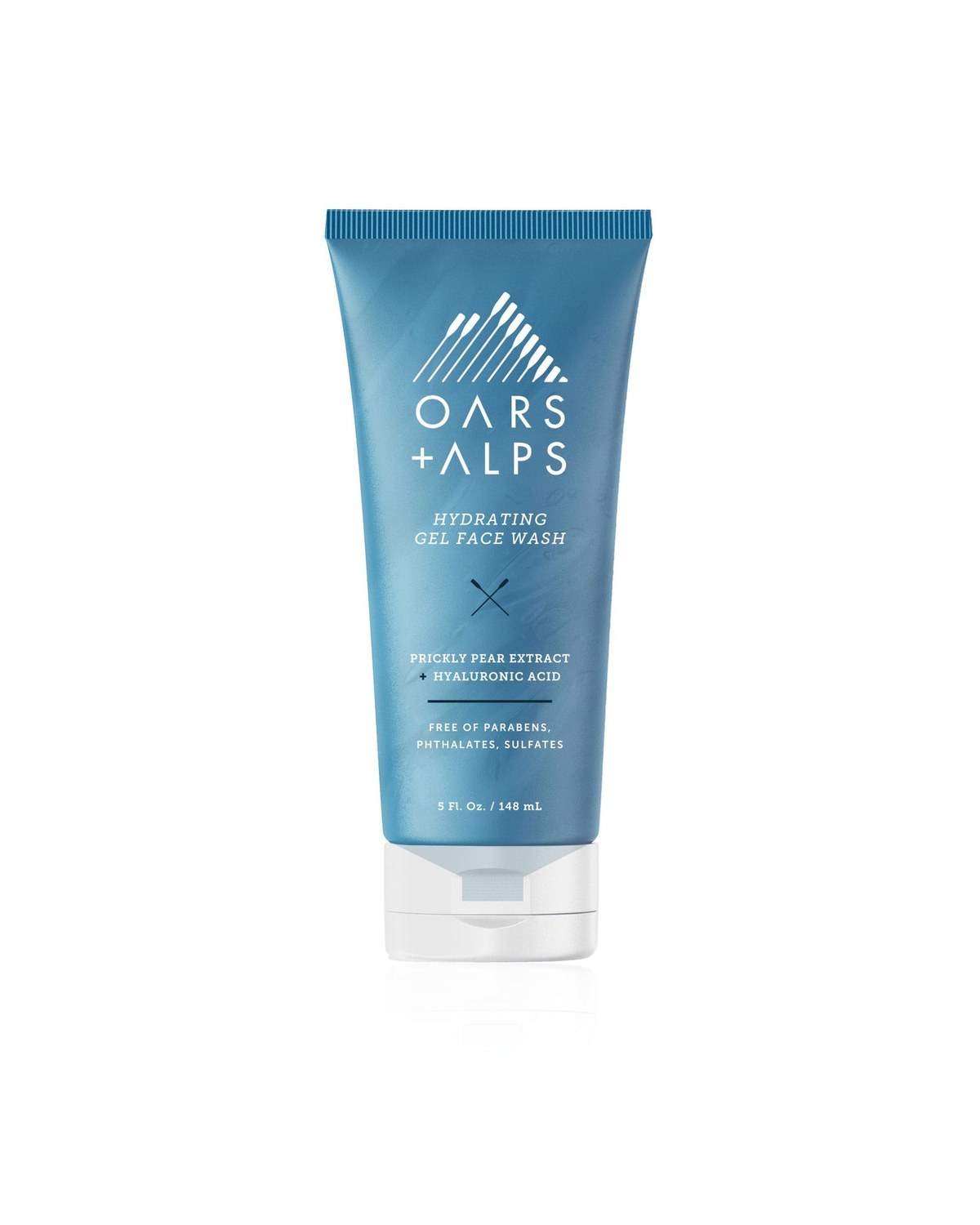
The cheapest way to enjoy this part of the day
Oars + Alps Hydrating Gel Face Wash
Fifteen dollars buys a quick-lathering gel with hyaluronic acid in it that smells of eucalyptus and lemongrass rather than of a fragrance blend. That's a lot of product for the money and it sits almost exactly in the middle of our scale.
It's the pick for anyone who wants the Kiehl's experience without the menthol or the twenty eight dollars. Same idea, softer delivery, half the price.
There's no Fragrance or Parfum in this list, and it still smells strongly of eucalyptus and lemongrass, because essential oils are what's doing it. If your skin reacts to scented products, that distinction won't protect you.
You want a scented wash that smells natural and costs fifteen dollars.
You need genuinely fragrance-free. Plant oils still count as scent.
The details, if you want them
What the brand publishes

The one that makes a bathroom feel like a hotel
Malin+Goetz Grapefruit Face Cleanser
Grapefruit peel oil, a rich lather, and a bottle that looks like it belongs in a nice hotel. Malin+Goetz have been doing this since the early 2000s and the grapefruit cleanser is the thing they're known for.
It's a genuinely good foaming wash underneath the design, sitting just past the middle of our scale, so it suits normal to oily skin. Amino-acid surfactants keep it from going as hard as the foam suggests.
Forty four dollars is a lot for eight ounces and the brand has never pretended otherwise. Nothing in here does something a fifteen dollar wash can't. What you're buying is the smell, the lather and the bottle, and those are real things to want.
You'd like the two minutes at the sink to be the nicest part of the morning.
You measure a cleanser by cost per ounce. This loses that argument badly.
The details, if you want them
What the brand publishes
Six words worth knowing
The ingredients that change what a bottle does
Everything else on an ingredient list is water, detergent and preservative. These six are the ones that make one wash behave differently from another.
Salicylic acid2 of 14
The one that gets inside a clogged pore, because it dissolves in oil rather than in water. That's why it's the standard answer for blackheads and for the spots that keep coming back in the same place. Over the counter it runs from 0.5% to 2%, and higher isn't automatically better in a wash that you rinse off after thirty seconds.
Glycolic acid1 of 14
Works on the surface rather than in the pore, loosening the dead cells that make skin look flat and feel rough. It's the reason a face looks brighter after a few weeks rather than cleaner after one wash. Two or three times a week does it. Daily is how people overdo it.
Ceramides2 of 14
The fats your skin already makes to hold itself together and hold water in. A wash with ceramides in it puts back some of what the detergent takes off, which is why a ceramide foaming wash can be genuinely gentler than a plain gel.
Niacinamide3 of 14
A form of vitamin B3, and about the most broadly useful thing you can find in a cleanser. It helps the skin barrier hold together, calms redness, and doesn't fight with anything else you might be using. Nobody needs to seek it out, and it's a small free win when it's there.
Hyaluronic acid3 of 14
Holds water. In a serum that matters a lot. In a wash that you rinse off it matters much less, and the honest version is that it takes the edge off a cleanser rather than hydrating you. Worth having, not worth paying extra for.
Activated charcoal1 of 14
Binds oil and grime on the surface so they rinse away, and it's the reason a charcoal wash leaves an oily face feeling properly clear. It doesn't reach into a pore the way an acid does, so treat it as a good oil-remover rather than a spot treatment.
Side by side
Compare all fourteen
Tap a column heading to sort.
| Wash ▴▾ | Price ▴▾ | After the rinse ▴▾ | Scent ▴▾ | Active ▴▾ | Format ▴▾ |
|---|---|---|---|---|---|
| Cetaphil Gentle Skin Cleanser | $11.99 | Very soft rinse | Fragrance-free | Niacinamide | Cream |
| Vanicream Gentle Facial Cleanser | $12.99 | Softer rinse | Fragrance-free | None declared | Gel |
| Neutrogena Hydro Boost Fragrance-Free Cleansing Gel | $16.49 | Softer rinse | Fragrance-free | Hyaluronic acid | Gel |
| The Ordinary Squalane Cleanser | $10.50 | Very soft rinse | Fragrance-free | Squalane | Balm or oil |
| DefenAge 1-Step Multi-Cleanse | $52 | Middle of the scale | Fragrance-free | None declared | Gel |
| CeraVe Foaming Facial Cleanser | $15.99 | The measuring stick | Fragrance-free | Ceramides | Foaming |
| La Roche-Posay Toleriane Purifying Foaming Cleanser | $15.99 | Middle of the scale | Fragrance-free | Ceramides | Foaming |
| Geologie Acne Control Face Wash | $14.99 | The firmest here | Contains fragrance | Salicylic acid 2% | Gel |
| Paula's Choice CLEAR Pore Normalizing Cleanser | $28 | A firmer rinse | Fragrance-free | Salicylic acid 0.5% | Gel |
| Brickell Purifying Charcoal Face Wash | $25 | The firmest here | Scented with plant oils | Charcoal | Gel |
| Jack Black Deep Dive Glycolic Facial Cleanser | $25 | The firmest here | Fragrance-free | Glycolic acid | Foaming |
| Kiehl's Facial Fuel Energizing Face Wash | $28 | The firmest here | Contains fragrance | Caffeine | Foaming |
| Oars + Alps Hydrating Gel Face Wash | $15 | Middle of the scale | Scented with plant oils | Hyaluronic acid | Foaming |
| Malin+Goetz Grapefruit Face Cleanser | $44 | A firmer rinse | Scented with plant oils | None declared | Foaming |
Scent is called out because it's the most common cause of a reaction and the easiest thing on the whole label to check before you buy.
Getting it right
Five things that fix most skin complaints
None of this costs anything and all of it makes a bigger difference than spending more.
- Stop chasing the squeak. A tight face after washing means too much came off, not that you finally got clean. If that's how every wash leaves you, move a few places left on the scale above and give it two weeks.
- Use lukewarm water. Hot water strips oil on its own, before the cleanser has done anything, and it's the cheapest mistake on this list to fix. Warm enough to be pleasant and no warmer.
- Change one thing at a time. If your skin is reacting and you swap three products at once, you've learned nothing. One change, two weeks, then the next one.
- Give an acid six weeks. Salicylic and glycolic both work on a schedule rather than on a dose. Six weeks of daily use tells you more than doubling the strength ever will.
- Put something back on afterwards. Whatever you wash with, a moisturizer within a minute or two of towelling off does more for how your face feels than any upgrade to the cleanser itself.
Questions
Face wash, answered properly
Is there really a difference between men's and women's face wash?
Not in how the skin works. Cecily Braden puts it plainly above: skin functions the same whether you're male or female, and what matters is your skin type and your concerns rather than your gender. Where the two aisles genuinely differ is in packaging, scent and price. Products aimed at men lean earthy and simple, products aimed at women lean floral and multi-step, and the same formula sometimes appears in both with different labels on it. Buy for what your skin is doing and ignore which shelf it came off.
How often should I wash my face?
Twice a day for most people, morning and night, plus after anything that leaves you sweaty. If your skin is dry or reactive, once at night with plain water in the morning is often better, and it's worth trying for a fortnight before you decide. Washing more than twice a day is the most common way people make oily skin oilier, because stripping oil is what tells your face to make more of it.
What does it mean when my face feels squeaky clean?
It means the wash took off more than the dirt. That tight, slightly tacky feeling is your skin without the oil film it uses to hold water in, and it's the single most useful signal you have that a cleanser is too strong for you. It's also the feeling most people have been taught to want, which is why it's the scale this whole page is built on.
Salicylic acid or glycolic acid, which do I need?
Salicylic acid dissolves in oil, so it gets down inside a clogged pore. That makes it the one for blackheads and for spots that keep coming back in the same place. Glycolic acid works on the surface, loosening dead cells, so it's the one for skin that looks dull and feels rough. If you have both problems, salicylic daily and a glycolic wash twice a week is a sensible combination.
Does an expensive cleanser work better than a cheap one?
For the actual job of cleaning, no, and the eleven dollar bottle at the top of this page is the proof. A cleanser is on your face for thirty seconds and then it goes down the drain, which limits how much any ingredient in it can do. What money buys is texture, smell, packaging and how much you enjoy the two minutes, and those are real things to want. Just buy them knowing that's what you're buying.
Is fragrance actually bad for skin?
Fragrance is the most common cause of contact reactions in skincare, which makes it the first thing to remove when you're trying to work out what your skin objects to. That said, plenty of people use scented products their whole lives with no trouble at all. If you never react to anything, this doesn't need to be your problem. If you react often, going fragrance-free for a month is the cheapest test there is.
What's the difference between fragrance-free and unscented?
More than the labels suggest. Fragrance-free should mean no fragrance and no essential oils, so the product smells of whatever the raw ingredients smell of. Unscented usually means the brand added something to mask a smell, or that the scent comes from named plant oils rather than from a fragrance blend. Plant oils are still scent, and reactive skin doesn't care which line of the ingredient list they came from.
Do I need a separate cleanser for morning and night?
Only if you wear sunscreen or work somewhere grimy. At night you're taking off a full day, which is a bigger job, and a balm or a proper foaming wash makes sense. In the morning you're taking off overnight oil and not much else, so something quiet does it. Plenty of people use one bottle for both and are perfectly fine.
Should I use a scrub?
Rarely, and not the harsh ones. Physical scrubs with sharp grit in them are the reason a lot of people have irritated skin they blame on something else. An acid does the same job more evenly, which is why the exfoliating pick on this page uses glycolic acid rather than grit. If you like the feeling of a scrub, use one with fine round particles and use it twice a week at most.
Does washing my face help with acne?
It helps, and it isn't the whole answer. A cleanser with salicylic acid clears the surface and keeps pores from clogging, and that's a genuine contribution. What it can't do is reach the hormonal and bacterial side of acne, which is where leave-on treatments and prescriptions come in. Give a wash four to six weeks. If nothing has changed by then, it's worth seeing a dermatologist rather than buying a stronger bottle.
Method
How we put this together
Checked live, at full price
Every pick was checked for stock and for price on the page we link to. Anything sold out or sitting on a markdown was left off, because those listings disappear and take the link with them.
Ingredient lists, not marketing copy
Scent, format and actives come from the published ingredient list wherever a brand prints one. Where a brand publishes no list, we say which retailer's list we read instead.
One scale, applied fourteen times
Rather than fourteen separate opinions, every wash is placed on the same scale against the same reference bottle. That makes the cards comparable, which is the only thing that makes a page this long useful.
