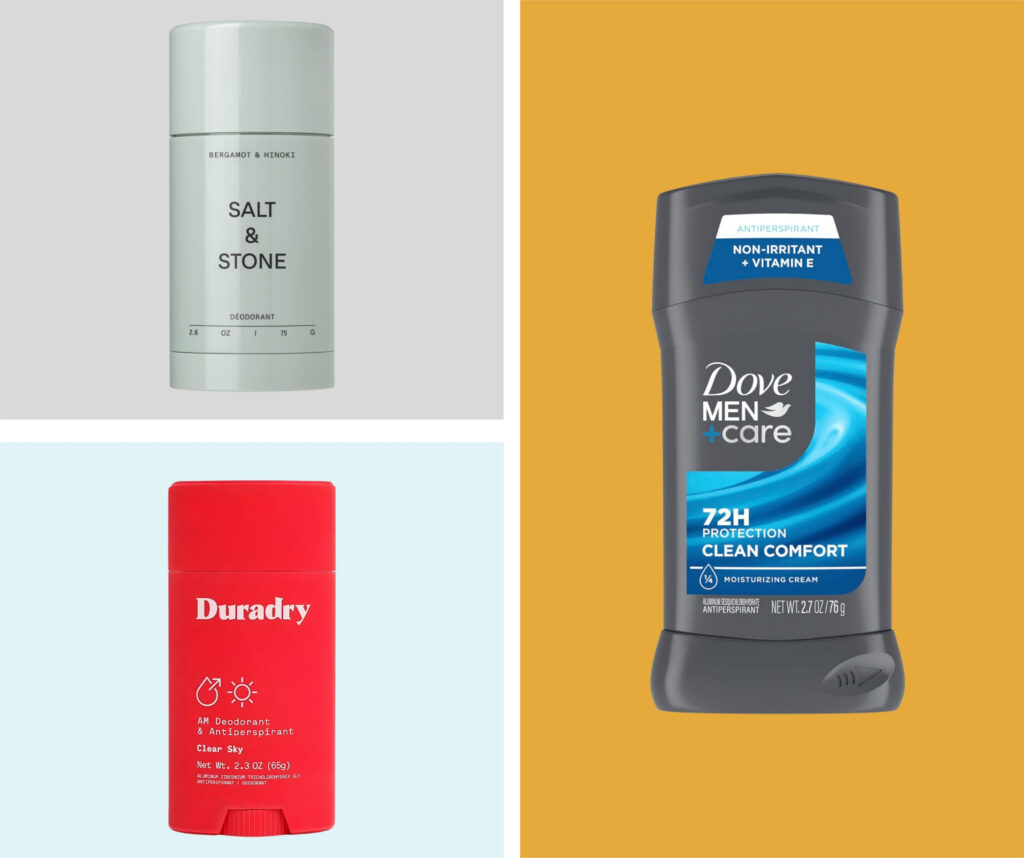
Here is the thing nobody tells you in this aisle. An antiperspirant is legally a drug. A deodorant is legally a cosmetic. That isn’t a technicality, it’s the whole map: the antiperspirant has to print its active ingredient and exact strength on a Drug Facts panel and hit a published performance standard, and the deodorant has to do neither.
So we read the panels. Every percentage on this page comes off the product’s own FDA-registered label, not off the front of the pack, and you can click through to verify any of them.
Start with what "24-hour protection" legally means, because it isn’t what you think: at least 20% less sweat. That’s the entire bar. A stick can promise all-day protection while you still sweat four fifths as much as you otherwise would.
Every Strength On This Page, Straight Off The Label
Antiperspirants are legally drugs, so the strength has to be printed on the back of every single one. Almost nobody turns the pack over. Here they all are, sorted by how close each gets to the strongest its type is allowed to be.
What’s Actually In The Stick
Antiperspirants come in a few different active ingredients, and each one has its own legal strength limit. So the bar shows how close each product gets to the maximum for its own type, which is the only comparison that actually means anything.
The standard typemaxes out at 20%
What’s in most sticks and gels. It’s capped at 20%, so a 20% stick is as strong as an antiperspirant gets without a prescription.
The heavy-duty typemaxes out at 15%
What doctors reach for with heavy sweating. Capped at 15%, goes on at night, washes off in the morning, and it can sting.
The spray typemaxes out at 25%
The only type that works properly in an aerosol. Capped higher, at 25%, and sprays are usually formulated below that.
The gentle typemaxes out at 25%
A milder salt, often used for sensitive skin. Also capped at 25%, and almost always formulated well under it.
These don’t block sweat at all4
Two products with the same number on the back can still perform differently, because the thing that drives real sweat reduction isn’t printed on any label. Treat the percentage as a floor rather than a score. The legal limits are set by the FDA, and the fuller answer is in the FAQ.
Two Different Problems, Sold On One Shelf
Sweating and smelling aren’t the same complaint and they don’t have the same fix. Say which one is actually yours.
You need an antiperspirant, and probably a stronger one than you own
Only an antiperspirant reduces sweat. It’s legally a drug, it carries a Drug Facts panel, and the active ingredient is an aluminum salt that forms a temporary plug in the sweat duct. No deodorant does this, and none is allowed to claim it does.
Start with these
This is the Hyperhidrosis Disease Severity Scale, a validated clinical instrument, quoted word for word. Pick the line that’s actually true for you.
Sixteen Picks, Grouped By The Problem They Solve
Every card carries the product’s actual Drug Facts panel and a link to verify it. Where a product is a cosmetic rather than a drug, the card says so plainly, because that tells you what it can and can’t do.
At The Legal Ceiling
All three are as strong as an antiperspirant is legally allowed to be. There’s no such thing as a stronger one sold over the counter, whatever the packaging on the shelf next to them says.
The cheapest way to buy the strongest thing on the shelf
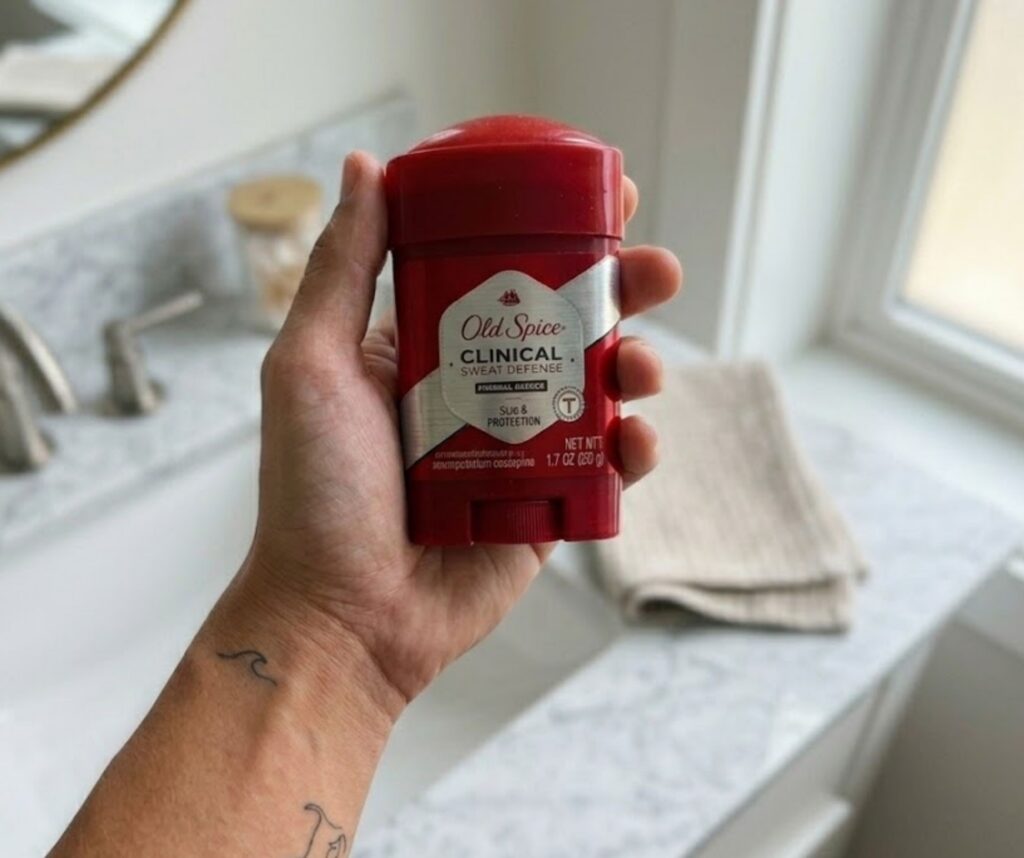
Old Spice Clinical Sweat Defense
This is the value answer to the whole category. It’s at the legal maximum strength and it costs about four dollars an ounce. The Gillette gel next to it on the shelf is exactly as strong and costs a dollar more per ounce.
The Directions on the panel tell you to apply three to four clicks at bedtime, which is the correct way to use any antiperspirant and which almost nobody does.
Old Spice also sells a non-clinical Sweat Defense that says EXTRA STRONG on the pack. That one is 19%, not 20%, and it sits right next to this one. The word that matters on the label is Clinical, not the shouting.
you want maximum strength and you’d rather not pay for the packaging.
you want something that goes on clear or dries fast. Soft solids are tacky.
The Numbers
The Numbers
Ceiling strength that doesn’t leave marks on a dark shirt
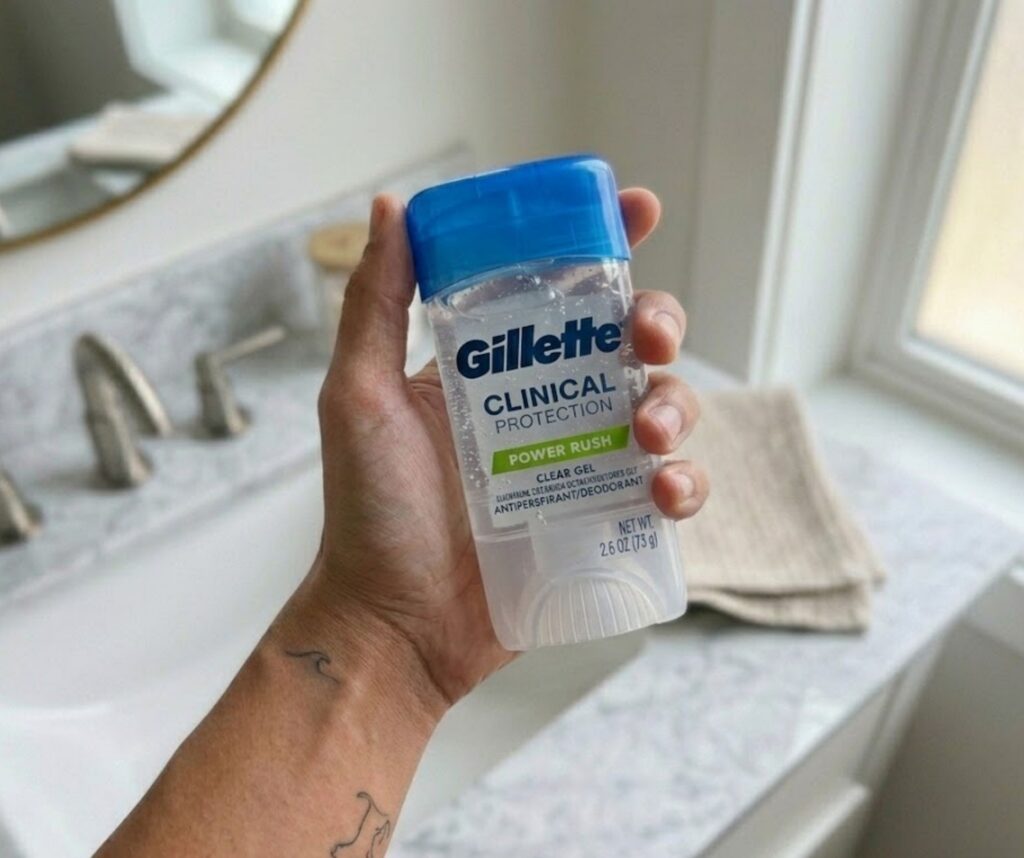
Gillette Clinical Clear Gel
Same maximum strength as the Old Spice, delivered as a clear gel instead of a soft solid. If you wear a lot of dark shirts and you’re tired of the chalky smear, this is the one to buy.
The trade is drying time. A gel goes on wet and needs a minute before you get dressed, which is another argument for the bedtime application its own Directions recommend.
Flip this and the Old Spice over and the active ingredients read as two different mouthfuls. They’re the same family, they’re both capped at 20%, and they’re both sitting at that cap. The long chemical name tells you nothing at all about how strong something is.
you want the ceiling strength without the white residue.
you get dressed in a hurry. Gel needs a moment.
The Numbers
The Numbers
The gentlest feeling of the three at the ceiling
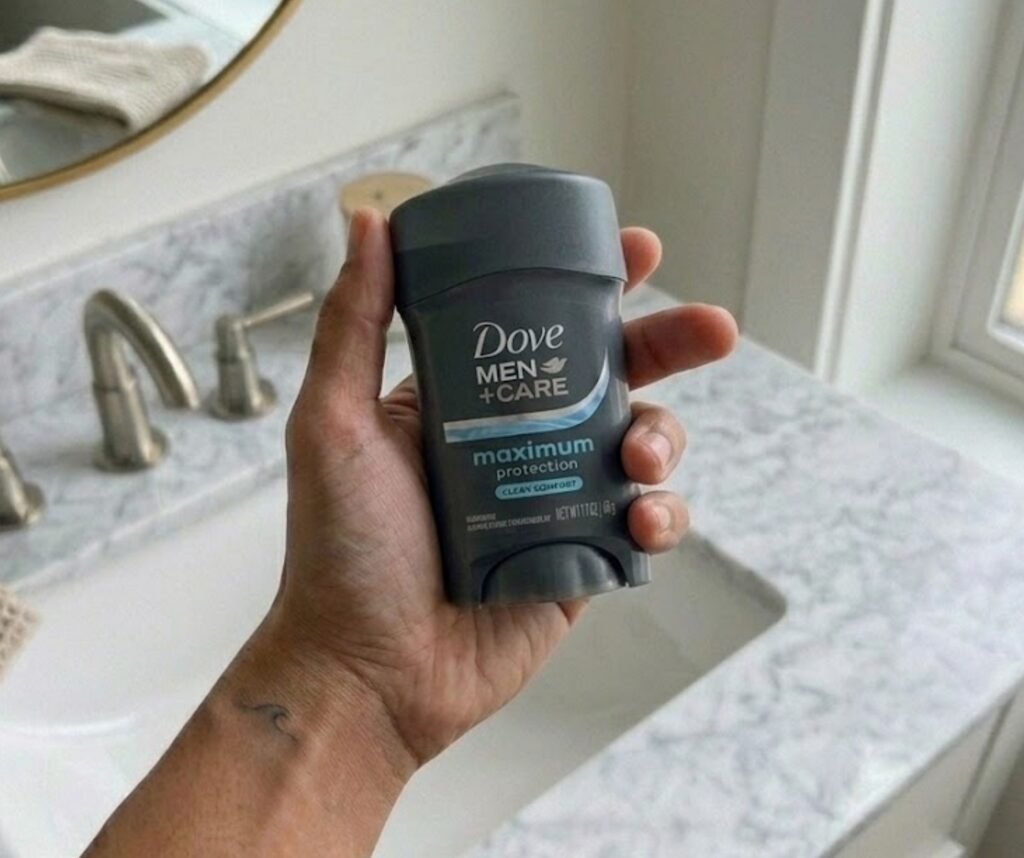
Dove Men+Care Maximum Protection Clean Comfort
The third of the 20% trio, and the one that feels least like putting on paste. Dove builds moisturizer into the base, which is why guys who find clinical formulas itchy tend to get along with this one.
It costs the most per ounce of the three, and it’s the smallest pack. You’re paying for the finish, not for extra strength, because there’s no extra strength available.
Dove renamed it. The formula didn’t change, but the word Clinical is coming off the pack and Maximum Protection is going on, and Dove has sold a weaker Maximum Protection stick under that same name before. So don’t buy the front. The one you want reads aluminum zirconium tetrachlorohydrex GLY, 20%, and says 96H on the box.
clinical formulas usually irritate you and you still want the full 20%.
you buy on price per ounce.
The Numbers
The Numbers
Sport And Heavy Sweat
Also at the ceiling, but built for people who are actually moving. Grippier finishes, longer claims, and in one case a pack that quietly got smaller.
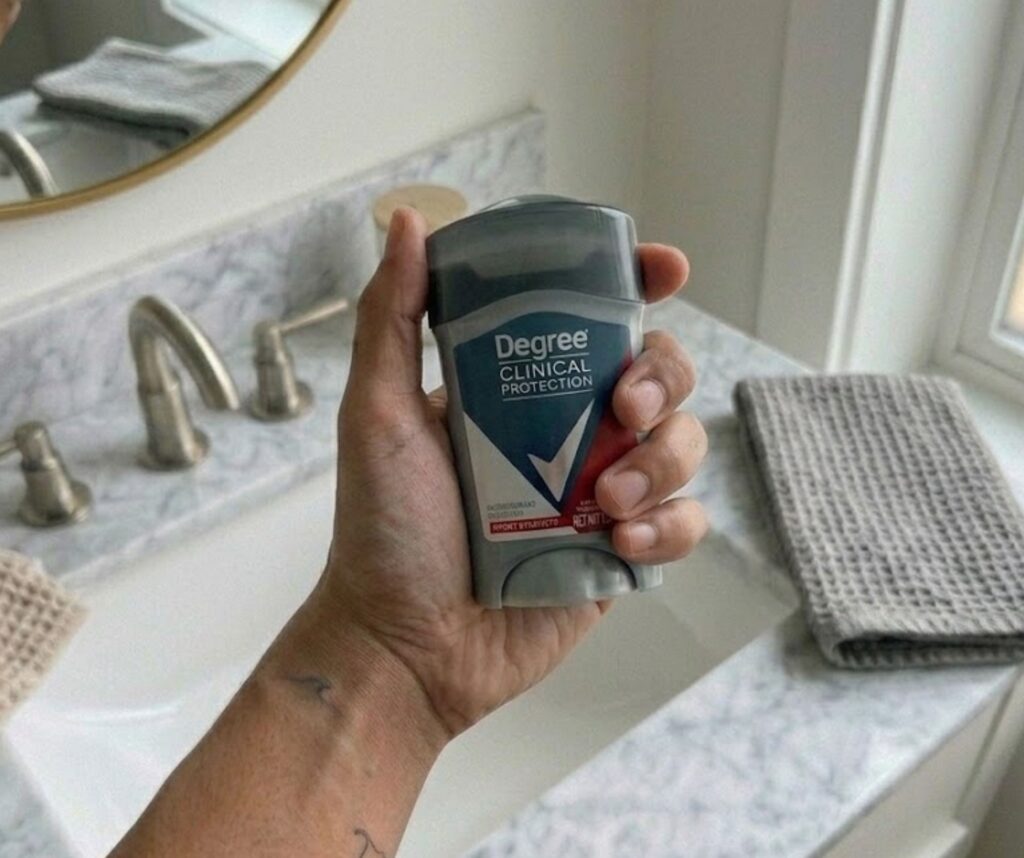
Full strength, and the pack got smaller when you weren’t looking
Degree Men Clinical Sport Strength
A maximum-strength stick aimed at people who train. Same strength and same active ingredient as the three above it, so what you’re really choosing here is the scent and the marketing.
Worth buying on sale, because on price per ounce it’s beaten by the Old Spice at the same strength.
This used to come in 1.7 oz. It’s now 1.6 oz at a similar price, which is a real per-ounce increase that no shelf tag will tell you about. Check the size on the pack rather than assuming.
you want a sport-scented version of the ceiling formula.
you’re counting ounces. The Old Spice Clinical is the same strength for less.
The Numbers
The Numbers
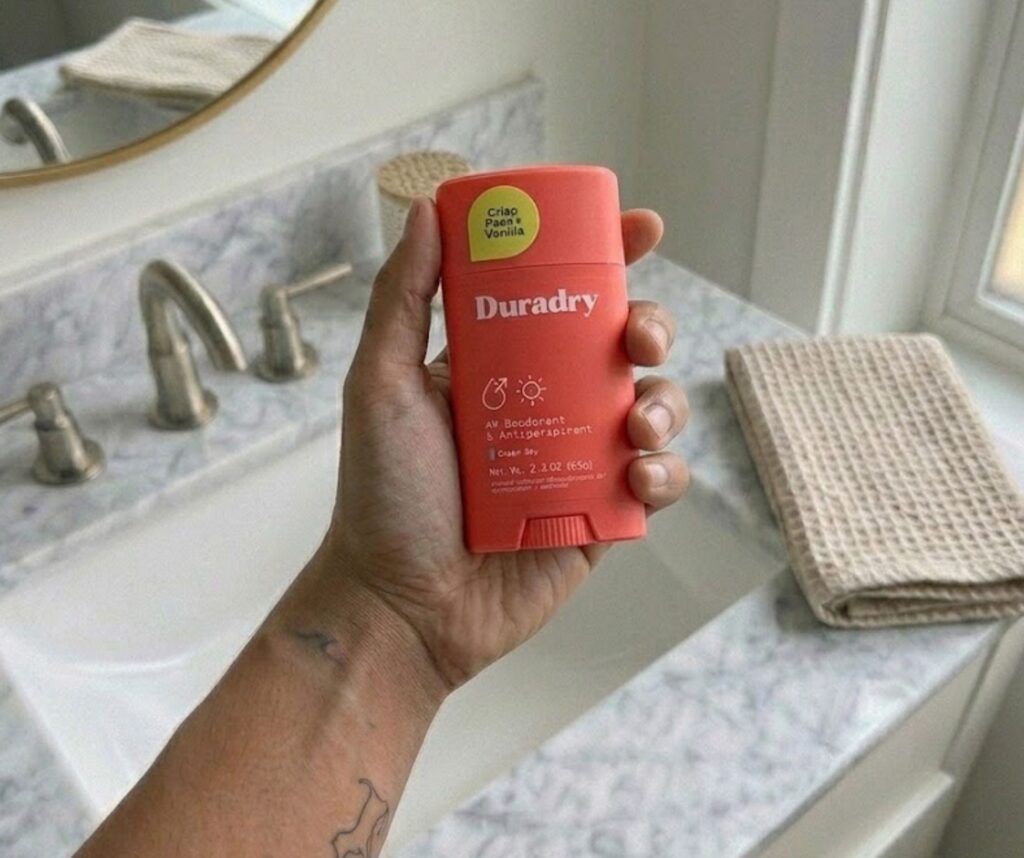
The daytime half of a two-product system
Duradry Clinical Sweat Control Stick
Duradry sells this as the morning half of a pair, with a much stronger aluminum chloride gel for nights. On its own it’s a competent maximum-strength stick in a larger pack than the drugstore clinicals.
The reason to look at it’s the system rather than the stick. If drugstore clinicals have genuinely failed you, the pairing below is the next step before a prescription.
Unlike every drugstore clinical here, this product’s registered Directions carry no bedtime instruction. That’s a labeling choice, not a chemistry one. Apply it at night anyway.
the drugstore clinicals have stopped working and you want a bigger pack.
you haven’t yet tried a 20% stick applied properly at night.
The Numbers
The Numbers
When It’s More Than Sweat
Aluminum chloride rather than aluminum zirconium. You put these on at night, you wash them off in the morning, and they can sting. This is the tier just below a prescription.
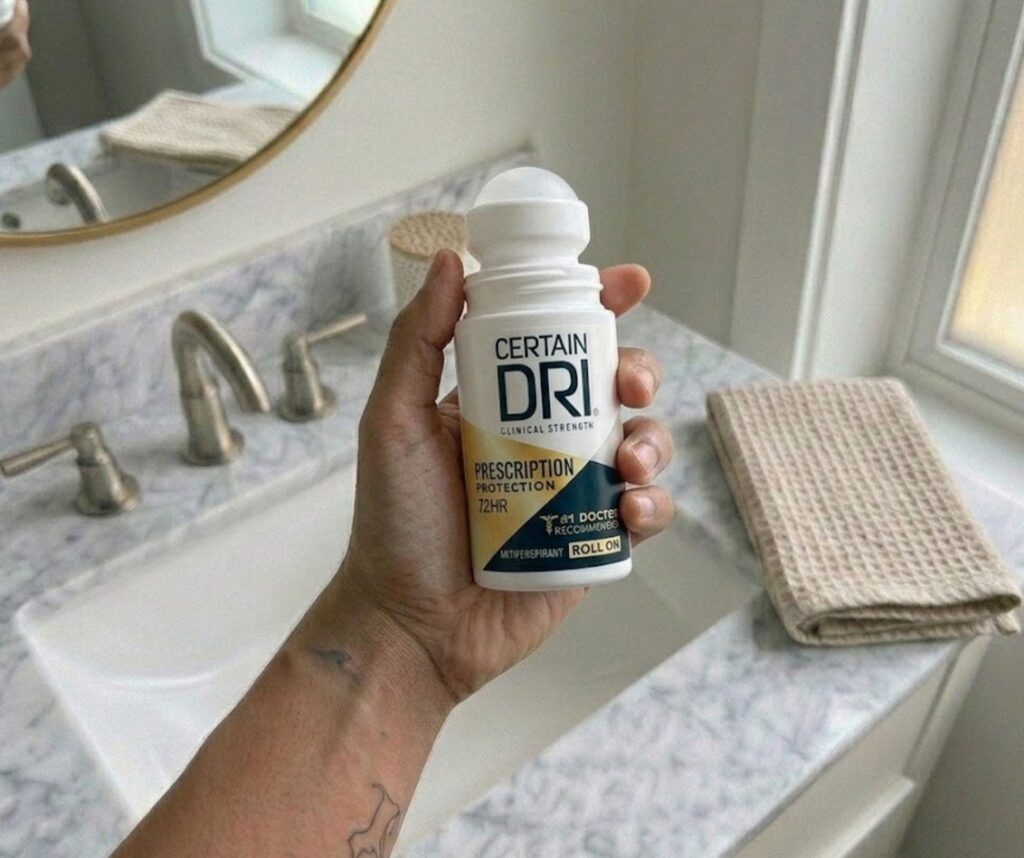
A different salt, a different job, and it can burn
Certain Dri Prescription Strength Clinical
This isn’t a stronger version of the sticks above. It’s a different chemical class. This is the ingredient dermatologists reach for with heavy sweating, and 15% is the legal maximum for it, so this really is the strongest thing you can buy without a prescription.
You apply it at bedtime to completely dry skin, and it’s fragrance-free, which matters because irritation is the main reason people abandon it.
Certain Dri Prescription Strength used to be 12% aluminum chloride. It’s now 15%. Both labels are still floating around in the FDA database and both numbers are still being quoted online. The current product is 15%.
ordinary clinical sticks genuinely aren’t enough.
you have sensitive skin and haven’t patch tested. Stinging is common.
The Numbers
The Numbers
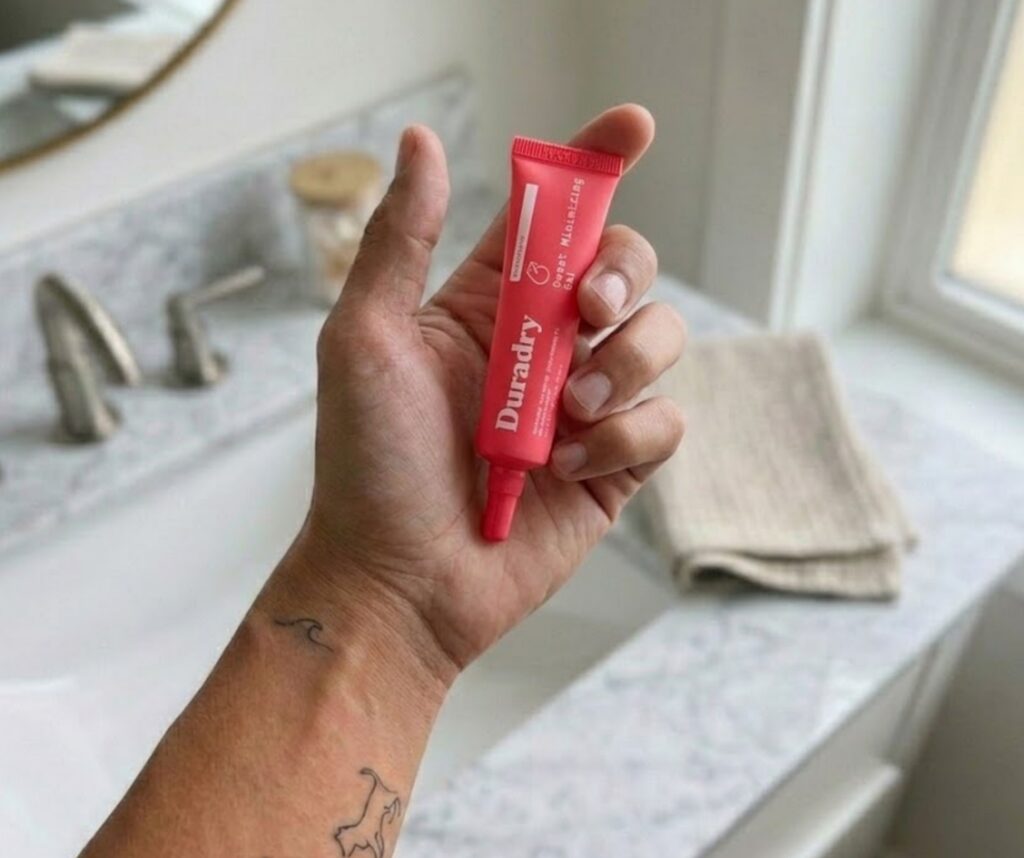
Goes on at night, gets washed off in the morning
Duradry PM Intensive Gel
The closest thing on this page to what a dermatologist would hand you. Fifteen percent aluminum chloride hexahydrate, fragrance-free and alcohol-free, applied at bedtime and rinsed off when you wake up.
That rinse isn’t a suggestion. It’s how you use the strongest aluminum salt without wrecking your skin, and it’s exactly how prescription aluminum chloride is dosed.
If you get here and still soak through shirts, the product isn’t the answer. That’s the point where the guide should stop and a doctor should start. Use the picker above to check yourself against the clinical scale.
you have tried the ceiling sticks properly, at night, and they aren’t enough.
you have broken or freshly shaved skin. Aluminum chloride and a razor nick is a bad night.
The Numbers
The Numbers
Everyday Antiperspirant
What most guys should actually buy. Enough sweat control for a normal day without the tackiness of a clinical formula.
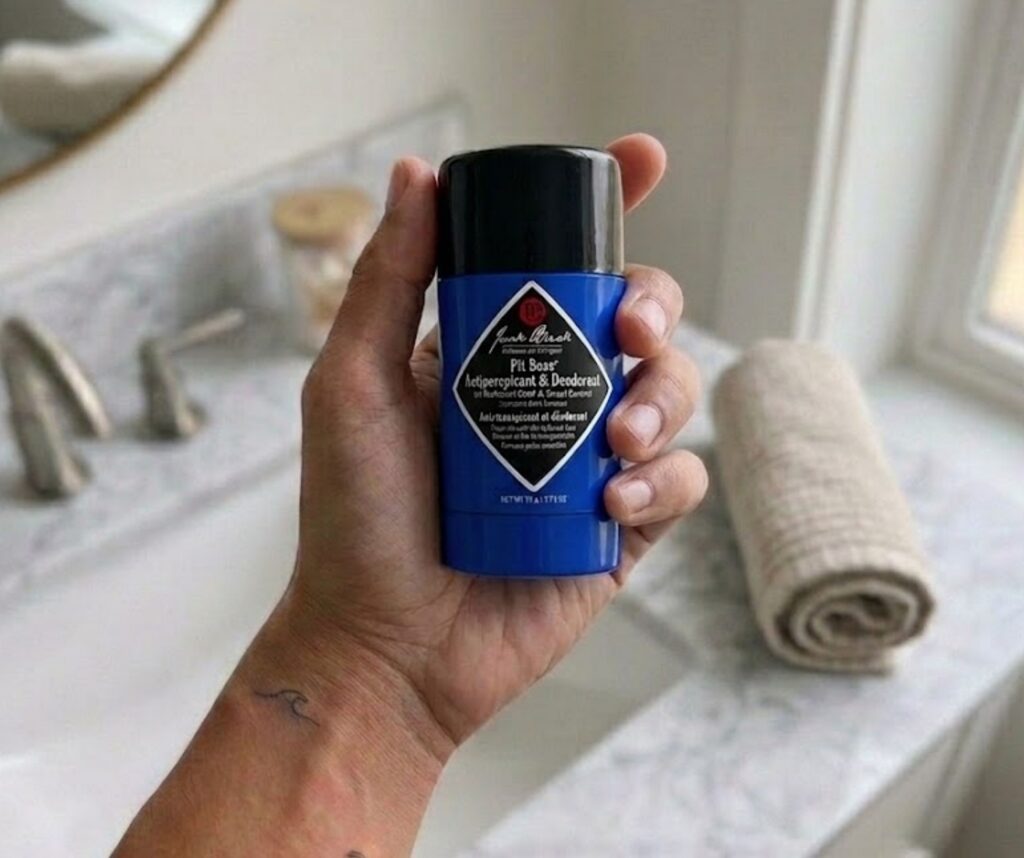
Ceiling strength that doesn’t look like a drugstore product
Jack Black Original Pit Boss
Most premium grooming sticks are weaker than the drugstore clinicals and cost three times as much. This one isn’t. It’s 20% aluminum zirconium, the same ceiling as the Old Spice Clinical, in a bigger pack with a better finish and a much better bathroom shelf presence.
You’re paying about twice the per-ounce price for that, which is a fair trade if you like the stuff you own.
The registered Drug Facts panel for this product spells the active ingredient "Tretrachlorohydrate." It’s a misspelling of tetrachlorohydrate that made it all the way onto FDA-registered labeling. The product is fine. The proofreading wasn’t.
you want full strength and you care what it looks like on the shelf.
you want the same chemistry for a quarter of the money, which is available.
The Numbers
The Numbers

What most guys actually need, at the price most guys want
Dove Men+Care Clean Comfort
Fifteen point two percent of the same active ingredient the clinical sticks use at twenty. That isn’t a con. Most people don’t need the ceiling, and the lower concentration is less tacky, less irritating and considerably cheaper per ounce.
If you sweat a normal amount and you have never had a problem, this is the honest recommendation and everything above it on this page is more than you need.
Dove’s unscented Men+Care stick is 14.8% rather than 15.2%. That’s a small difference and probably not one you’d feel, but it’s a real one, and it’s the kind of thing you only find by reading the panel.
you sweat a normal amount and want to stop overthinking this.
you soak through shirts. Go up to a 20%.
The Numbers
The Numbers
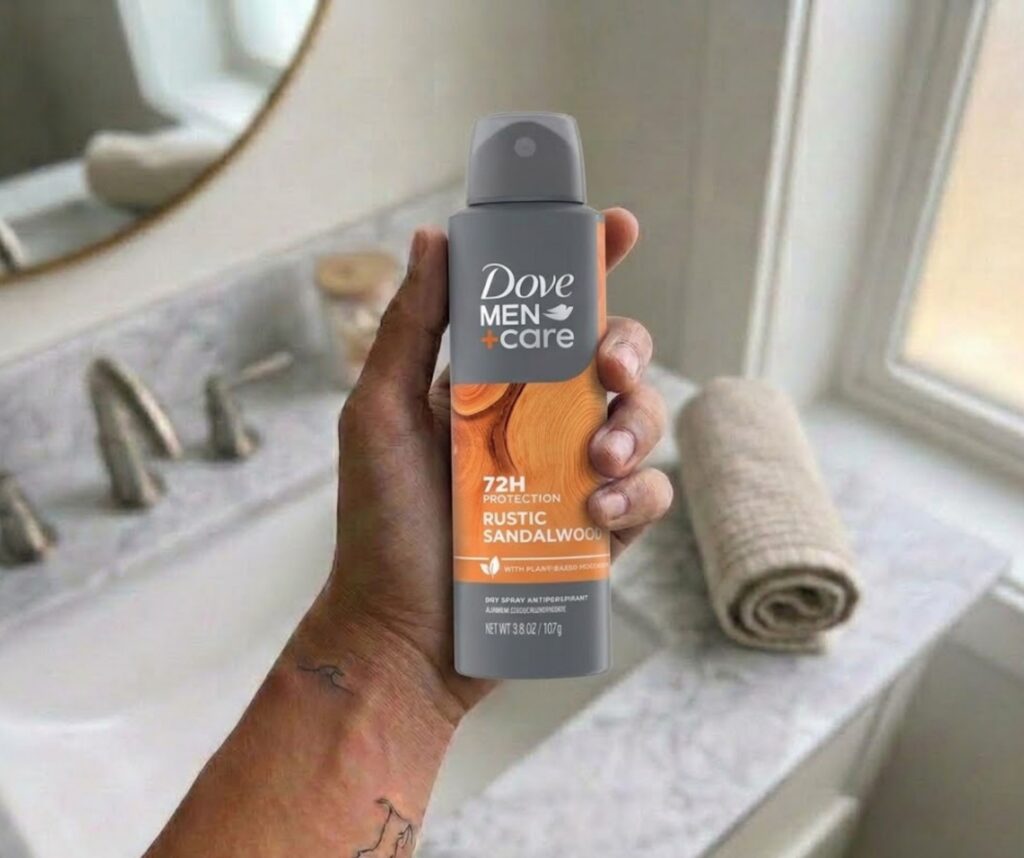
The best aerosol on the shelf, and the cheapest per ounce here
Dove Men+Care Dry Spray
If you want a spray, this is the one. It runs 20.2%, but sprays have to use a different active ingredient with a higher legal cap, so that number isn’t comparable to the clinical sticks. What it is, is high for a spray.
It’s also the cheapest thing on this page per ounce, by a distance.
Their Extra Fresh dry spray is 15.2%. This Sandalwood one is 20.2%, and the two use different active ingredients. Same brand, same shelf, same format, meaningfully different product. The only way to tell them apart is to read the back.
you want a spray and you want it to actually do something.
you want the same active the clinical sticks use. It isn’t allowed in an aerosol.
The Numbers
The Numbers
Sensitive Skin And Fragrance-Free
The worst-served corner of this category. Deodorant is the single biggest cause of fragrance allergy in men, and almost nothing here is genuinely fragrance-free.
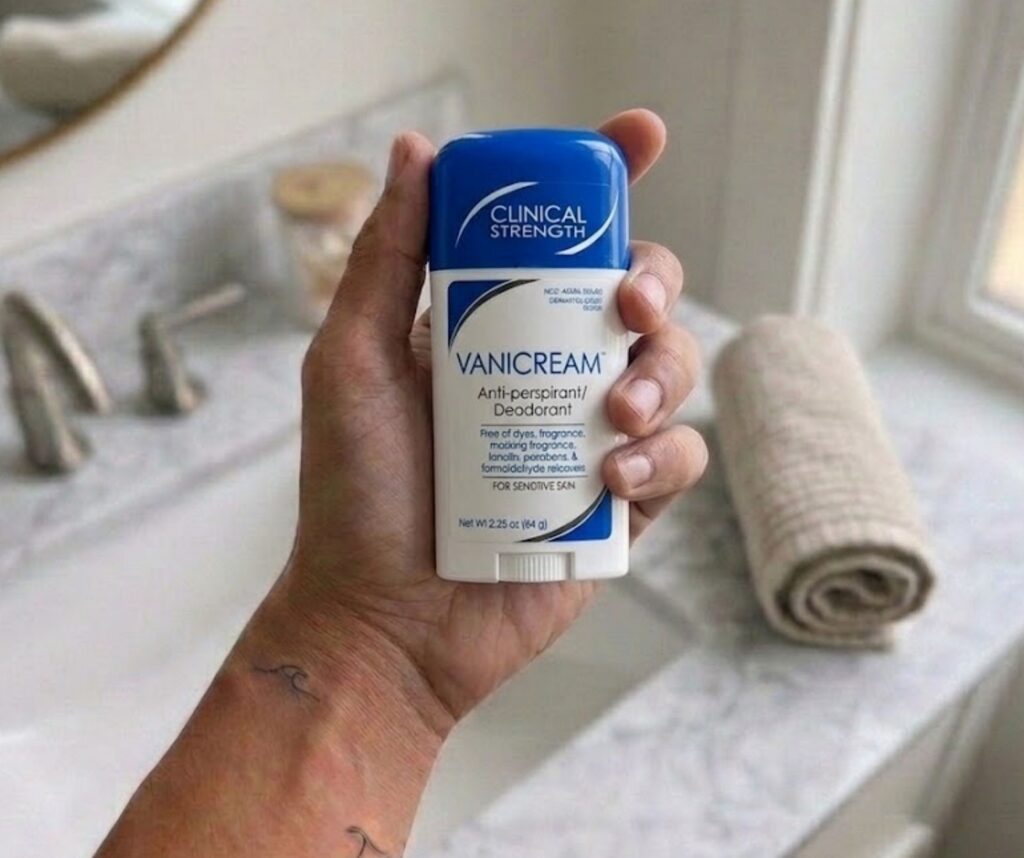
The only genuinely fragrance-free product here that’s also at the ceiling
Vanicream Anti-Perspirant / Deodorant
This is the single most useful product on the page for anyone whose armpits have ever reacted. It’s 20% aluminum zirconium, so it gives up nothing on strength, and it’s genuinely fragrance-free rather than merely unscented.
That combination barely exists. Of the products researched for this guide, four had a real fragrance-free option and only this one paired it with full strength.
In a study of 17,716 patch-tested patients, deodorants caused a quarter of all fragrance allergy cases, and were significantly more often the culprit in men than in women. If your underarms react, the odds favor the perfume over the aluminum salt. Switching to this before going aluminum-free is the cheaper experiment.
you have reacted to a deodorant before and you still want it to work.
you want your antiperspirant to smell like something.
The Numbers
The Numbers

Twenty percent of a gentler salt, which isn’t the same as twenty percent
Carpe 100H Antiperspirant, Fragrance Free
Fragrance-free, and its Directions tell you to use it at night and again in the morning, which is the regimen the International Hyperhidrosis Society actually recommends.
The number needs context though, and this is exactly the kind of thing the panel tool above exists for.
This is 20% of a gentler active whose legal cap is 25%, so it’s sitting at about four fifths of its own maximum. The clinical sticks are 20% of a stronger one whose cap is 20%, so they’re maxed out. Same number on the front, different amount of sweat control, and gentler is exactly the point here.
you want fragrance-free and a gentler salt than the clinicals.
you need maximum sweat control. This isn’t the strongest option.
The Numbers
The Numbers

No aluminum, no fragrance, no baking soda, all in one stick
Each & Every Nothing On
If you’ve reacted to both fragrance and baking soda, your options collapse to almost nothing. This is the one that clears both hurdles in a single product without feeling like a science experiment.
The odor work is done by piroctone olamine, a real antimicrobial, backed by magnesium hydroxide and magnesium carbonate. Magnesium salts are far less soluble than baking soda and sit at a lower pH, which is why they’re gentler on skin.
Nothing in this group will. A product that reduced perspiration would legally be a drug and would carry a Drug Facts panel. This is a cosmetic, and it’s working on the bacteria rather than the sweat.
fragrance and baking soda have both burned you before.
sweat rather than smell is your actual problem.
The Numbers
The Numbers
Aluminum-Free Deodorant
These do nothing about sweat, by law as much as by chemistry. They work on the bacteria that turn odorless sweat into a smell. Judge them on which antimicrobial they use.
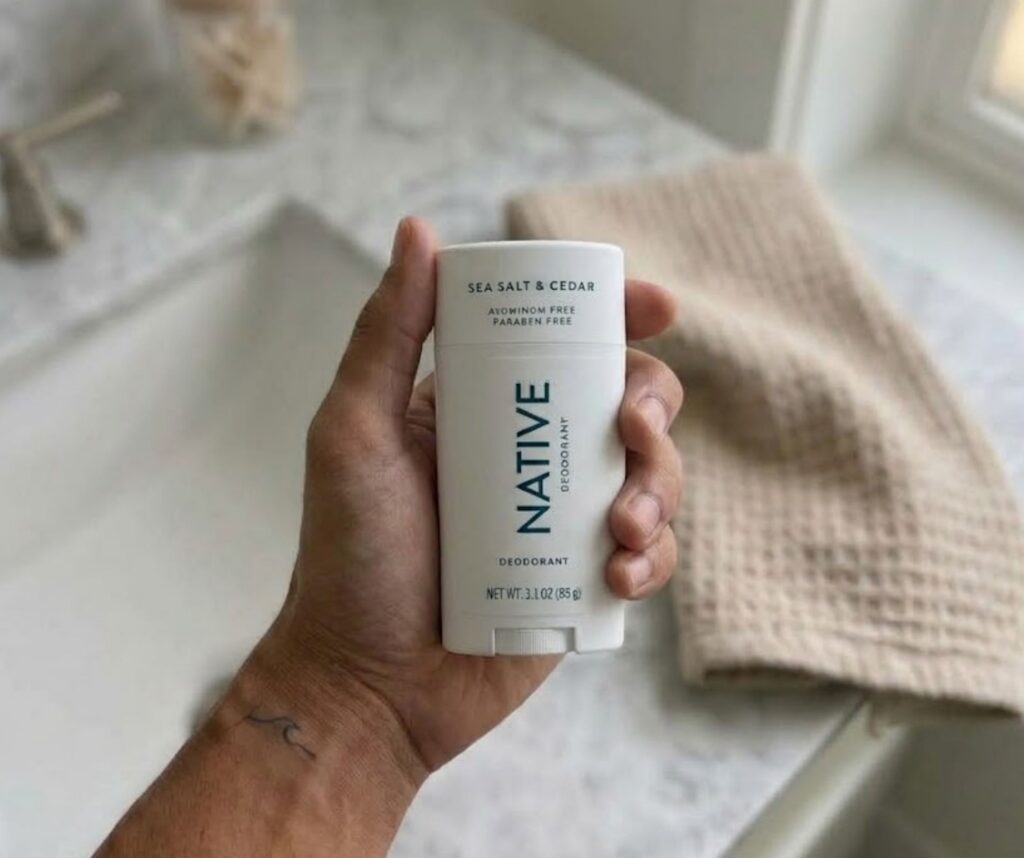
Reformulated in 2026, and the old one is still on the shelf
Native Deodorant Stick
Native rebuilt this in June 2026 and took the baking soda out. The new formula runs on piroctone olamine as the antimicrobial, with magnesium oxide neutralizing odor, tapioca starch absorbing moisture and cyclodextrin trapping odor molecules. If you wrote Native off years ago because it gave you a rash, the reason you did that’s gone.
There’s an Unscented version, and Native says plainly that unscented means no fragrance rather than masked fragrance, which is a distinction most of this category blurs.
The old baking soda formula is still being sold as the Plastic Free Deodorant Stick, marked Last Chance, at the same price from the same brand. Two products, same name, same shelf, and only one of them has sodium bicarbonate in it. If bicarb is why you’re here, read the tube.
you want a mainstream natural stick and bicarb was your dealbreaker.
you need sweat control rather than odor control.
The Numbers
The Numbers
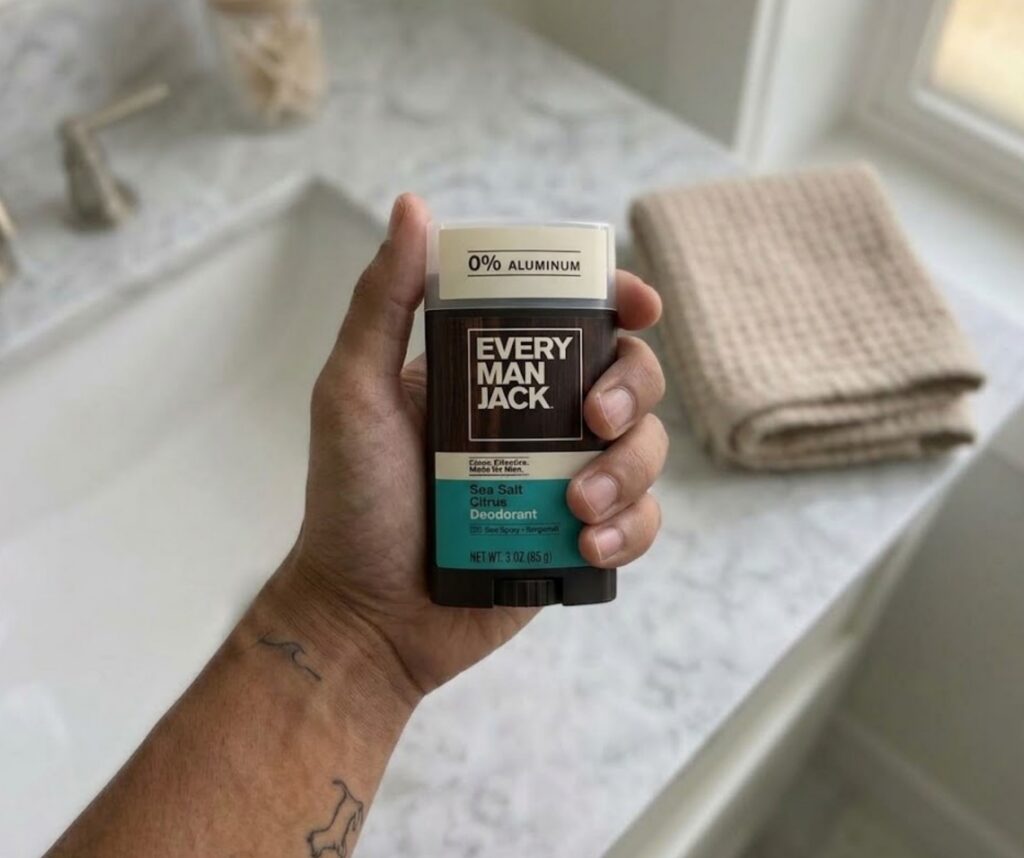
The most actual chemistry per dollar in this group
Every Man Jack Aluminum Free Deodorant
Triethyl citrate is the active idea here, and it’s a genuinely clever one. Skin esterases hydrolyze it into citric acid, which lowers the surface pH and interferes with the bacterial enzymes that turn odorless sweat into smell. It’s targeting the mechanism rather than covering the result.
At under three dollars an ounce it’s a third the price of the boutique sticks and it’s doing more than most of them.
Every Man Jack sells a 2.7 oz Sea Salt version running an entirely different older formula built on lichen extract, with no triethyl citrate. Same brand, same aluminum-free badge, different chemistry. Match the size and the scent, not just the label.
you want a functional aluminum-free stick and you aren’t paying twenty dollars for one.
you need fragrance-free. There’s no current unscented option.
The Numbers
The Numbers
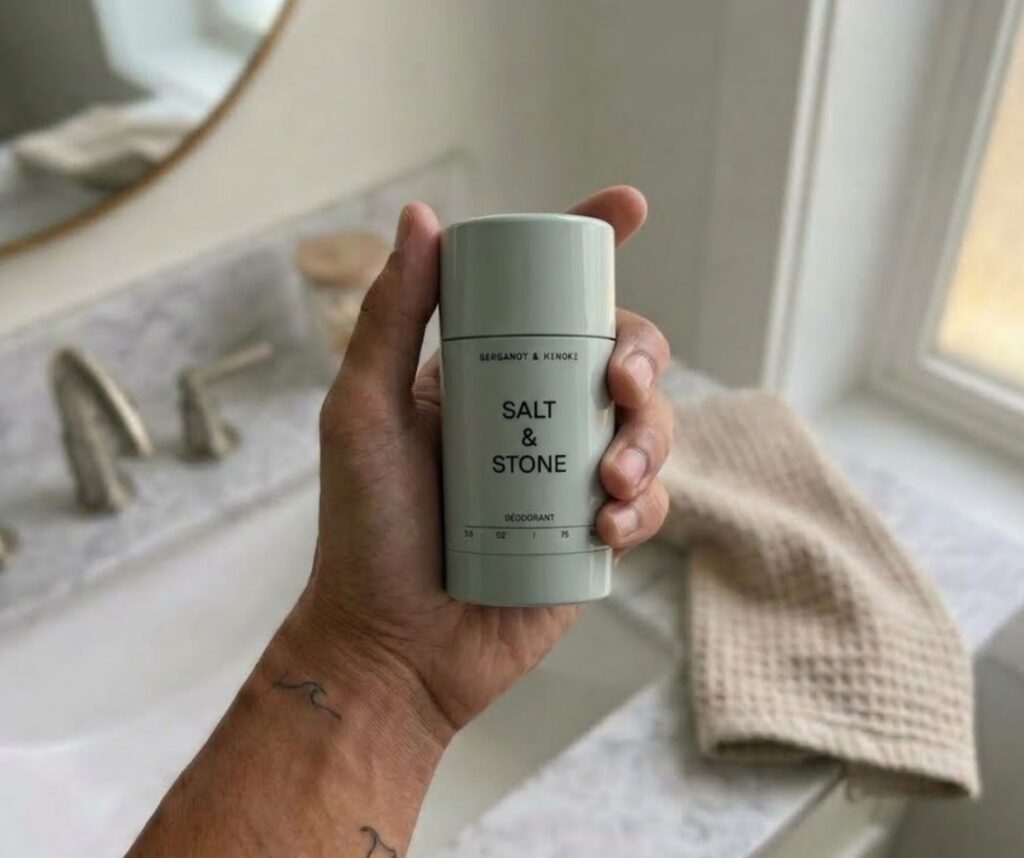
The good-smelling one, and specifically the version without baking soda
Salt & Stone Deodorant Gel
This is the premium natural stick that people actually repurchase, and the scent is most of why. The functional work is done by glyceryl caprylate and glyceryl undecylenate, both real antimicrobials, with arrowroot and corn starch handling moisture.
Buy this one rather than the brand’s Extra Strength stick, for a reason that costs you nothing.
Salt & Stone’s Aluminum-Free Extra Strength stick is also $20 for 2.6 oz, and it does contain sodium bicarbonate. This gel doesn’t. You aren’t paying a premium to avoid the ingredient most likely to irritate you, you just have to pick up the right one of the two.
you want it to smell expensive and you’d rather not gamble on bicarb.
you’re buying on price. There’s better chemistry here for eight dollars.
The Numbers
The Numbers
You’re Probably Putting It On At The Wrong Time
Put antiperspirant on at night, on completely dry skin. Not in the morning. This costs nothing, works with the product you already own, and most guys have never heard it.
The reason is mechanical. The aluminum salt has to meet sweat inside the duct and aggregate its proteins into a plug, and that takes time. You sweat least while you’re asleep, so an overnight application gets hours to form that plug instead of being flushed straight back out. The plug then lasts at least 24 hours, which is why your morning shower doesn’t undo it.
This isn’t a life hack somebody made up. The American Academy of Dermatology says to apply before bed and save deodorant for the morning. The International Hyperhidrosis Society says that if you’re only going to apply once, make it before bed. And 7 of the antiperspirants on this page carry "apply at bedtime" in the FDA-regulated Directions on their own label.
Six Things You’ve Been Told That Aren’t True
Each of these is checkable against a regulation, a named health body or a published study, and each one is sourced.
That’s the entire bar. The rules set two tiers: a product needs a 20% reduction to claim all-day or 24-hour protection, and 30% to claim extra effective. A stick can legally promise 24-hour protection while you still sweat 80% as much as you otherwise would. Nothing else in this category reframes the shelf as fast as that one number.
Source: 21 CFR 350.50 and the FDA effectiveness testing guidelinesThe aluminium is in the formula, stoichiometrically. One major crystal brand describes its stick as made with just one ingredient, potassium alum, and calls it always aluminum free in the same block of copy. A $42 luxury roll-on does the same trick more carefully, saying it was created without aluminum chloride, chlorohydrate or zirconium, which is true, and tells you nothing about the alum it does contain.
Source: PubChem, and the brands’ own product pagesThe National Cancer Institute states that no scientific evidence links these products to breast cancer. The American Cancer Society says there’s currently limited evidence to conclude that antiperspirant use increases risk, and notes that none of the major health organizations have found a conclusive link. Worth knowing what the one aluminum-related warning on the panel actually is: ask a doctor before use if you’ve kidney disease, which is about renal clearance, not cancer.
Source: National Cancer Institute and American Cancer SocietyThe absorbed dose of aluminium through skin has been measured at 0.00052% in a human tracer study, so there’s no depot to clear. What does happen is measurable though: when people stop using antiperspirant, the bacteria in the armpit shift within days toward Corynebacterium, which is the genus most strongly associated with body odor. So the transition is real, it’s microbial rather than toxicological, and it’s the kernel of truth the marketing is built on.
Source: EU Scientific Committee on Consumer Safety, and a 2016 study in PeerJAmong 17,716 consecutively patch-tested patients, one in ten had a fragrance allergy, and deodorants accounted for a quarter of those cases. Deodorant was significantly more often the culprit in men than in women. Going aluminum-free is the change almost everyone makes first, and it changes the wrong variable. Try fragrance-free at full strength first.
Source: Contact Dermatitis, 2011Old Spice sells a Sweat Defense stick that says EXTRA STRONG on the pack and reads 19%, sitting right next to its Clinical version at 20%. Dove has renamed its 20% clinical stick Maximum Protection, so the word that actually meant something is coming off the pack while the formula stays put. And a well known aluminum-free deodorant is called Sweat Defense while containing no antiperspirant active at all, which is a sweat claim on a product that legally can’t make one. Not one of those names is regulated. The panel on the back is.
Source: the products’ own Drug Facts panels on DailyMedAll 16, Sortable
Tap any column to sort. Sorting by strength is worth doing, as long as you read the type column next to it, because that’s what makes two identical-looking numbers mean different things.
| Product ▴▾ | Price ▴▾ | Per ounce ▴▾ | Type ▴▾ | Strength ▴▾ | Fragrance-free ▴▾ |
|---|---|---|---|---|---|
| Old Spice Clinical Sweat Defense | $6.98 | $4.11 | The standard type | 20% | No |
| Gillette Clinical Clear Gel | $12.97 | $4.99 | The standard type | 20% | No |
| Dove Men+Care Maximum Protection Clean Comfort | $10.99 | $6.46 | The standard type | 20% | No |
| Degree Men Clinical Sport Strength | $8.87 | $5.54 | The standard type | 20% | No |
| Duradry Clinical Sweat Control Stick | $15.99 | $6.95 | The standard type | 20% | No |
| Certain Dri Prescription Strength Clinical | $10.82 | $9.02 | The heavy-duty type | 15% | Yes |
| Duradry PM Intensive Gel | $18 | n/a | The heavy-duty type | 15% | Yes |
| Jack Black Original Pit Boss | $22 | $8.00 | The standard type | 20% | No |
| Dove Men+Care Clean Comfort | $6.99 | $2.59 | The standard type | 15.2% | No |
| Dove Men+Care Dry Spray | $8.97 | $2.36 | The spray type | 20.2% | No |
| Vanicream Anti-Perspirant / Deodorant | $14.56 | $6.47 | The standard type | 20% | Yes |
| Carpe 100H Antiperspirant, Fragrance Free | $14.99 | $8.52 | The gentle type | 20% | Yes |
| Each & Every Nothing On | $22 | $8.80 | Deodorant, no sweat control | Cosmetic | Yes |
| Native Deodorant Stick | $14 | $5.28 | Deodorant, no sweat control | Cosmetic | No |
| Every Man Jack Aluminum Free Deodorant | $8 | $2.67 | Deodorant, no sweat control | Cosmetic | No |
| Salt & Stone Deodorant Gel | $20 | $7.69 | Deodorant, no sweat control | Cosmetic | No |
Strength is the number printed on the back of the pack. Products marked deodorant have no sweat-blocking ingredient at all.
The Things People Actually Ask
What’s the actual difference between antiperspirant and deodorant?
It’s a legal difference, not a marketing one. An antiperspirant reduces sweat, which counts as altering a body function, so the FDA regulates it as an over-the-counter drug. It has to carry a Drug Facts panel naming its active ingredient and exact concentration, and it has to meet a published performance standard to make a duration claim. A deodorant only addresses odor, so it’s a cosmetic. It needs no active ingredient, no panel, and it faces no efficacy standard at all. That’s why an aluminum-free deodorant can’t legally claim to reduce sweat, and why any product that does is telling you something about itself.
When should I put antiperspirant on?
At night, on completely dry skin. This is the single most useful thing on this page and it costs nothing. The American Academy of Dermatology says to apply it before bed and save the deodorant for morning. The International Hyperhidrosis Society says that if you’re only going to apply once, make it before you go to bed. Several products' own FDA-regulated Directions say apply at bedtime in as many words. The reason is that the aluminum salt needs to sit in the duct long enough to aggregate sweat proteins into a plug, and you sweat least overnight. The plug then lasts at least 24 hours, so your morning shower doesn’t undo it.
Is a higher percentage always stronger?
No, and this trips up almost everyone. The percentages are only comparable within the same salt class. Aluminum zirconium salts are capped at 20% by the monograph, aluminum chlorohydrate and sesquichlorohydrate at 25%, aluminum chloride at 15%. So a 20% aluminum zirconium stick is at its legal maximum while a 20% sesquichlorohydrate stick is nowhere near its own. The percentages are also calculated anhydrous with the buffer excluded, and the single biggest driver of real performance, the distribution of aluminum polymer species, isn’t printed anywhere. Two sticks with identical labels can differ by more than a third in tested sweat reduction.
Is aluminum in antiperspirant safe?
The major cancer bodies say there’s no established link to breast cancer. The National Cancer Institute states that no scientific evidence connects these products to it, and the American Cancer Society says none of the major health organizations have found a conclusive link. On absorption, the EU’s scientific committee adopted a dermal absorbed fraction of 0.00052% from a human study using a radioactive tracer. The one aluminum-related warning the FDA actually requires on the panel is to ask a doctor before use if you’ve kidney disease, because impaired kidneys clear aluminum less well. If you’d still rather not use it, that’s a perfectly reasonable preference. Just go in knowing that an aluminum-free product isn’t a weaker antiperspirant, it isn’t an antiperspirant.
Do natural deodorants stop you sweating?
No. Not a little, not eventually. If a product reduced perspiration it would meet the FDA’s definition of an antiperspirant and would have to be sold as a drug with a Drug Facts panel. A cosmetic deodorant is, by its own legal classification, not doing that. What the ingredients do is address odor: magnesium salts and baking soda raise skin pH to suppress odor-forming bacteria, triethyl citrate lowers it to block their enzymes, starches absorb moisture that’s already there, and fragrance covers what’s left.
How do I know if my sweating is a medical problem?
There’s a validated one-question scale for this, the Hyperhidrosis Disease Severity Scale, and the picker on this page uses it. If your honest answer is that sweating is barely tolerable and frequently interferes with your day, or intolerable and always does, that scores as severe and it’s worth seeing a dermatologist. Roughly 15.3 million Americans have hyperhidrosis, about 4.8% of the population, and only about half have ever discussed it with a healthcare professional. There’s a real treatment ladder past anything sold in a shop.
Our Review Process
Sixteen products, every strength claim checked against the manufacturer’s own FDA-registered labeling rather than against its advertising.
We read the back, not the front
Every strength here comes from the FDA’s own labeling database, and every card links to the exact record so you can check us. That pass found a stick called Maximum Protection that isn’t close to maximum, and one shouting EXTRA STRONG at 19% sitting right next to its own Clinical version at 20%.
We check the product still exists
Three of the products previously recommended on this page are gone: one discontinued at the brand, one sold out with no restock, and one that isn’t in the current US line at all. Six outbound links pointed at retailers that shut down years ago.
We say when a number can’t be trusted
These percentages only mean something next to others of the same type, and the biggest driver of how well one actually works never appears on the label at all. We show you the number, then tell you what it can’t tell you.