 Skip to content
Start here
Every chino sits somewhere between sweatpants and slacks. The good ones know which, and the bad ones are the reason you own a pair you never wear.
So this page has one ruler, and it's the only question anybody actually has at the moment of buying: how far up a dress code will these carry me. Every pair below is placed on that ladder against the J.Crew 770, which is the most copied straight fit in the business and almost certainly a pant you have already owned.
What decides where a pair lands is the cloth, not the cut: how much elastane is in it, whether it has a sheen, and whether it holds a line or collapses. Those are on every card, in words, because they're the things that tell you whether a chino will look right next to a jacket.
Where this guide landed
Start with the occasion
Where are you actually wearing these
Not fits and not body types. Pick the thing you're buying them for and we'll tell you what decides it and which pairs do it.
6 occasions cover almost every chino ever bought
Each one is decided by something specific about the cloth or the cut. Start with wherever you're actually going.
The lowest-stakes chino is also the hardest to get wrong
You want something that isn't jeans and isn't sweatpants, that you can put on without a plan, and that nobody will comment on in either direction. That's most of the wear most chinos get.
Buy wide rather than slim and buy cotton rather than performance. A relaxed leg reads deliberate now in a way it didn't ten years ago, and it's far more forgiving about what you happen to be doing that day. Spend less here and more on the pair you wear to work.
The words on the tag
What the fabric name actually tells you
Four fabric families in plain words: what each one does to the way a pair hangs, who it suits, and the thing about it nobody mentions.
Cotton twill with stretch
The modern default, and most of this page
What it does to the way they hang
Cotton twill with 2% to 8% elastane knitted in. You get the look and breathability of cotton with enough give to sit down in without planning ahead.
Who it suits
Almost everybody. If you have no strong opinion, this is the safe buy and it's what eight of the twelve pairs below are.
Worth knowing
Elastane is what wears out first. A pair at 2% will hold its shape for years; a pair at 8% is more comfortable on day one and more likely to bag at the knee.
The measuring stick
All twelve on the dress-code ladder
One line each, from strictly weekend to wears-with-a-blazer. The 770 is marked. Right isn't better: a pair at the left-hand end is the correct buy for most of the days most people have.
The placing comes from fabric, stretch content, sheen and cut, read off what each brand publishes. It's a judgment rather than a measurement, and it's the same judgment applied twelve times.
The shortlist
Twelve pairs, low rung to high
Everything here is in stock at full price, checked at the size level wherever the store exposes one. Two cards carry no price, because those two retailers change theirs faster than this page can be rebuilt.
Weekend, and proud of it
The bottom of the ladder, and there's nothing wrong with living here. These four are cut relaxed, made of cotton, and sized for a Saturday. Three of them cost less than a hundred dollars and the fourth is the best-documented pair on the page.
The widest leg here, on purpose
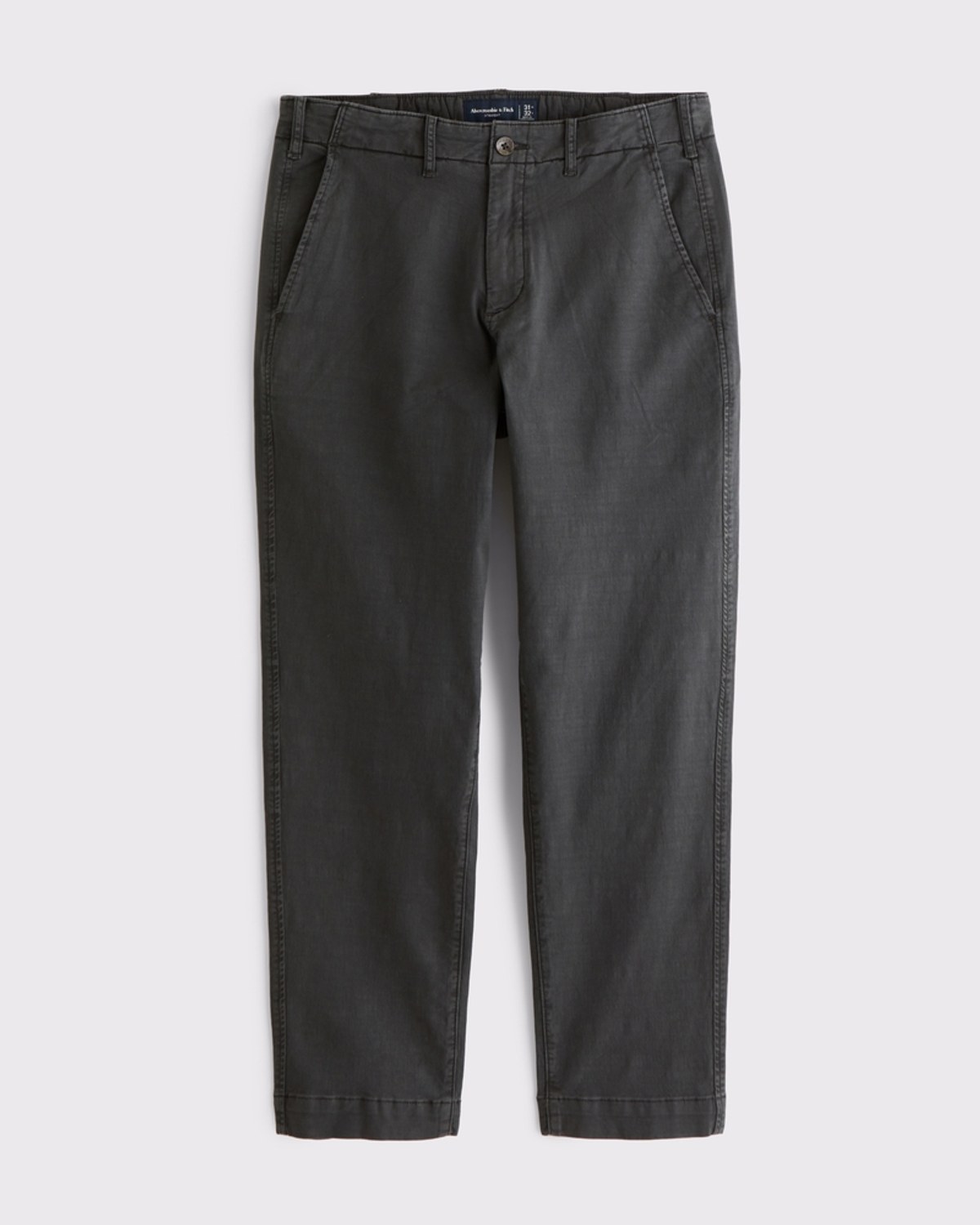
Abercrombie 90s Straight Chino
The 90s cut is the one genuinely new idea in chinos in a decade, which is funny given the name. It's a high rise, a straight leg that stays straight all the way down, and a button fly, and it reads current in a way that a slim tapered pair no longer does.
It's also the cheapest way into that silhouette from a brand that knows how to cut it. Abercrombie spent the last few years quietly getting very good at this, and eighty five dollars for a full waist and length grid is a lot of pant.
This sits higher than almost anything else here, which means it sits at a wider part of you. Measure where the band will actually land rather than assuming your usual number, because a high rise bought too small is the most uncomfortable thing in this guide.
You want the wide, high-rise cut and you'd rather not pay a hundred and fifty for it.
You want something slim. This is the opposite of slim and it won't be talked round.
The details, if you want them
What the brand publishes
The floor of the category, and honest about it
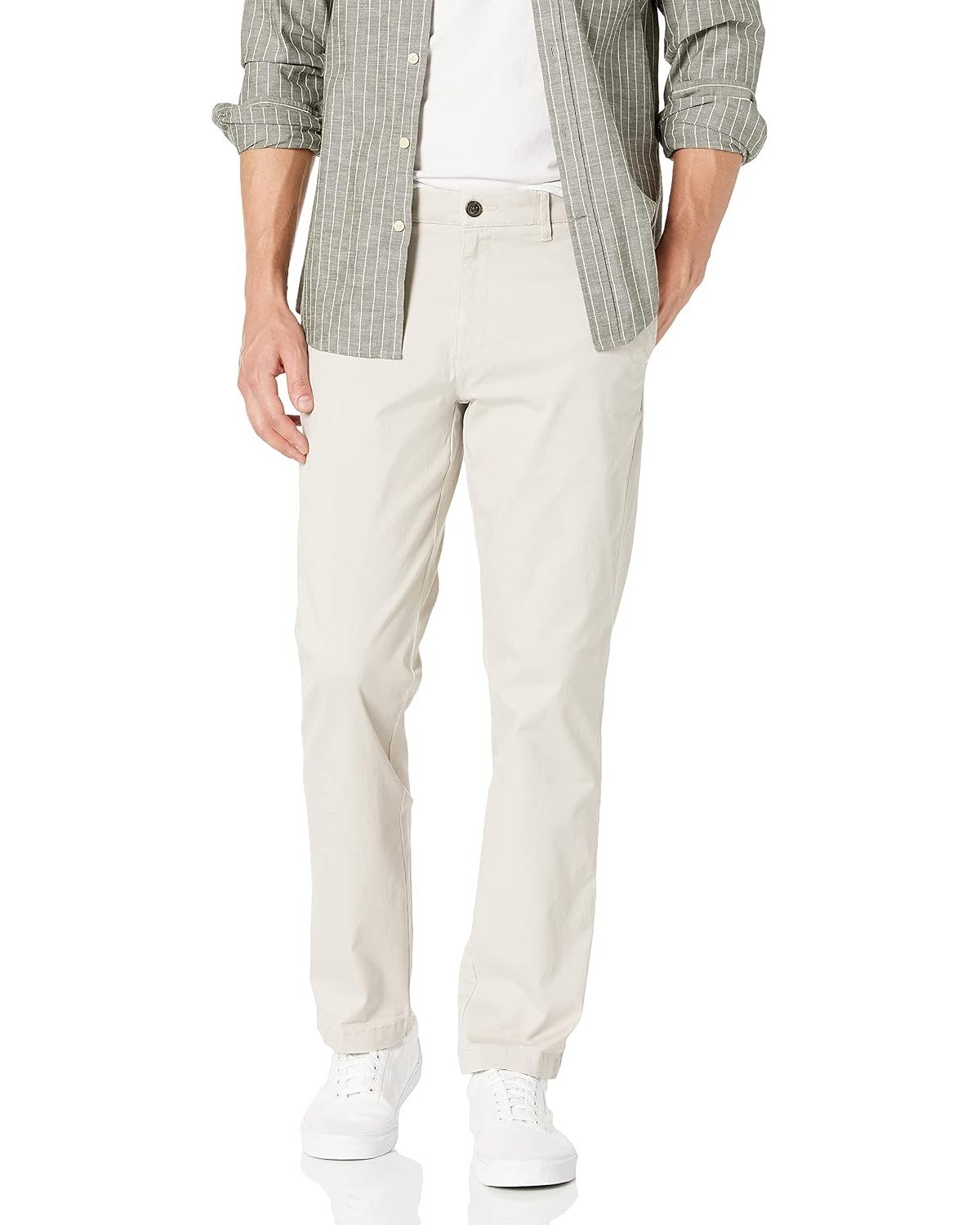
Goodthreads Straight Fit Comfort Stretch Chino
Around twenty dollars buys you a washed cotton chino that fits, holds a color and survives a wash cycle. It isn't going to last the way the pairs further down this page will, and at this price it doesn't have to.
This is the pair to buy when you need chinos in a hurry, when you're between sizes and want to find out which way you're going, or when you want a color you're not sure you'll actually wear.
Goodthreads and Amazon Essentials both make a chino and they don't fit the same, and even inside one brand a color change can mean a fit change. Order one, decide, then order the rest. Don't buy three at once.
You want a chino this week and you don't want to think about it.
You want a pair that improves with wear. This one starts good and stays level.
The details, if you want them
What the brand publishes
The only pair here you can buy on numbers
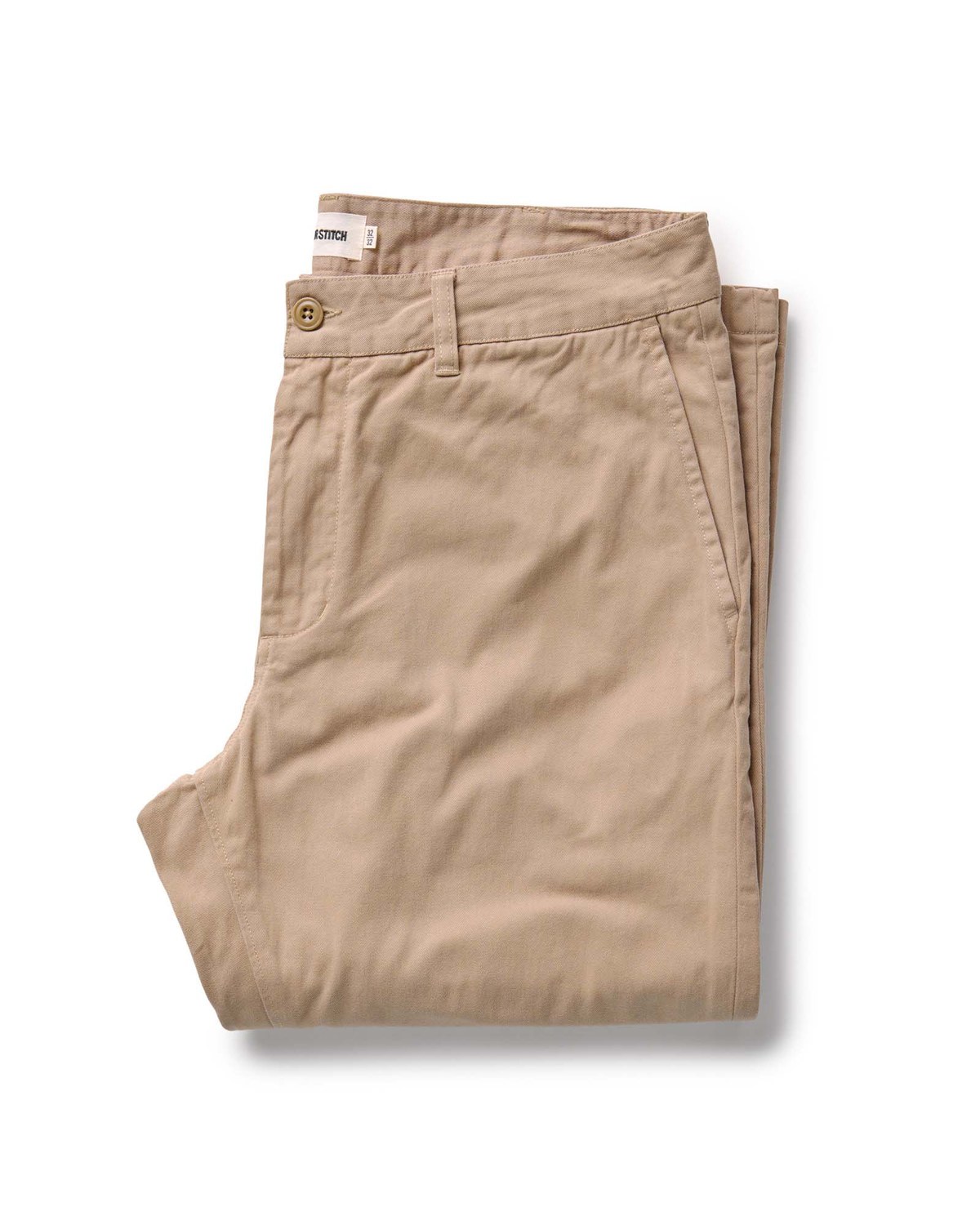
Taylor Stitch Democratic Foundation Pant
Taylor Stitch publishes the leg opening and the front rise for every single size, plus the fabric weight. Nobody else in this guide comes close, and it turns buying a chino from a guess into arithmetic. If you've ever been burned by a leg opening, start here.
The pant underneath the spec sheet is good too: 8 oz organic cotton twill, garment dyed, no stretch at all, cut with real room through the seat and thigh. It's a workwear pant wearing chino clothes and it gets better looking every wash.
Taylor Stitch makes these in batches rather than continuously, and right now the 34 inch inseam is deep while the 32 is down to a handful of waists. If your size is there, take it. If it isn't, the smoked olive colorway is currently stocked a little deeper.
You want to know the actual measurements before you spend a hundred and forty dollars.
You need stretch. This has none at all, and the first week says so.
The details, if you want them
What the brand publishes
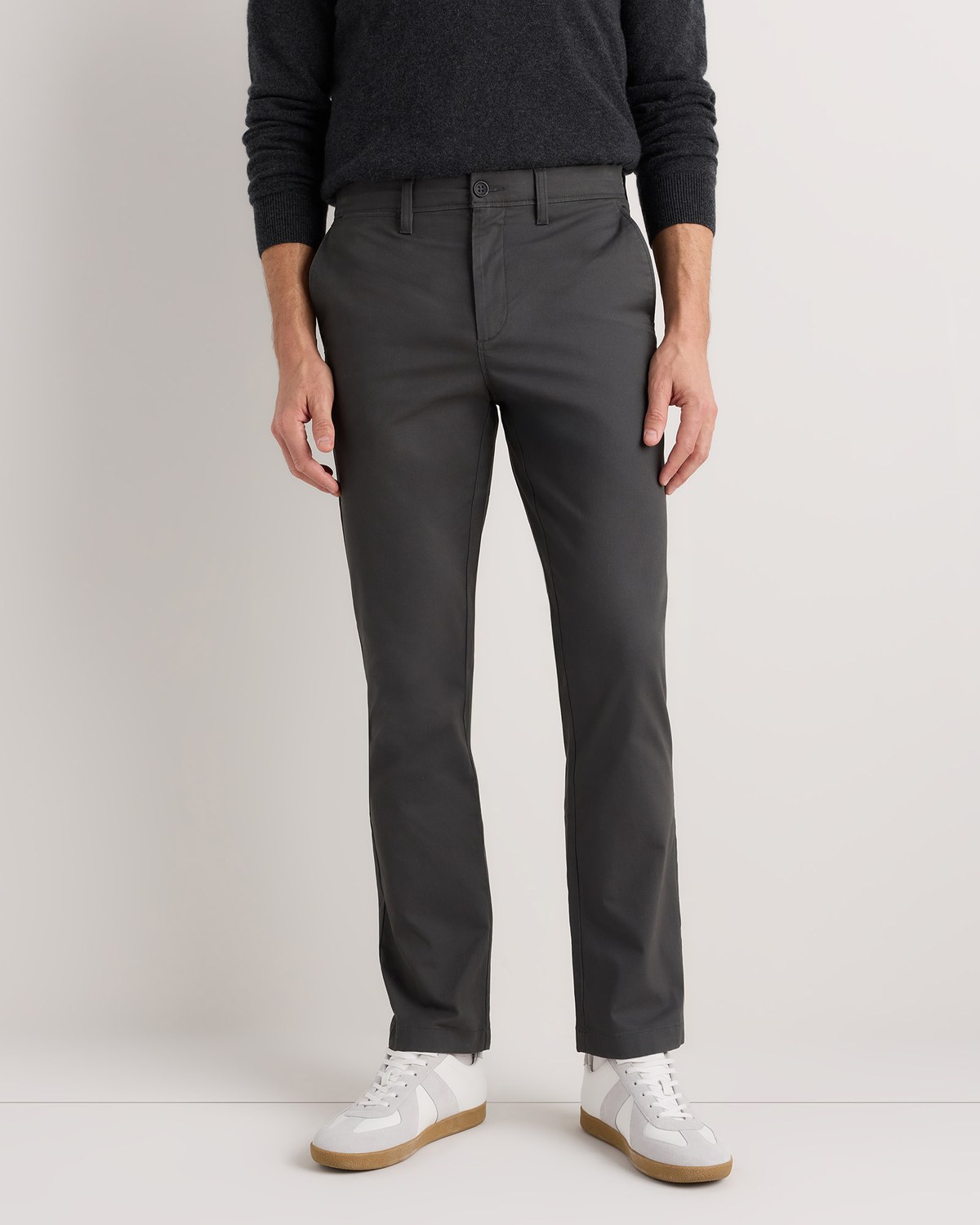
The best pant per dollar on this page
Quince Organic Cotton Stretch Chino
Sixty dollars for peached organic cotton twill with a proper leg opening published is a genuinely unusual amount of pant for the money, and it's the reason Quince keeps turning up in guides like this one.
The straight fit comes in at a 15.25 inch leg opening, which sits right in the modern middle, and the peached finish means it feels broken in on the first wear rather than the tenth. If you only want to spend sixty dollars, this is where to spend it.
Quince flags low stock across most of this style most of the time. They restock rather than discontinue, so if your size is gone it's worth checking back rather than settling for the wrong one.
You want the most chino you can get for under seventy dollars.
You need a 38 or 40 waist. The grid stops at 36.
The details, if you want them
What the brand publishes
Clears a normal office
The middle of the ladder and the middle of the market. Five pairs that will pass anywhere with an unstated dress code, priced from fifty dollars to a hundred and forty, and including the pair everything else here is measured against.

Fifty dollars and a waist 27
Uniqlo Slim Chino Pants
Uniqlo's whole advantage is the size grid. This starts at a 27 inch waist and runs to 40, which means it fits people the rest of this page quietly ignores, and it does it at fifty dollars.
The pant is a plain, correct slim chino in 97% cotton with just enough spandex. Nothing here is remarkable, which is exactly the point at this price. Buy two colors and stop thinking about it.
Uniqlo sells a tall make of this that swaps to a cotton and polyester blend. It hangs differently and it has more sheen. If you're buying the tall, know that you're buying a different pant rather than the same one in a longer leg.
You're at either end of the size range, or you just want two pairs for a hundred bucks.
You want a straight or relaxed leg. This one is cut slim and it means it.
The details, if you want them
What the brand publishes

The deepest size grid on the page
Lands' End Knockabout Traditional Fit Chino
Lands' End cuts this in four fits across a waist and inseam grid that nothing else here matches, and they've been making the same pant for long enough that the sizing is genuinely predictable. That's worth more than it sounds.
Traditional is the roomiest of the four, sits at the waist and eases through the thigh, and it's the fit to pick if slim has never worked for you. Triple washed, so there's no break-in period at all.
Lands' End runs a promotion on this chino more weeks than it doesn't, which is why we haven't printed a number. Whatever the page says today, it's worth checking the site's current offer before you check out, because it very often applies.
Nothing off the rack ever fits you in both the waist and the inseam.
You want a current, narrow silhouette. Traditional is roomy by design.
The details, if you want them
What the brand publishes
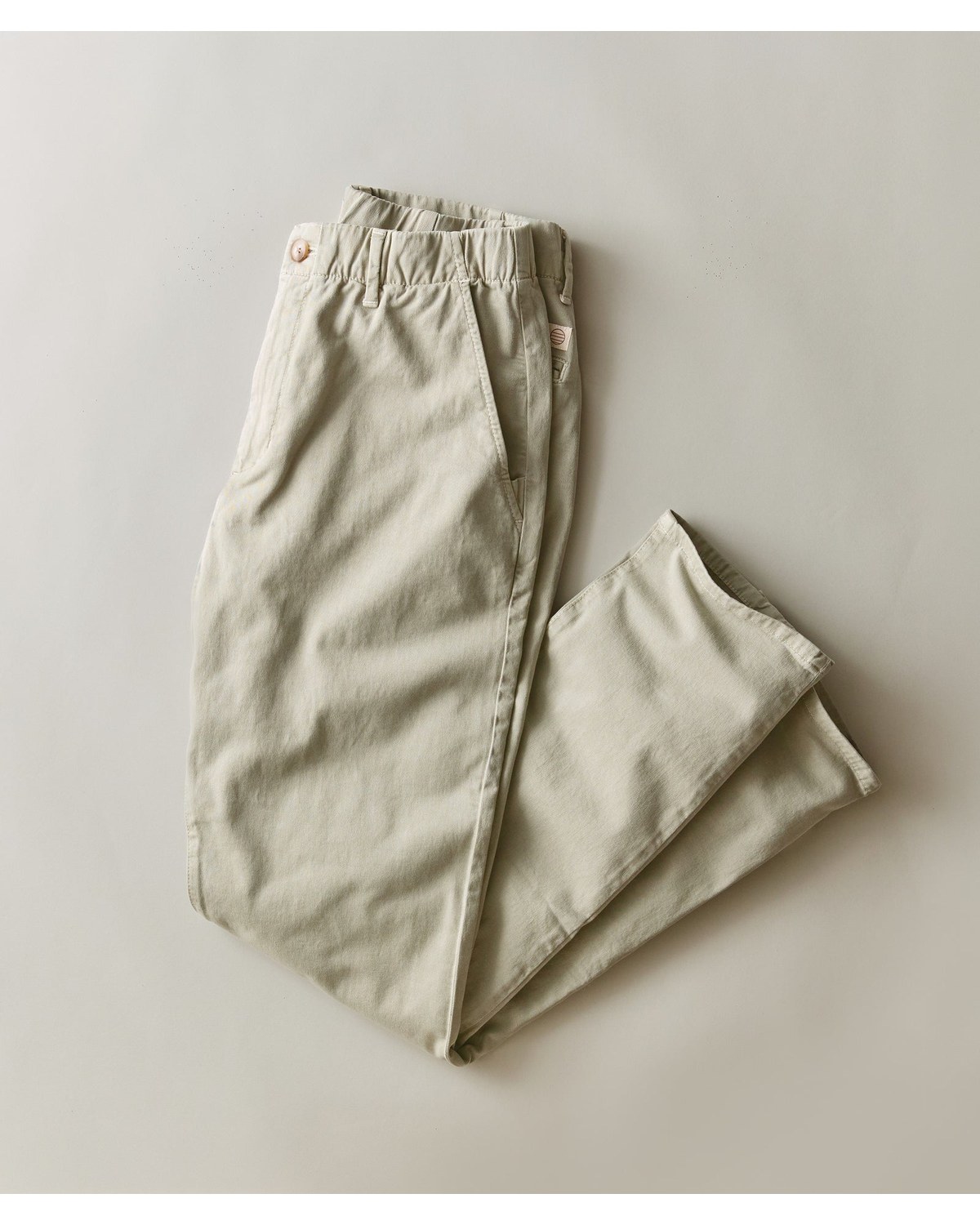
It has an elastic waistband and you'd never know
Marine Layer Saturday Twill Chino
The thing nobody mentions about these is the waistband: it's elastic, with belt loops over the top, and from the outside you genuinely can't tell. It's the most comfortable pant on this page by a distance and it doesn't look like a compromise.
Half the twill is organic cotton, it's garment dyed so the color has depth rather than flatness, and the whole size run is in stock in several colors, which is rarer than it should be at this price.
Marine Layer sells these in small through double extra large rather than in waist inches, which is fine if you sit squarely in a letter and annoying if you're a 33 or a 35. Check their chart against a pair you own before ordering.
You want office-appropriate and genuinely comfortable at the same time.
You buy trousers by waist measurement and don't want to translate.
The details, if you want them
What the brand publishes
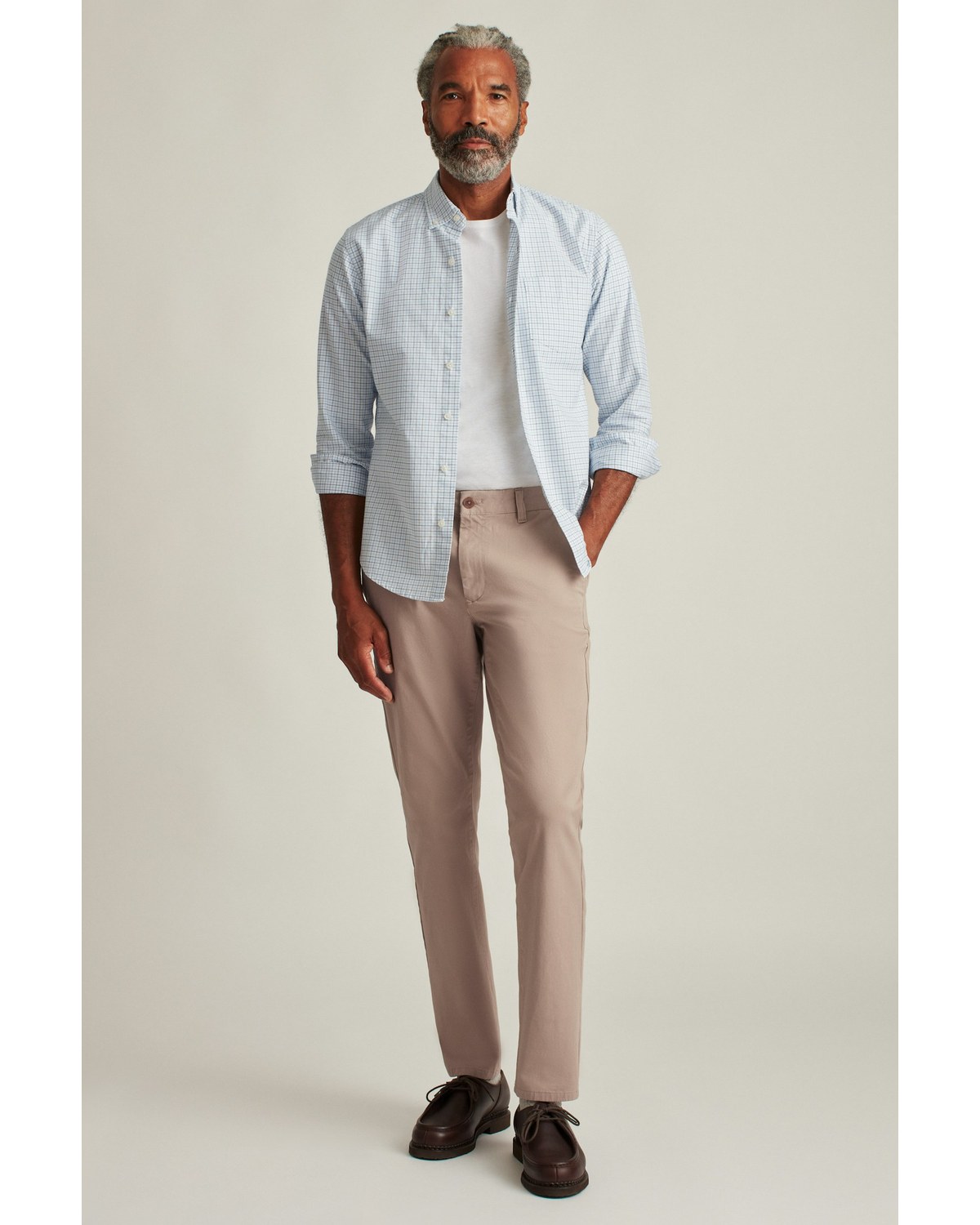
Four real fits in one fabric
Bonobos Chinos 2.0
Bonobos built the company on the idea that men are shaped differently and the waist size on the tag doesn't capture it. Four named fits in the same fabric and the same color is still the most useful thing anyone in this category does.
The Athletic cut in particular is a genuinely different pattern with more room through the seat and thigh at the same waist, rather than a size up pretending. If chinos have always pulled across your legs, this is the first thing to try.
This is the stretchiest cotton pair on the page and it's why they feel so good in the fitting room. The trade comes later: high elastane content is what bags at the knee first. Wash cold and hang them, and they'll hold on much longer.
Nothing fits your thighs and waist at the same time.
You want a pant that holds a sharp line. There's too much give in here for that.
The details, if you want them
What the brand publishes
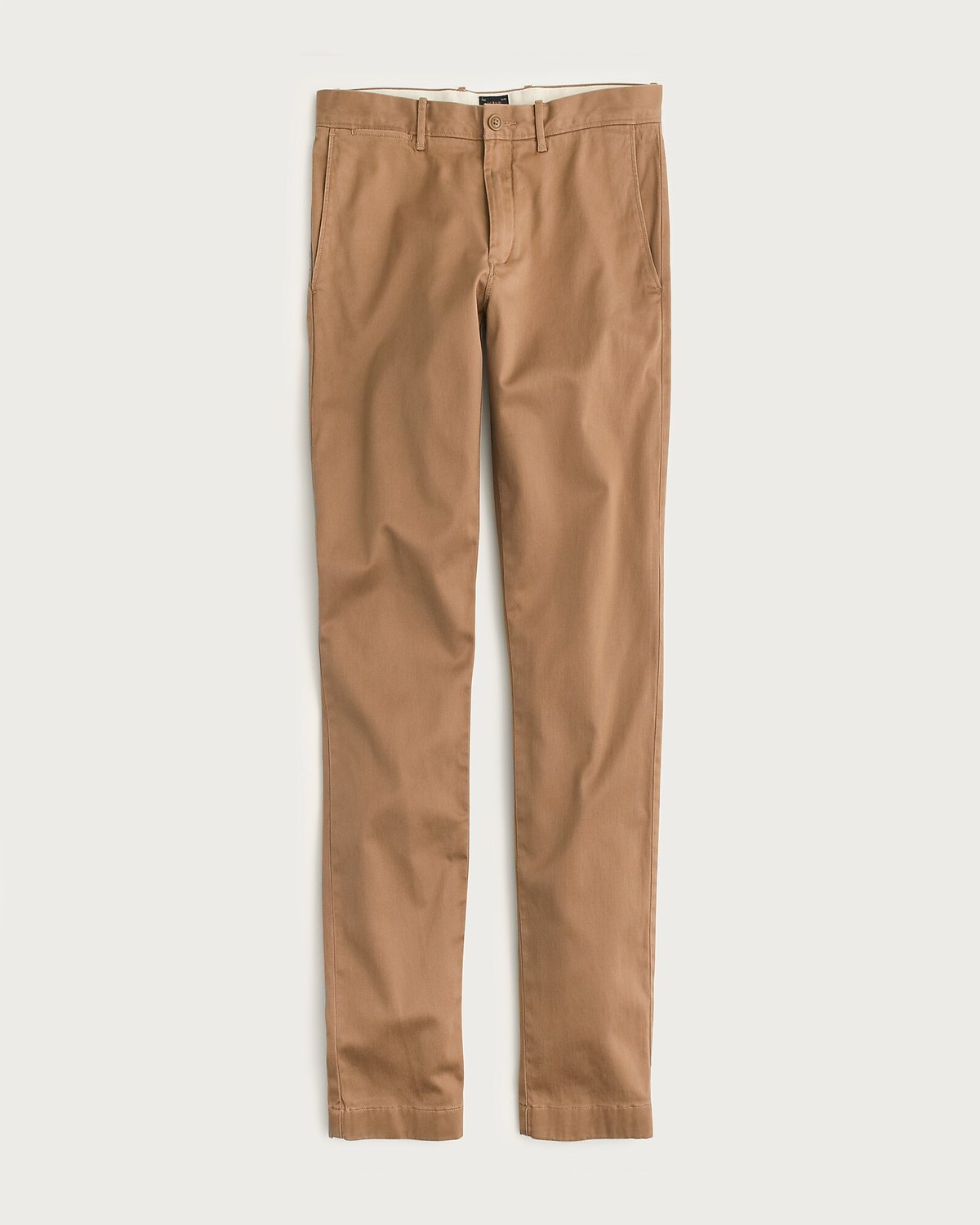
The measuring stick for this whole page
J.Crew 770 Straight-fit Stretch Chino
The 770 is the most copied straight fit in the category. Ask anyone in men's clothing what a normal chino fit is and they'll describe this pant, which is exactly why we've made it the reference. When we say something is dressier or more casual, this is the middle we mean.
It earns the spot on merit too. 7.9 oz twill is a real year-round weight, the 3% elastane is enough to move in without being enough to sag, and J.Crew publishes that weight, which most of this page doesn't.
770 is the straight one, 484 is slim and 1040 is athletic, and they share the same fabric and colors. People buy the wrong number constantly because it looks like a style code. Check the first digit before you check out.
You want the safe, correct answer and you'd like it to cost under a hundred dollars.
You want something with a point of view. This is deliberately the middle.
The details, if you want them
What the brand publishes
These go with a blazer
The top of the ladder. Three pairs that sit next to a jacket without looking like they wandered in from a different outfit. Two get there with rigid cotton and one gets there by refusing to wrinkle at all.
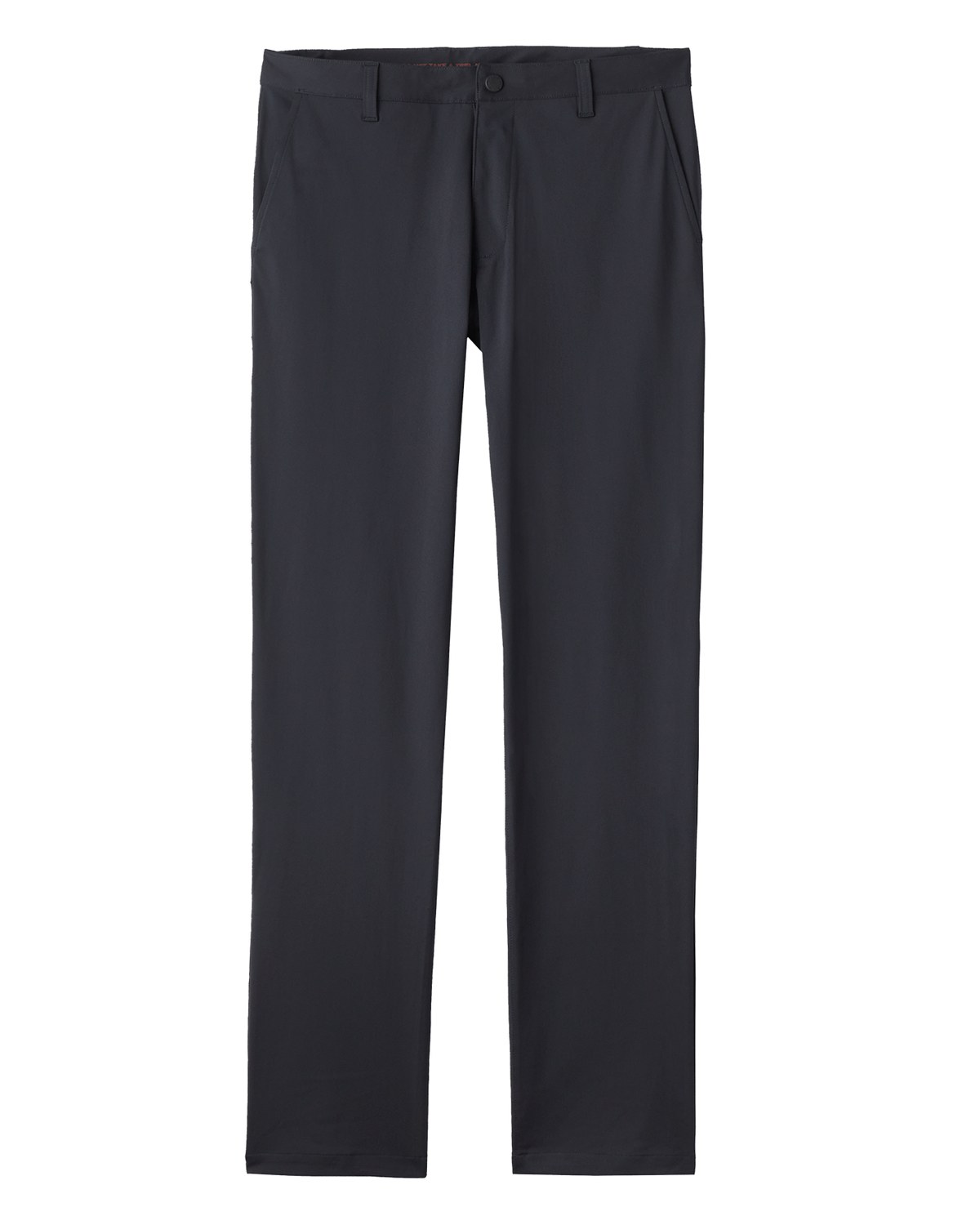
It will never wrinkle, and it isn't cotton
Rhone Commuter Pant
This is the pair for anyone whose real objection to chinos is the iron. It comes out of a suitcase flat, it dries overnight on a hotel rail, and it shrugs off a spilled drink. On a travel-heavy week it's the most useful thing on this page by a distance.
It also reads dressier from across a room than most of the cotton here, because it holds a clean line and never creases at the hip. Up close the story changes, and that's the trade you're making.
Their own page describes it as a four-way-stretch knit and stops there. No fiber percentages anywhere, which for a pant at this price is a strange thing to leave out. What we can say from handling this category is that it's a synthetic and it has the faint sheen synthetics have.
You travel constantly and you're finished with ironing.
You want a chino that looks like cotton up close, because this one doesn't.
The details, if you want them
What the brand publishes

Every single size is in stock
Alex Mill Flat Front Chino
Alex Mill cut their teeth making the kind of clothes that look expensive without announcing it, and this is the clearest example. 100% cotton, vintage washed, a clean flat front and a straight leg, in colors that are deliberately a shade off the obvious.
They publish a 12.3 inch front rise, which puts it just above the waistband of most things here and is a big part of why it sits so well under a jacket. Twenty of twenty sizes are in stock, which after the rest of this research feels like a miracle.
A rigid cotton pant is stiff for the first several wears and then molds to you permanently. If you've spent five years in stretch chinos this will feel wrong on day one. Give it a fortnight before you judge it.
You want the dressiest thing here that still reads as a chino.
You want to put them on and feel great immediately. That takes a week here.
The details, if you want them
What the brand publishes
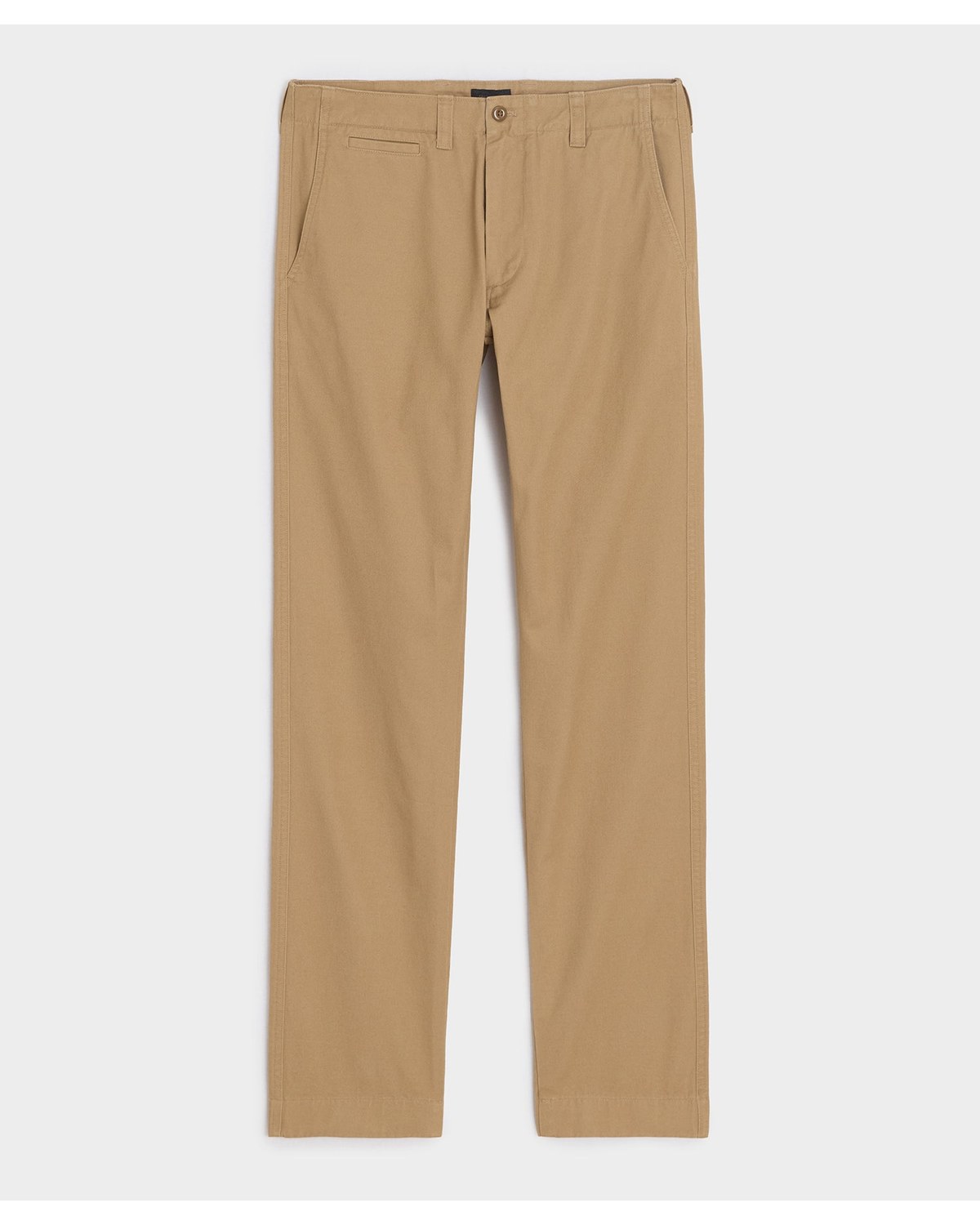
The one that goes next to a jacket
Todd Snyder Straight Fit Favorite Chino
This is the top of the ladder and the reason is the fabric: soft, broken-in, 100% cotton twill with no elastane anywhere in it. It holds a line, it takes a press, and it sits next to a sport coat without the fabric mismatch that gives most chinos away.
Todd Snyder also publishes a 15 inch leg opening, which is the modern middle and the reason it works with both a loafer and a boot. Eight colors, and the khaki is the one to buy first.
You're paying roughly twice the J.Crew for a pant made of the same fiber. What the money buys is the hand of the cloth and the cut, and both are genuinely better. Whether that's worth ninety dollars is a question only you can answer, and buying the 770 instead is a perfectly good call.
You want one pair of chinos that works with a jacket and you'll wear them for years.
Your chinos mostly see a weekend. This is more pant than that needs.
The details, if you want them
What the brand publishes
The uncomfortable part
Three numbers that would settle this, and almost nobody prints them
We checked eighteen brands for this guide. Here's how many of the twelve that made it publish the measurements you'd actually want before spending a hundred dollars.
A fabric weight in ounces2 of 12 publish it
The single most useful number on a chino and almost nobody prints it. Around 7 to 8 oz is a year-round twill. Under 7 is a summer pant. Over 10 is closer to workwear and will be hot in July. Two of the twelve pairs here publish one.
A leg opening in inches3 of 12 publish it
What decides whether a pair reads modern or reads like it came out of a closet in 2006. Anything from about 14 to 16 inches is the current middle. Under 14 is slim, over 17 is properly wide. Three brands here publish it, and one of them grades it by size.
A front rise in inches2 of 12 publish it
Where the waistband actually sits, which changes the proportions of your whole outfit more than the leg does. Roughly 10 inches is a low rise and 12 or more sits at your natural waist. Two brands here publish it.
Side by side
Compare all twelve
Tap a column heading to sort.
| Pair ▴▾ | Price ▴▾ | On the ladder ▴▾ | Stretch ▴▾ | Fabric ▴▾ | Sized ▴▾ |
|---|---|---|---|---|---|
| Abercrombie 90s Straight Chino | $85 | Weekend end | A little stretch | Cotton twill with stretch | By waist |
| Goodthreads Straight Fit Comfort Stretch Chino | Moves | Weekend end | A little stretch | Cotton twill with stretch | By waist |
| Taylor Stitch Democratic Foundation Pant | $138 | Weekend end | No stretch | Cotton twill, no stretch | By waist |
| Quince Organic Cotton Stretch Chino | $60 | More casual | A little stretch | Cotton twill with stretch | By waist |
| Uniqlo Slim Chino Pants | $49.90 | More casual | A little stretch | Cotton twill with stretch | By waist |
| Lands' End Knockabout Traditional Fit Chino | Moves | More casual | A little stretch | Cotton twill with stretch | By waist |
| Marine Layer Saturday Twill Chino | $138 | Level with the 770 | A little stretch | Cotton twill with stretch | S to XXL |
| Bonobos Chinos 2.0 | $99 | Level with the 770 | A lot of stretch | Cotton twill with stretch | By waist |
| J.Crew 770 Straight-fit Stretch Chino | $98 | The measuring stick | A little stretch | Cotton twill with stretch | By waist |
| Rhone Commuter Pant | $138 | A step dressier | A lot of stretch | Performance woven | By waist |
| Alex Mill Flat Front Chino | $175 | A step dressier | No stretch | Cotton twill, no stretch | By waist |
| Todd Snyder Straight Fit Favorite Chino | $188 | The dressiest here | No stretch | Cotton twill, no stretch | By waist |
How a pair is sized is in here because one of the twelve is sold in letter sizes rather than by waist, and that's the sort of thing worth knowing before the box arrives.
Getting it right
Five things that matter more than which pair you buy
All of this is free and all of it does more for how a chino looks than another fifty dollars of purchase price.
- Get the length right. One soft fold at the shoe, or none. Two or more and a good pair starts looking borrowed. A hem costs about fifteen dollars and it's the highest-return money in this whole guide.
- Buy navy or olive first. Khaki is the default and it's also the color that reads most like a uniform and shows the most marks. Navy goes with everything you own.
- Hang them damp. Wash cold, take them out immediately, hang them wet. The weight of the water pulls the creases out on its own. The dryer is what sets a wrinkle permanently.
- Match the fabric to the jacket. A soft washed stretch twill next to a structured blazer reads like two different outfits. If a jacket is involved, go rigid and go darker.
- Try the athletic cut before sizing up. If chinos pull across your thighs, a named athletic fit is a different pattern with more room in the seat and thigh at the same waist. Sizing up in a slim fit solves the thigh and ruins the waist.
Questions
Chinos, answered properly
What actually makes a pair of pants a chino?
Cotton twill, a flat front, slash pockets at the hip and a plain hem. That's it, and it's a loose enough definition that half the market stretches it. The word comes from the cotton twill the US military bought through the Philippines in the 1890s, which is also why khaki and chino get used as if they mean the same thing. Khaki is a color. Chino is a pant.
Chinos or khakis, is there a difference?
In practice the two words have collapsed into each other and most stores use them interchangeably. If anyone is being precise: khaki is the tan color, and a chino is the style of trouser, which is why you can buy a navy chino and a khaki-colored suit. Nobody will correct you either way.
How much stretch should a chino have?
Somewhere between 2% and 4% elastane is the sweet spot. It's enough to sit down in comfortably and little enough that the pant holds its shape for years. Above about 6% you get a pair that feels great in the fitting room and starts bagging at the knee inside a year. Zero stretch is stiff for a week and then molds to you permanently, which is why the dressiest pairs on this page have none.
What leg opening should I be looking for?
Somewhere between 14 and 16 inches covers almost everybody right now. Under 14 reads slim and starts to look dated. Over 17 is a properly wide, deliberate silhouette that suits some people and swamps others. The catch is that almost no brand publishes the number, so most of the time you're buying on a photograph.
Should chinos break on the shoe?
A slight break or none at all. A single soft fold where the hem meets the shoe is the safe answer and works with almost everything. Two or more folds and the pant reads too long, which is the single most common way a good pair gets ruined. Hemming costs about fifteen dollars and improves a chino more than another fifty dollars of purchase price will.
How do I stop them wrinkling?
You mostly can't, if they're cotton. What you can do is wash cold, pull them out of the machine immediately, and hang them damp so the weight of the water pulls the creases out. Tumble drying is what sets a wrinkle permanently. If wrinkling genuinely bothers you, that's the argument for a performance fabric rather than for a better cotton one.
What color should my first pair be?
Navy or olive, not khaki. Khaki is the default and it's also the color most likely to read like a uniform, and it shows every mark. Navy goes with everything and hides a lot. Olive is the one that looks considered without trying. Buy khaki third.
Are chinos still in style?
The pant is, the fit isn't. What aged badly is the very slim, low-rise, tapered cut that dominated the 2010s. The current silhouette sits higher and runs straighter, and the same brands that sold you the skinny version are now selling the wide one. If your chinos feel dated, it's almost certainly the cut rather than the category.
Can I wear chinos with a blazer?
Yes, and the fabric decides whether it works. A soft, washed, stretchy twill next to a structured jacket looks like two different outfits. A rigid 100% cotton in a darker color looks deliberate. That's the whole reason this page is sorted the way it is: the three at the top of the ladder do this and most of the others don't.
How many pairs do I actually need?
Two, in different colors, at different points on the ladder. One casual pair you can ruin and one you'd wear to dinner covers almost every occasion a chino is right for. A third is worth it only if you wear them to work every day, in which case buy the same pair again rather than a new one.
Method
How we put this together
Checked size by size, not just in stock
Where a store exposes its inventory we read it variant by variant. Several well-reviewed pairs were cut for having lost the middle of their size run, which is the version of sold out that catches people out.
Nothing on markdown
Every pick was checked for a compare-at price. Anything sitting on a discount was left off, because those listings lose sizes and then vanish, and a guide full of dead links helps nobody.
One ladder, applied twelve times
Rather than twelve separate opinions, every pair is placed on the same scale against the same reference pant. That's the only thing that makes a page this long usable.
