 Skip to content

Sunglasses do two jobs at once. They protect your eyes, and they change your face. Almost every guide to them handles the second job and waves at the first, which is how you end up with a page of pretty pictures and a line about UV400 that turns out to mean nothing at all.
So we did this one differently. Same 24 pairs, still grouped by the job you need them to do, but this time with the two questions that actually decide whether you keep wearing them: will they fit your face, and is the lens right for where you’re going. Both have real answers. One of them has a number.
Here’s the part that surprises people. The frames below span 129 mm to 144 mm across the front, and the average man’s face measures 143.5 mm at the cheekbones. So most of this list is narrower than the face it’s going on, and the fix costs nothing beyond knowing your own number.
Start Here: Will They Actually Fit Your Face?
Frame width is the one sunglasses measurement that’s objective, and it’s the one nearly nobody checks. Set your face width below and every pair on this page sorts itself into fits, runs narrow, runs wide, or the brand won’t say.
Sixteen Real Numbers And Eight Brands That Won’t Tell You
The frames on this page run from 129 mm to 144 mm end to end. US men average 143.5 mm across the cheekbones. That’s a smaller gap than the marketing suggests, which is exactly why a few millimeters decides whether a pair looks made for you or borrowed.
Your face width
Two ways to measure
- With a ruler. Hold it flat against your face at the widest point, right across the top of your cheekbones just below your eyes. Read the number in millimeters. Do it in a mirror, do it twice.
- With a pair you already own. If you have sunglasses that fit well, lay them flat and measure hinge to hinge across the front. That number is what you want to match.
Pick Where You’re Going, Get The Lens That Belongs There
Pick the situation and get how dark to go, whether polarized is worth it, and which tint. Four of the answers are the opposite of what the industry will tell you.
The 24 Best Men’s Sunglasses Of 2026
Grouped by the job, not ranked head to head, because a fishing lens and a designer acetate aren’t competing for the same slot in your life. Every card carries the published measurements, or an honest note where the brand publishes none.
The Everyday Icons
The four shapes every other pair on this page is a variation of. If you own one pair of sunglasses in your life, it comes from this group.
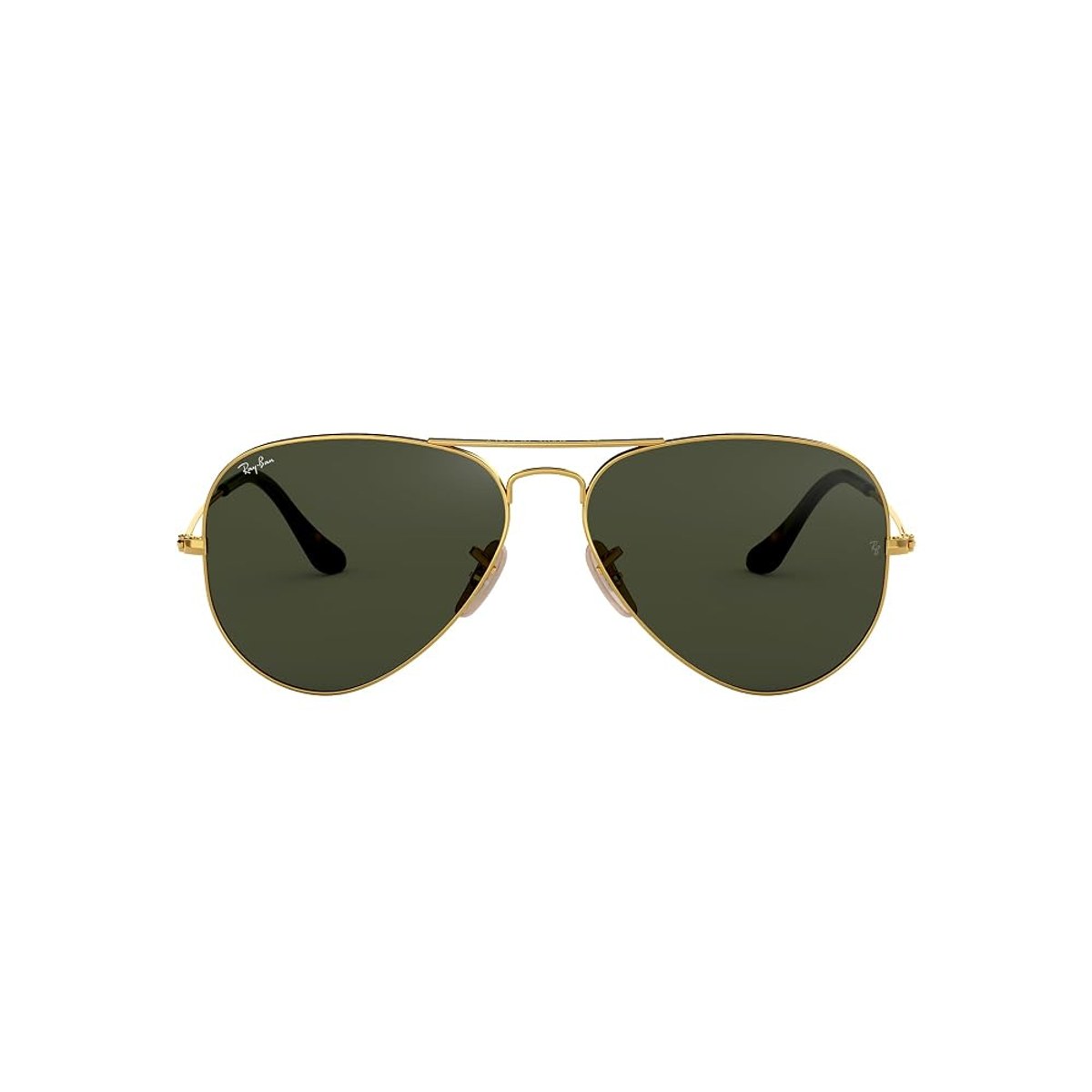
The one pair to own if you only ever own one pair
Ray-Ban Aviator Classic
If you buy one pair for the rest of your life, make it these. The RB3025 is the original aviator, the teardrop that looks right on nearly every face and has never once gone out of style since Bausch and Lomb drew it for the Army Air Corps.
Crystal glass lenses, a metal frame that survives real life, and a look that reads sharp with a suit or a t-shirt. At 136 mm across it sits right in the middle of the male face-width range, which is the actual reason it flatters so many people.
The base lens isn’t polarized. Ray-Ban sells a polarized version as a separate and more expensive listing, so check which one you’re adding to the cart. And the 58 is the common size for men: the 55 reads small on a wide face and the 62 is a lot of sunglass.
Almost all of them. The teardrop is the closest thing to a universal shape there is.
you want one do-everything pair that always looks right.
you need wraparound coverage for sport or water.
The Numbers
The Numbers
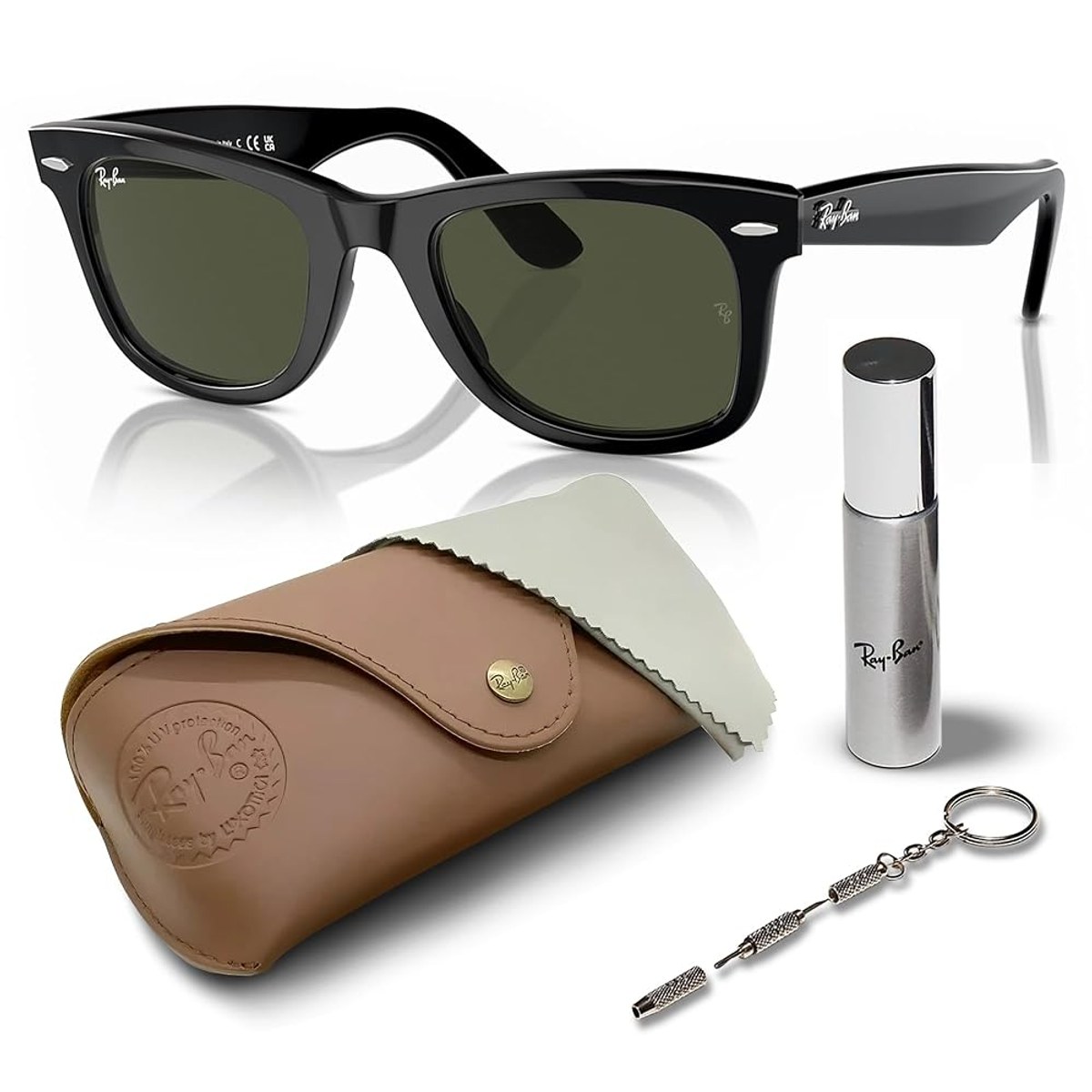
The other icon, and the bolder one
Ray-Ban Original Wayfarer
The Wayfarer is the other Ray-Ban icon: thick acetate, a slightly angular shape, and decades of cool from Dylan to Don Draper. It’s bolder than an aviator and it flatters rounder or softer faces that want a bit of structure.
The Original 2140 runs larger and squarer than the New Wayfarer, with a 22 mm bridge that’s unusually wide, so it sits away from the face more than most. That’s the look. It’s also why it doesn’t suit everyone.
The Original 2140 and the New Wayfarer 2132 are different frames with the same name in conversation. The New is smaller, softer at the corners and sits closer. If the Original has ever felt like too much sunglass on you, that’s the one to try.
Round and softer faces. The hard top line is doing the contrast work.
you want a statement frame with real heritage behind it.
you have a small or narrow face, in which case the New Wayfarer is your pair.
The Numbers
The Numbers
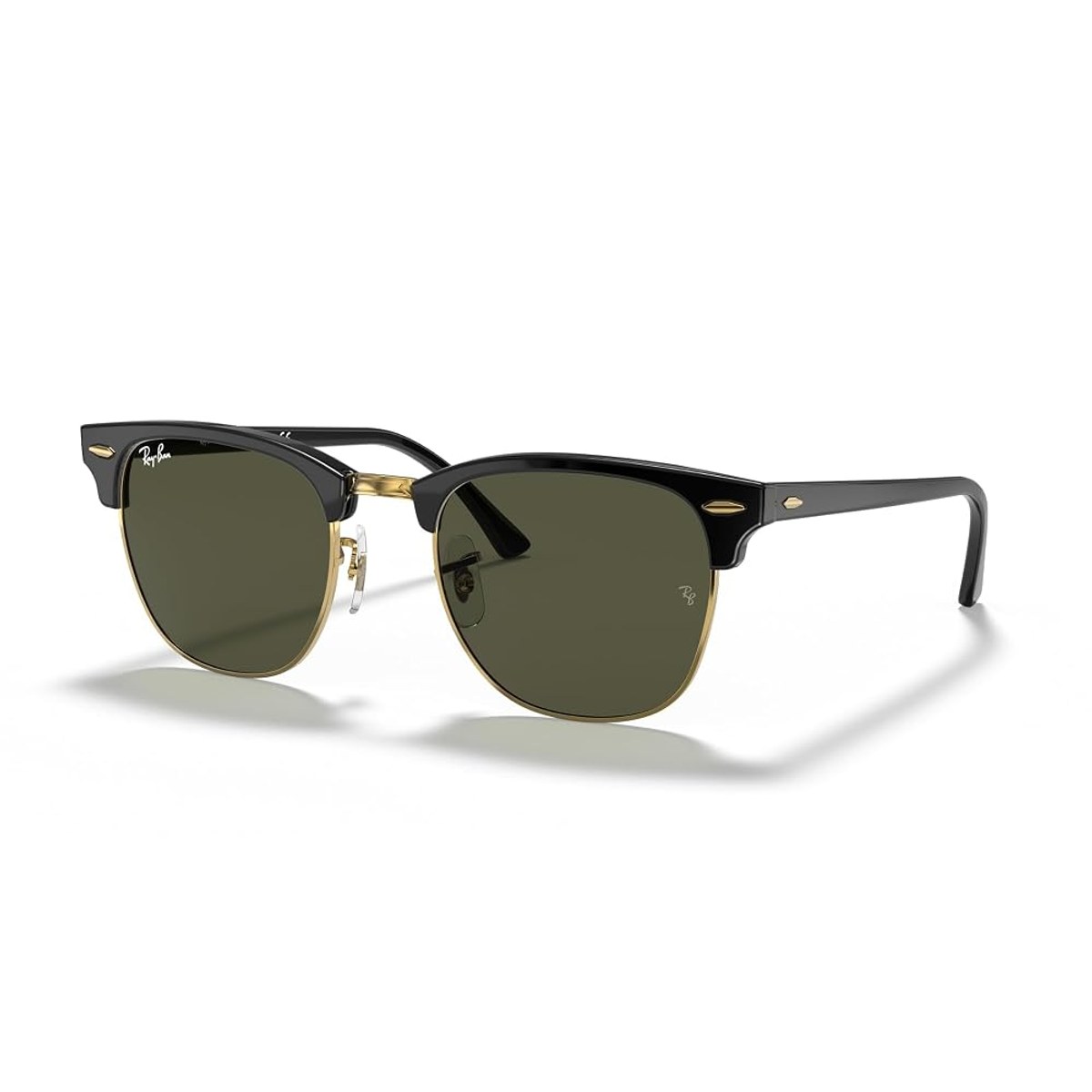
When the aviator feels flashy and the Wayfarer feels casual
Ray-Ban Clubmaster
Half acetate brow, half metal rim, all mid-century. The browline shape adds a studious, put-together edge and it looks especially good on angular faces that want to soften the top line.
It’s the pick when an aviator feels too flashy and a Wayfarer too casual, which turns out to be most weekdays. At 137 mm it’s the widest of the four Ray-Bans here.
The weight of a browline sits on the nose pads rather than being spread across a full rim, so on a low or flat nose bridge it can creep down through the day. If that’s you, an optician can bend the pads in for about the price of a coffee and it fixes it permanently.
Strong jawlines and angular faces. The heavy brow balances a heavy chin.
you want retro character without going full aviator.
you want maximum coverage or anything that reads sporty.
The Numbers
The Numbers
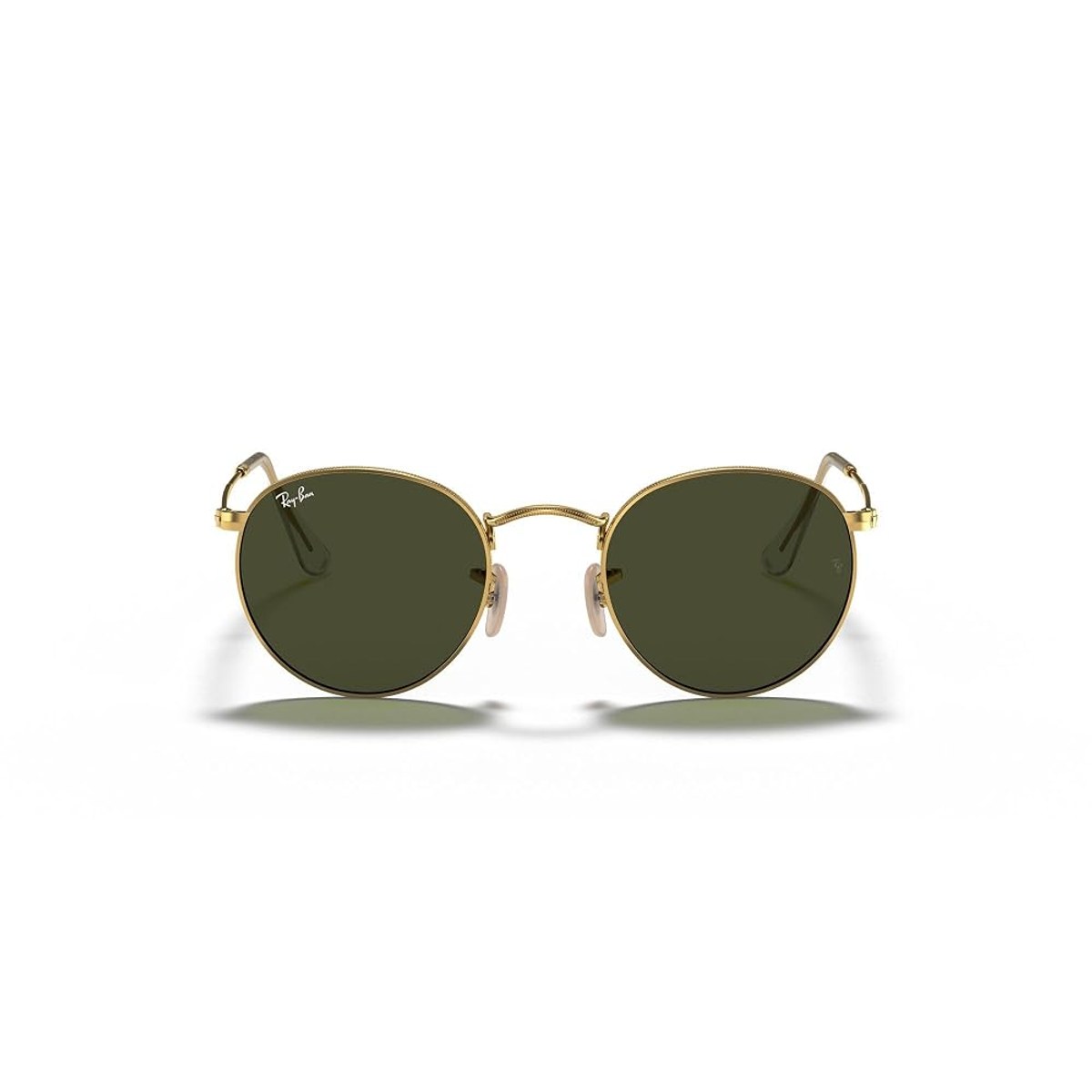
The most divisive shape on this page, and the most interesting
Ray-Ban Round Metal
Perfectly circular metal frames with a thin, minimalist profile. Round frames are the move for squarer, angular faces that want to add some curve, and they read creative without trying too hard.
At 129 mm end to end this is by some distance the narrowest frame on this page, which means it genuinely won’t work on a wide face. If your face measures north of 145 mm, look at something else.
Thin metal round frames disappear on a large face and take over a small one, so this is the pick where getting the width right matters most. Run it through the Fit Finder above before you commit.
Square and angular faces. Round on round is the one combination that genuinely doesn’t work.
you have an angular face and you want something with personality.
you already have a round face, or a wide one.
The Numbers
The Numbers
Heritage And Handmade
Made by people, in small numbers, by companies that have been doing it for decades. You pay for the build, not the badge.
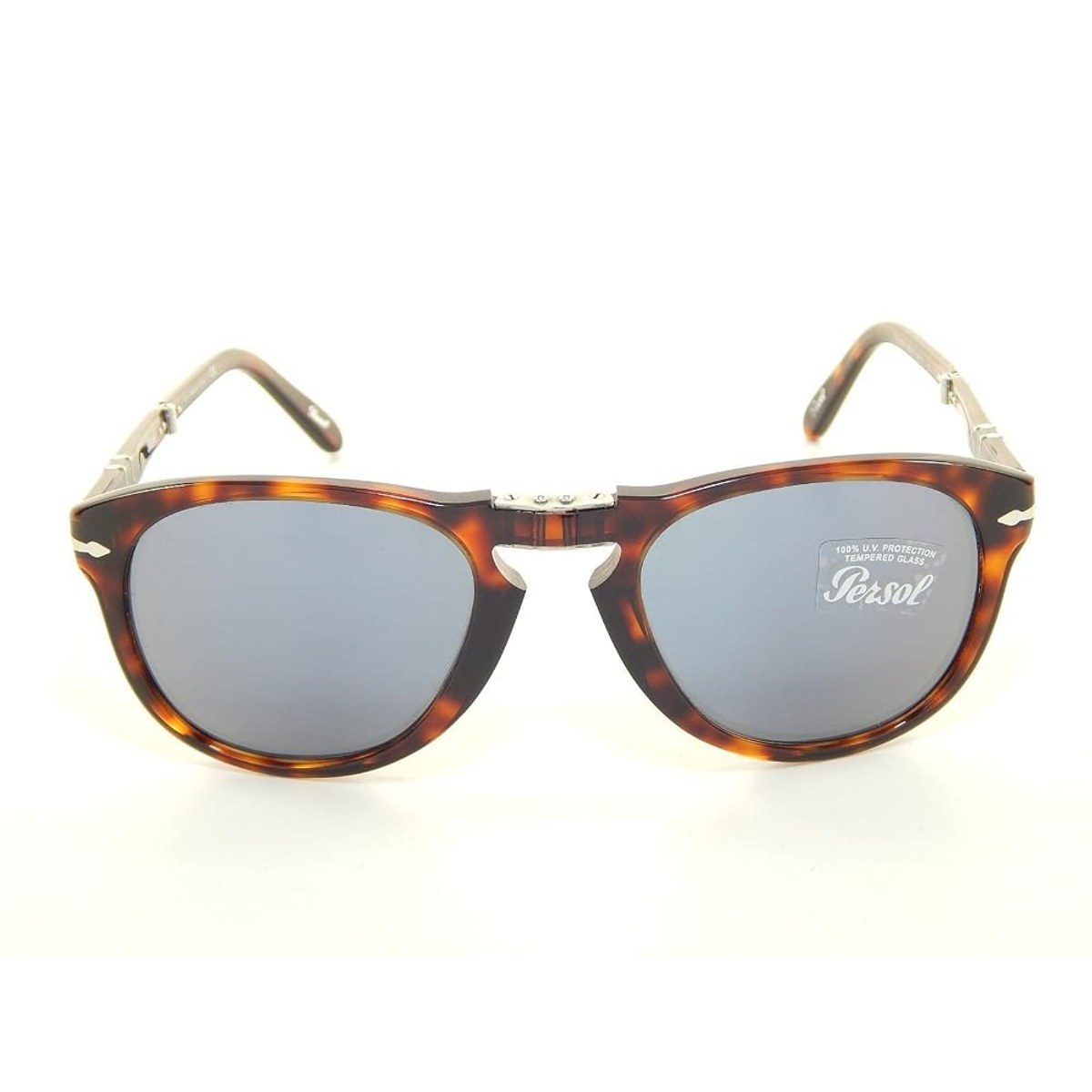
The grail, and it folds into your jacket pocket
Persol 714 Steve McQueen Folding
The most famous folding sunglasses on earth, the ones Steve McQueen made legendary. Hand-made in Italy with Persol’s Meflecto flexing arms and the silver arrow on the temple, and the whole thing folds neatly into a jacket pocket.
Old-money cool with genuine craftsmanship behind the price. Persol has been making these in Turin since 1917, and the folding mechanism is the part you actually pay for.
Persol now lists only the 54 mm on its US site, so the smaller 52 that used to exist is gone. And Persol publishes no total frame width, no weight, and no figure at all for how dark the lens is, which for a frame at this price is a little rich.
Medium faces. There’s only one size now, so this isn’t a frame you can size to yourself.
you want a heritage piece you’ll still own in twenty years.
you’re rough on your sunglasses. The folding hinge is the failure point.
The Numbers
The Numbers
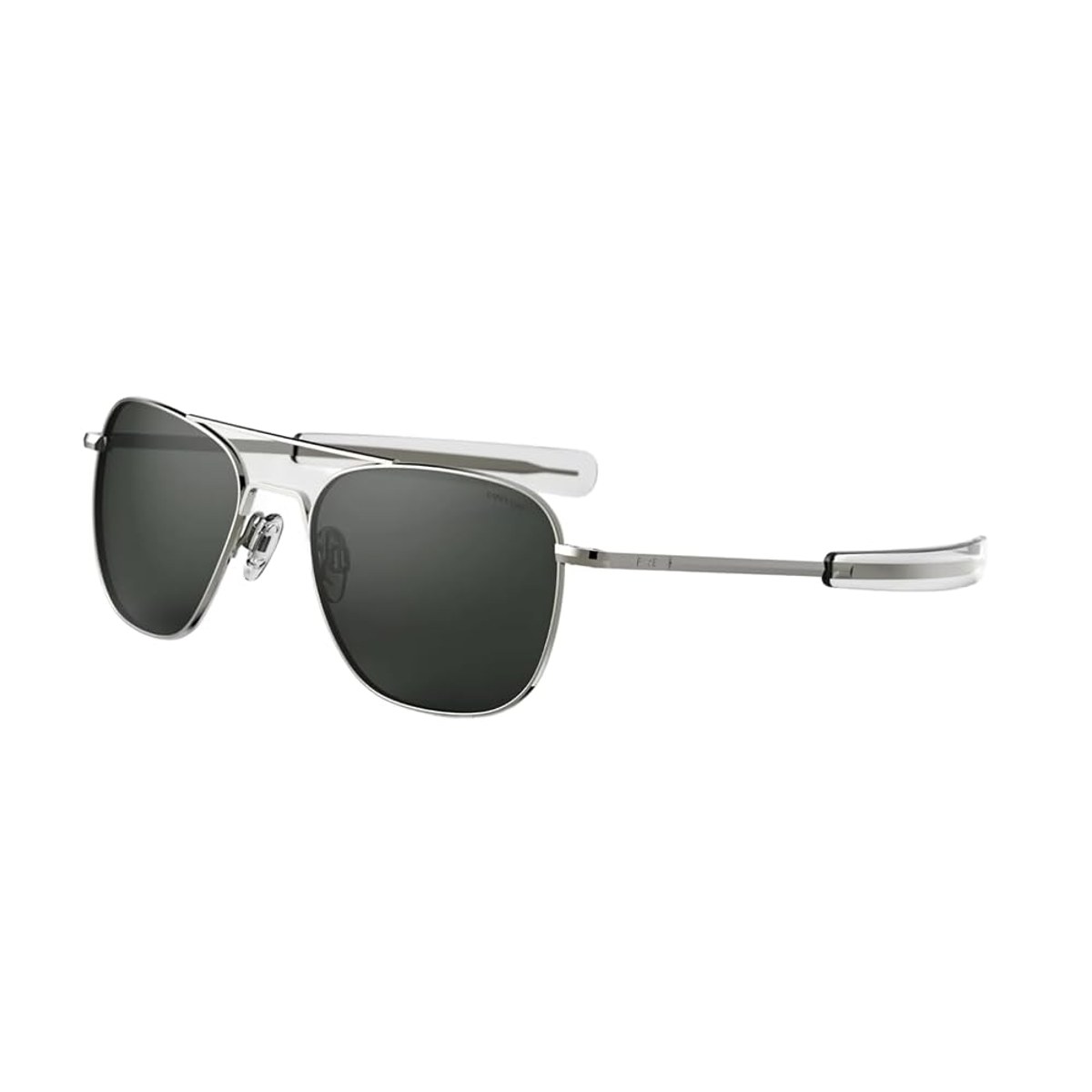
The one the Air Force actually buys
Randolph Aviator
Randolph has made aviators for the US military for decades and it shows. Solid metal construction, bayonet temples designed to slide under a flight helmet, and mineral glass lenses that shrug off scratches a plastic lens would keep forever.
Heavier and more substantial than a Ray-Ban, with a lifetime solder guarantee to match. It’s also, by a distance, the best-documented frame on this page: Randolph publishes lens width, bridge, temple, lens height, total frame width and light transmission for every single size. Nobody else here comes close.
Randolph sells four sizes and publishes the end-to-end width of each: 52 is 135 mm, 55 is 143 mm, 58 is 148 mm and 61 is 151 mm. Randolph calls the 55 its Regular. Put your own face width into the Fit Finder above and pick from that list, because this is the one brand that gives you enough information to actually get it right.
Medium to wide. Four sizes are sold, from 135 mm up to 151 mm across.
you want a bombproof aviator that outlasts everything else you own.
you want the lightest possible frame. Glass and solid metal aren’t light.
The Numbers
The Numbers

The aviator that went to the moon
American Optical Original Pilot
AO’s Original Pilot is the aviator that actually went to the moon: standard issue for US pilots and worn on Apollo missions. The flat, angular lens and the comfortable bayonet temple give it a more utilitarian look than the teardrop Ray-Ban.
If you’ve ever thought aviators looked a bit too fashion, this is the one that doesn’t. It’s a piece of equipment that happens to look good.
AO’s own size selector and its rendered spec list disagree about temple length, one says 145 mm and the other says 140 mm across all three sizes. If temple length matters to you, and it does if you wear a helmet or headset, call them before you order.
Medium. Three sizes are sold, 52, 55 and 57.
you want real service heritage rather than the marketing version of it.
you specifically want the teardrop shape, because this isn’t it.
The Numbers
The Numbers
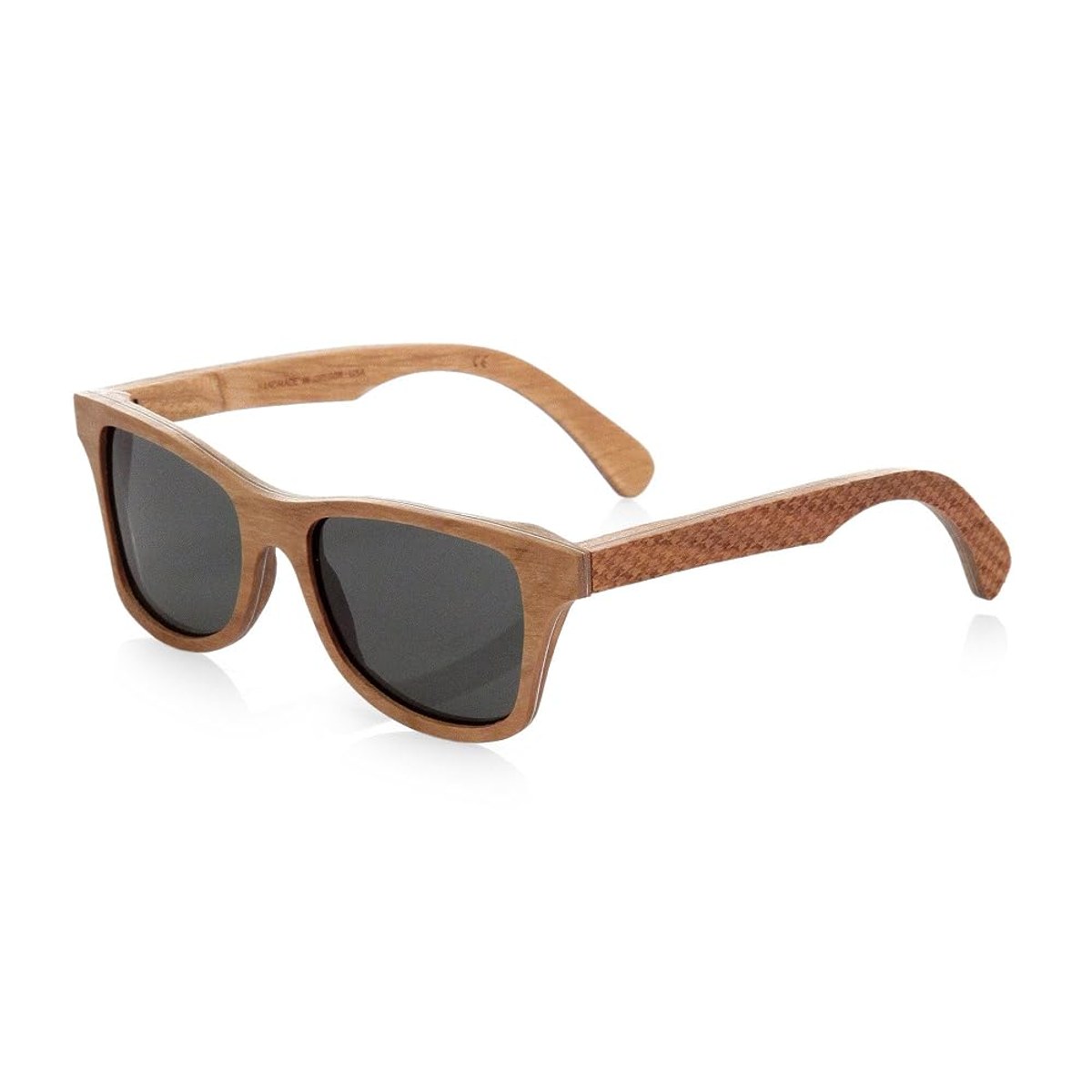
No two pairs have the same grain
Shwood Canby
Shwood hand-makes each Canby from real wood, so no two pairs share the exact same grain. The result is a warm, natural frame that genuinely is different from everything else in the room, and it starts conversations whether you want it to or not.
It’s a craft object as much as a set of sunglasses. Shwood also publishes its total frame width, which puts it in the minority on this page.
The $149 Canby isn’t polarized. The polarized version is a separate $199 listing. Wood also doesn’t love being left on a hot dashboard or soaked repeatedly, so this is a nice-day frame rather than a beach frame.
Medium to wide. At 144 mm this is one of the widest frames here.
you want something handmade that nobody else at the table will have.
you want a rugged sport pair or a bargain.
The Numbers
The Numbers
Built For Sport
Coverage, grip and lenses tuned for contrast. These stay on your face when you’re moving and sweating.
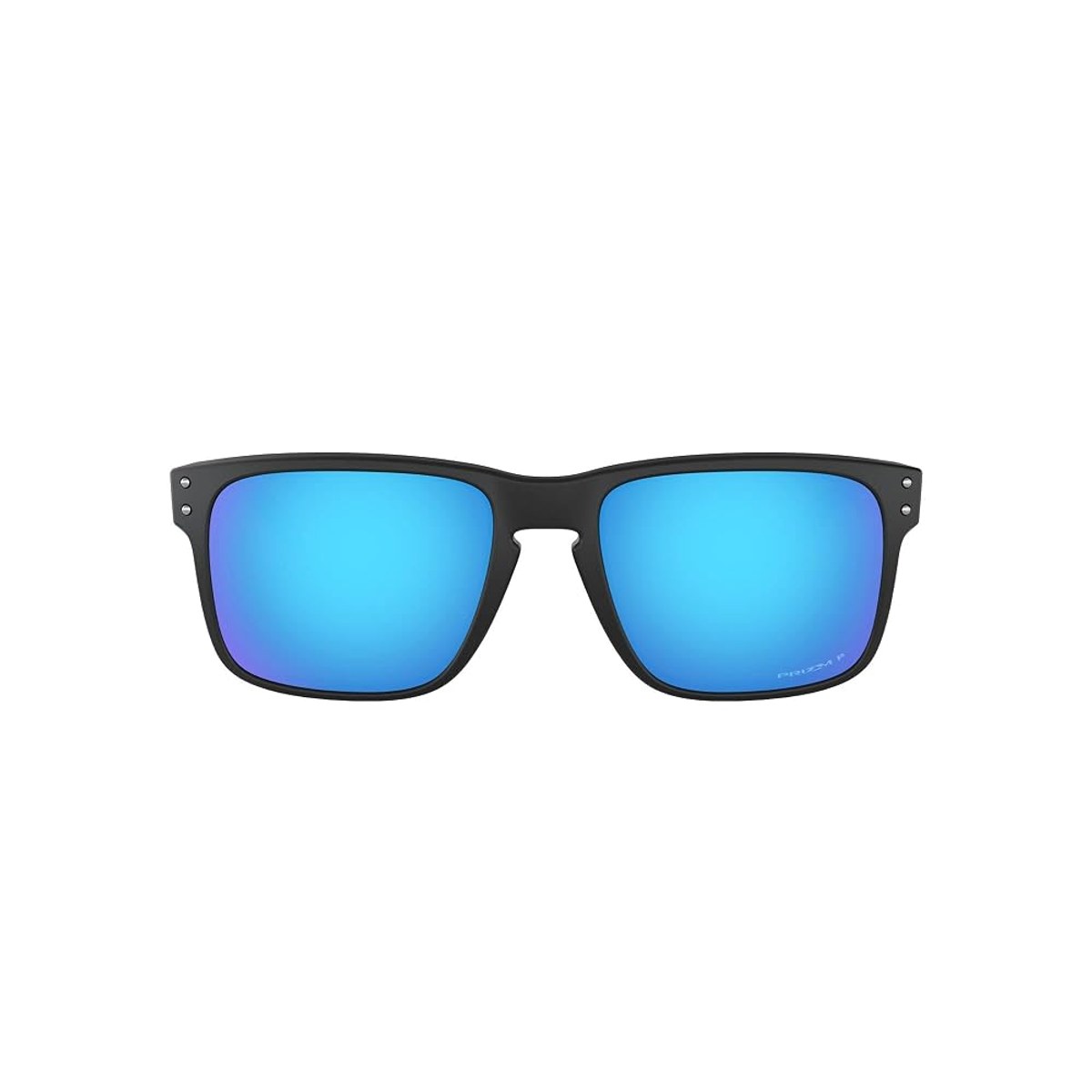
The one pair that goes from the truck to the trail to the game
Oakley Holbrook
The Holbrook is Oakley’s crossover hit: a clean, squared retro shape wrapped around modern sport guts. Lightweight O Matter frame, grippy earsocks, and Prizm lenses that visibly lift contrast on road, trail and water.
It’s the pair that goes from driving to hiking to the ballgame without looking out of place in any of them, which is a harder trick than it sounds.
Luxottica’s retailers publish 57-18-137 for the Holbrook, one safety-eyewear database publishes a 55 mm lens, and another retailer measures the frame at 132 mm across. Oakley itself publishes only a fit label. We’ve used 57-18-137 with the 132 mm measured width and flagged the disagreement rather than pretending it doesn’t exist.
Medium. Squared frames flatter rounder faces.
you want one pair for driving, sport and everyday and you’re done thinking about it.
you want something dressy, or a heritage look.
The Numbers
The Numbers
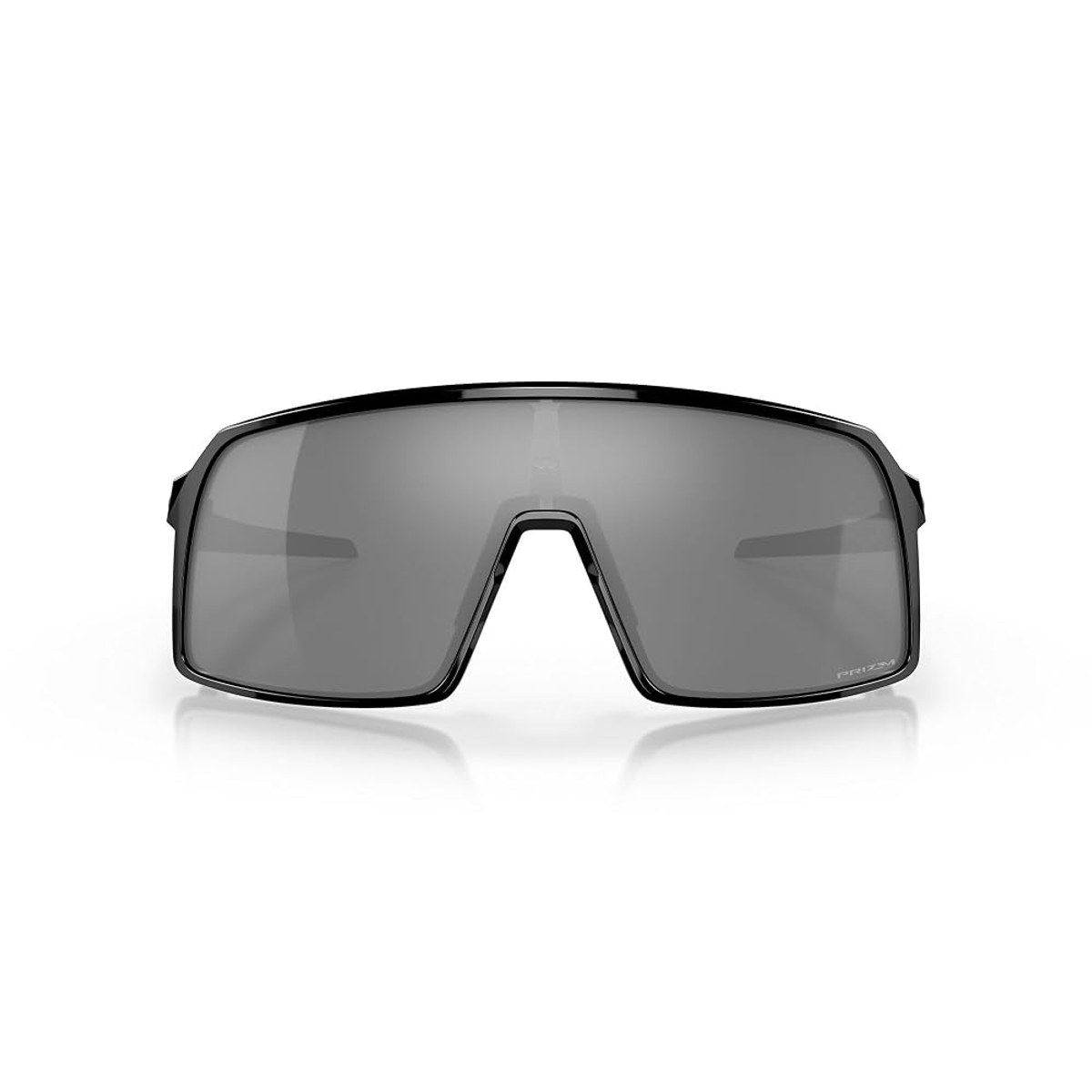
Maximum coverage, maximum opinion
Oakley Sutro
If you want the modern, aggressive single-lens shield look, the Sutro nails it. Huge coverage for cycling and running, Prizm for contrast, and a face-hugging wrap that stays put at speed.
Because it’s one continuous lens rather than two, the usual lens-bridge-temple numbers don’t really apply. Oakley publishes a fit width instead: 134 mm, which it calls large.
The standard Sutro and the Sutro Low Bridge Fit, the OO9406A, are different SKUs with different nose geometry. If sunglasses usually slide down or sit on your cheeks, the Low Bridge Fit is the one you want and most listings don’t make the distinction obvious.
Medium to large. This isn’t a frame that hides.
you cycle, run, or you want the bold shield look and you can carry it.
you want anything understated.
The Numbers
The Numbers
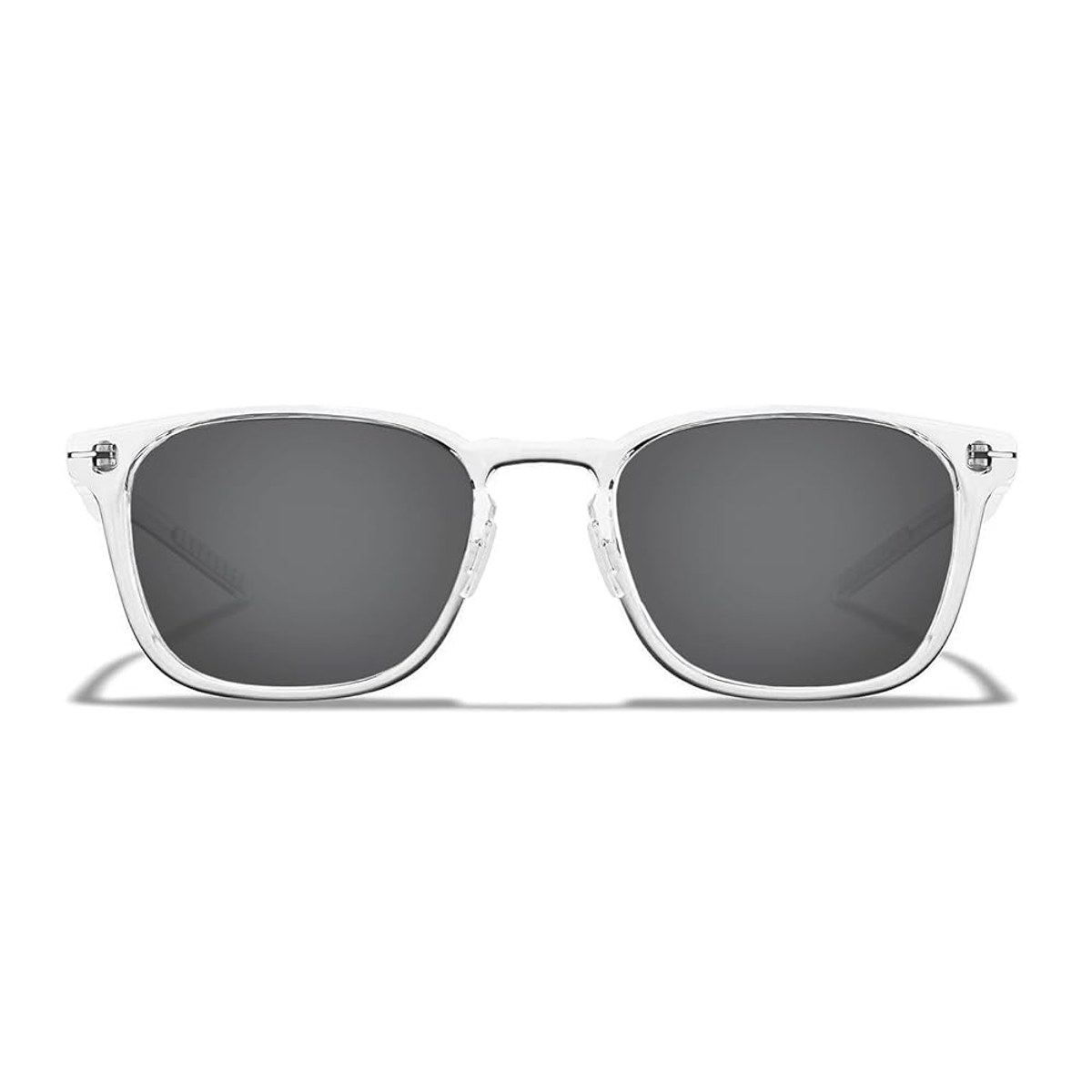
They don’t move when you sweat
Roka Rory
Roka built its name on sunglasses that don’t slip when you’re drenched, and the Rory brings that to a normal-looking lifestyle frame. Featherlight at 19 grams, with grippy nose and temple pads that lock on during runs, rides and sweaty rounds of golf, and clean enough to wear to lunch afterward.
Roka is also one of only two brands on this page that publishes frame weight in grams, which tells you something about who is paying attention.
The Rory comes in Small at 49 mm, Regular at 52 mm and XL at 55 mm, at 18, 19 and 20 grams. Roka doesn’t publish a total frame width for any of them, so the size chart is what you have to go on.
Any. This is the only brand here that sells three sizes of the same lifestyle frame.
you run, ride or golf and you’re tired of pushing your glasses back up.
you want heritage or a fashion frame.
The Numbers
The Numbers
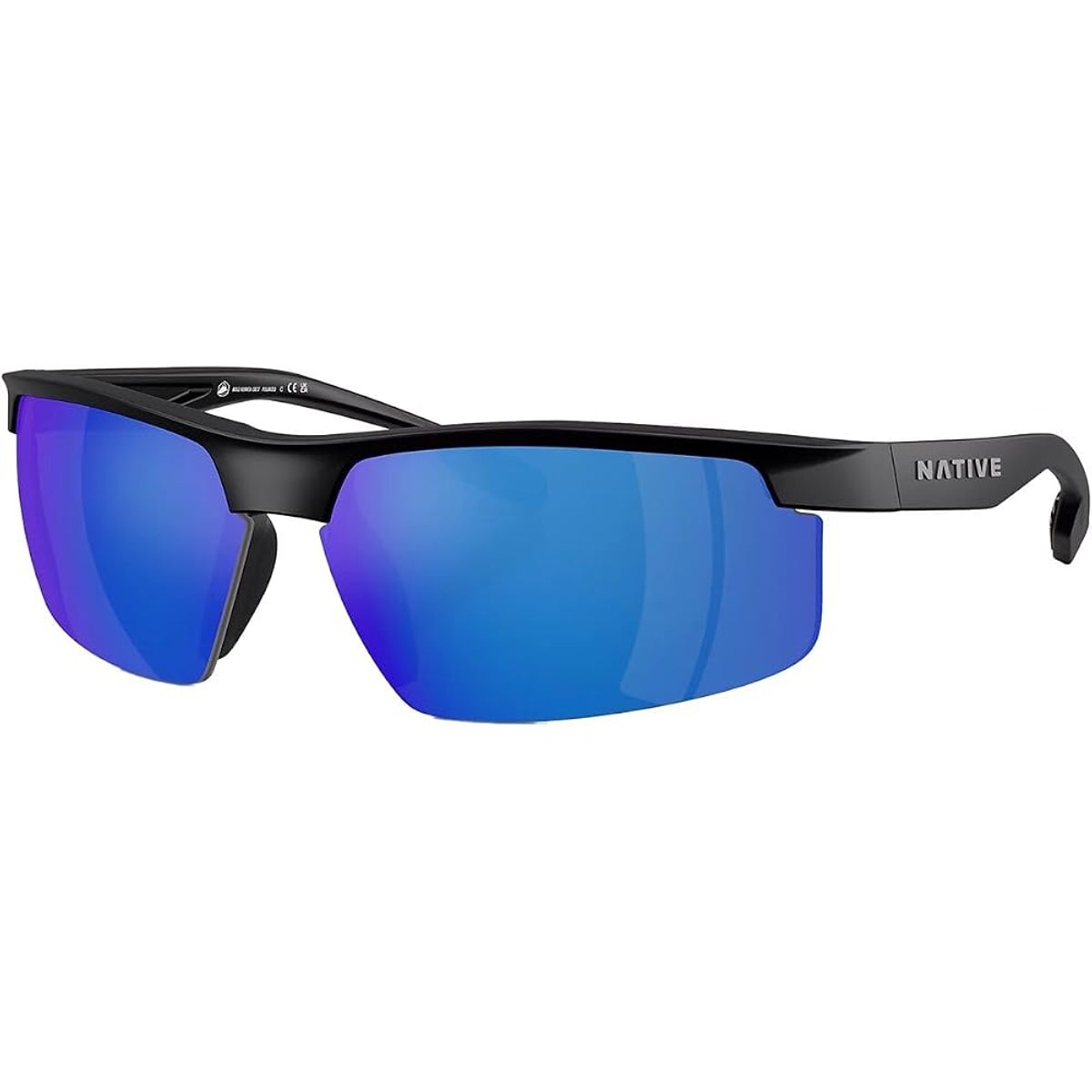
Polarized, rugged, and under eighty dollars
Native Eyewear Ridge-Runner
Native makes tough, polarized outdoor sunglasses at a price that won’t ruin your day if they go off a chairlift. The Ridge-Runner is a grippy wraparound with cushioned rubber contact points and a no-slip fit.
It’s everything you want for hiking, biking and fishing without spending premium-glass money, and it’s one of the few brands here that publishes both a total frame width and how dark the lens is.
The Ridge-Runner shows as unavailable with a waitlist on Native’s own site, though it’s still stocked elsewhere. There’s also a near-identical Ridge-Runner Crest, the XD9048, which is a separate model. Make sure you’re buying the one you meant to.
Medium to wide. This is a big, high-coverage wrap.
you want a cheap, tough, genuinely polarized pair for the outdoors.
you want premium glass optics or anything you’d wear to dinner.
The Numbers
The Numbers
For Water, Road And Glare
The four here exist to solve one specific optical problem: reflected light bouncing off a flat surface into your eyes.
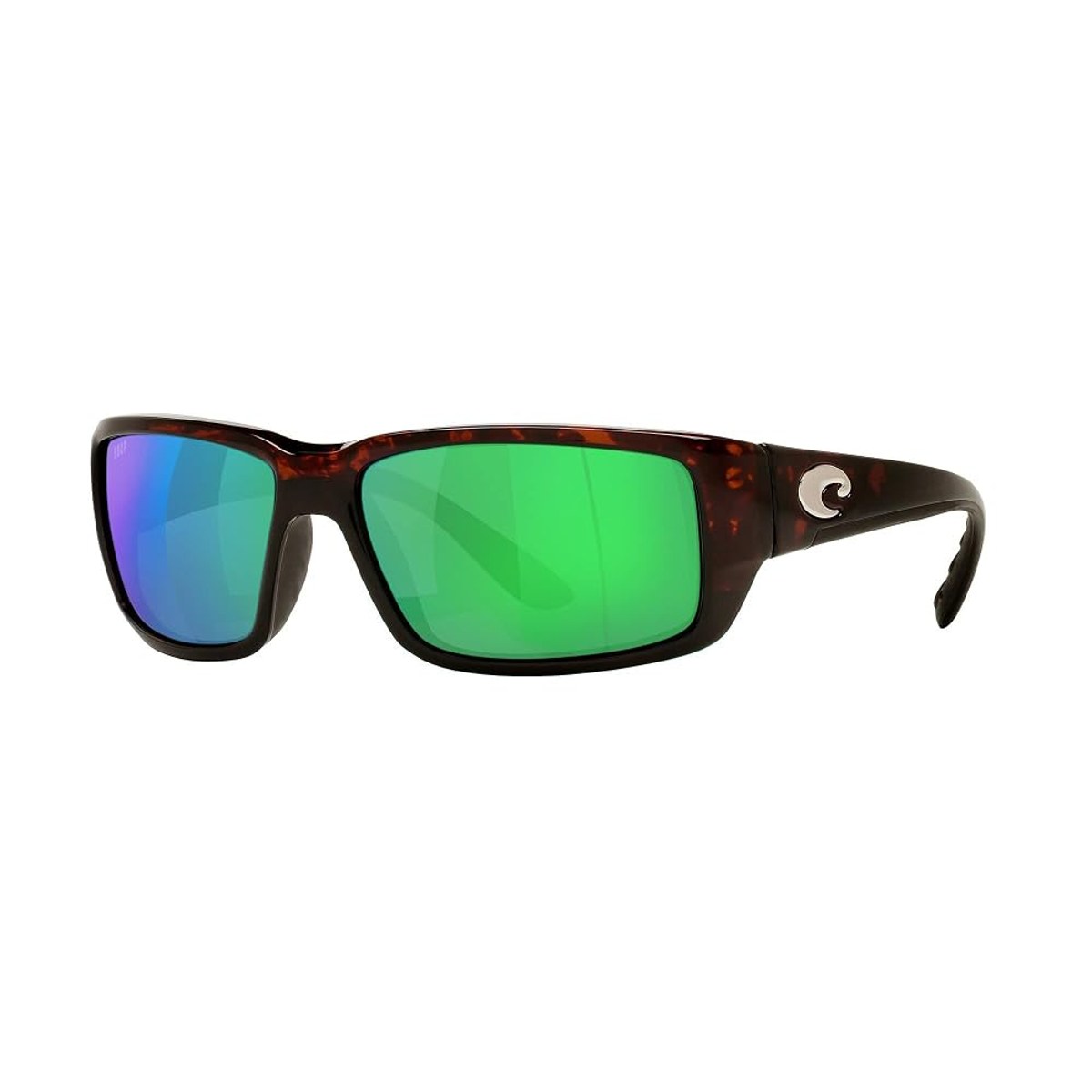
The one that lets you see fish
Costa Del Mar Fantail
Costa’s 580G glass is the gold standard for cutting glare off water. The physics behind that isn’t marketing: light bouncing off a flat water surface comes back polarized horizontally, so a vertical polarizer strips the reflection out and leaves the light that came up through the water column. That’s why you can see into the water rather than at it.
The Fantail is the do-everything Costa: wrap coverage, vented nose pads and temples to fight fog and sweat, and a build that shrugs off boats, kayaks and beaches. Costa is also one of the few brands here that will tell you how dark its lenses actually are.
580G is glass: optically the best thing here, and heavier. 580P is polycarbonate: lighter, more impact resistant, cheaper, very slightly less sharp. On a boat take the glass. On a bike take the plastic.
Medium. Narrower across than the number suggests, because the lenses wrap.
you fish, boat, or spend real time on the water.
you just want a light everyday city pair.
The Numbers
The Numbers

The best-looking everyday polarized lens there is
Maui Jim Red Sands
Put on a pair of Maui Jims and colors look richer. That’s PolarizedPlus2 doing its thing: killing glare while lifting reds, greens and blues. The Red Sands is a versatile universal-fit frame that works on most faces, which makes it the easiest Maui Jim to recommend as a premium everyday pair.
Worth saying plainly: no independent peer-reviewed study validates PolarizedPlus2, or Prizm, or ChromaPop, or 580. The mechanism behind all of them is real optics. The measured advantage over a good ordinary polarized lens has never been published. Buy it because you like how the world looks through it, which is a completely legitimate reason.
Maui Jim’s own site publishes the Red Sands at 60-17-145 and calls it Medium. At least one large retailer lists the same frame as a Large at 59-17. Use Maui Jim’s numbers. Maui Jim publishes no total frame width and no figure for how dark the lens is.
Most of them. The shape is deliberately neutral.
you want the best-looking everyday polarized lens and you’ll keep it for years.
you want big sport coverage, or a bargain.
The Numbers
The Numbers

One polarized pair for life and light adventure
Smith Lowdown 2
The Lowdown 2 is Smith’s everyday hero: a clean medium square with a keyhole bridge and ChromaPop lenses that make greens and reds jump. Comfortable enough for all day, sporty enough for the trail, and good-looking enough for the brewery after.
The frame is bio-based rather than petroleum acetate, which is a small thing that costs you nothing.
Smith’s own site currently shows the Lowdown 2 sold out, though it’s widely stocked elsewhere. Also worth knowing: two large retailers publish frame widths for this frame that differ by 10 mm, 136 mm against 126 mm, and Smith publishes nothing at all. We’ve used the 136 mm figure because it’s the only one that fits a 55-16 frame.
Medium. Tight on a genuinely large head.
you want one polarized pair that covers work, weekend and a hike.
you have a large head, or you need a wrap.
The Numbers
The Numbers
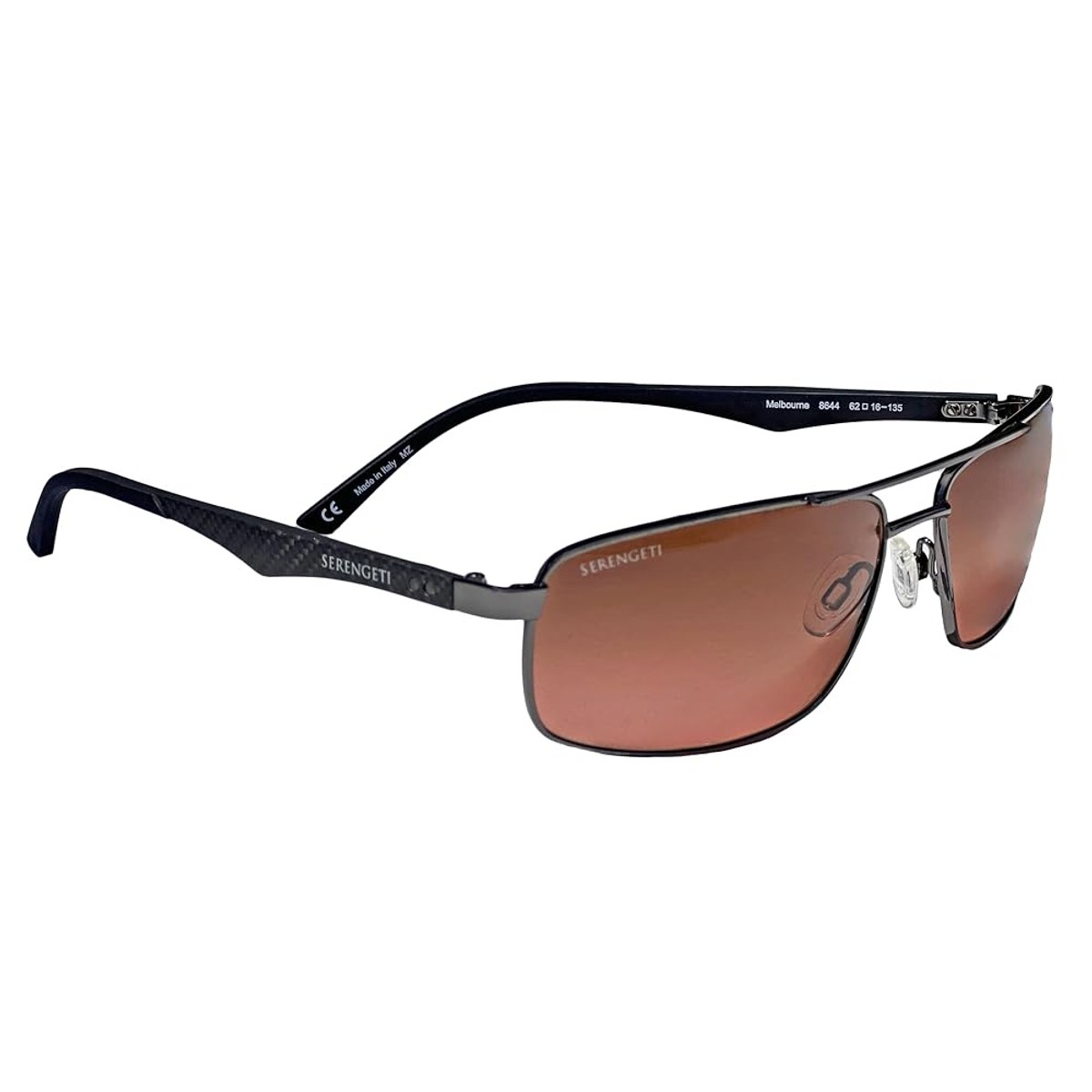
The specialist pick for people who drive for a living
Serengeti Melbourne
Serengeti’s Drivers tint is a contrast filter built specifically for road use: it lifts contrast and cuts glare without the screen problems polarization causes on a modern dashboard. If you drive for a living, that combination is genuinely hard to find anywhere else.
The lenses are also photochromic mineral glass, which darkens outdoors and lightens when the light drops.
Serengeti’s own site says its photochromic lenses are activated by UV in the atmosphere, and a windshield blocks around 96% of UVA. So the lens won’t meaningfully darken behind the glass. That isn’t a knock on the product: the Drivers tint is fixed, it works regardless, and it’s the actual reason to buy these. It’s a knock on how the category is usually sold to you.
Medium. One size only.
you spend serious hours behind the wheel and your dashboard fights polarized lenses.
you mainly want them for water or the beach.
The Numbers
The Numbers
Big Style, Small Money
All five are polarized and all five cost less than a tank of gas. Buy two, lose one, still ahead.
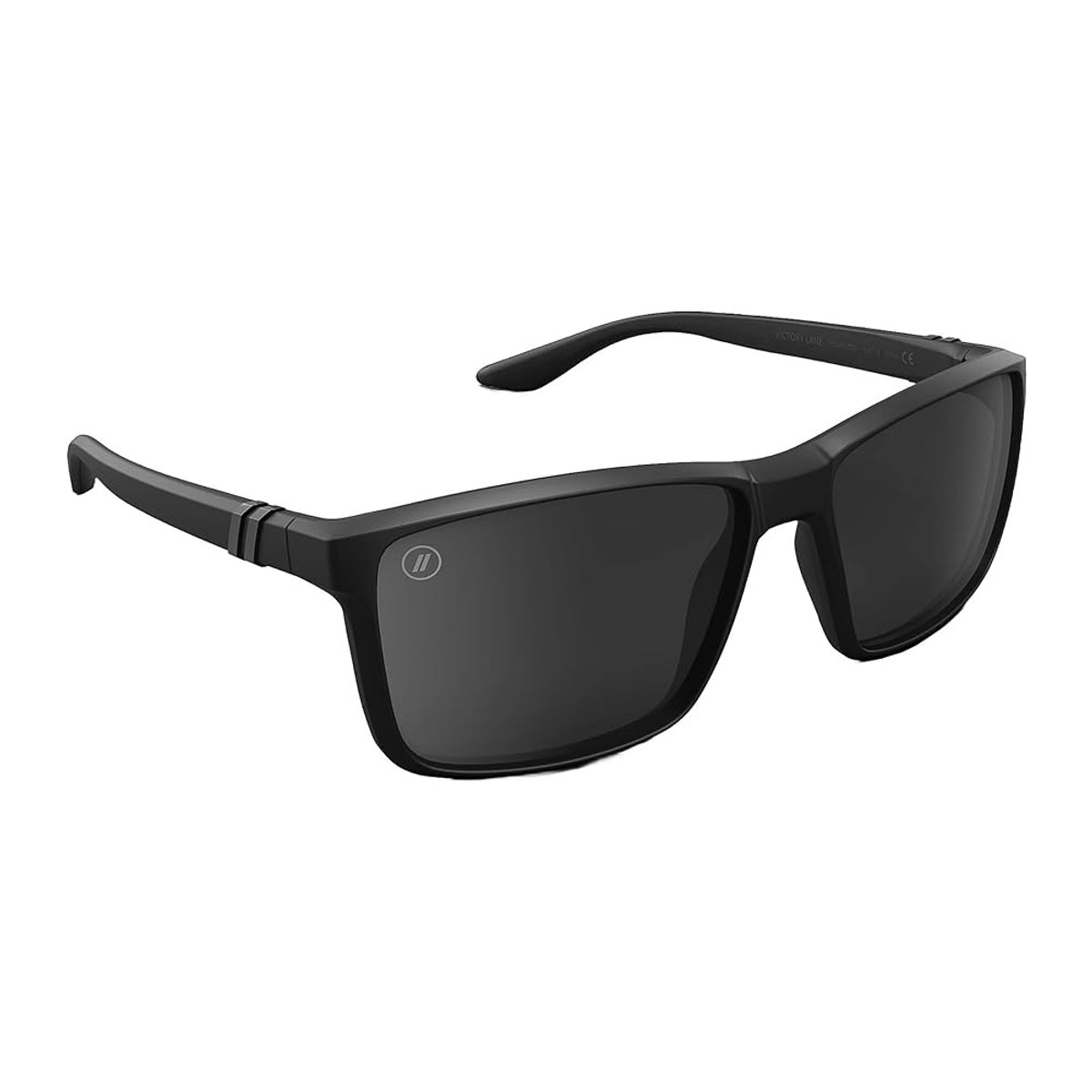
Looks premium, costs about a tank of gas
Blenders Mesa
Blenders blew up by making genuinely good-looking polarized sunglasses at a fraction of the big names. The Mesa is a clean modern everyday frame with punchy lens colorways and real polarization.
This is the pair you can lose at the beach without a second thought and still look sharp in. At $59 for a polarized lens, it’s one of the best value propositions on this page.
Blenders publishes a fit guide but no total frame width, no lens material and no figure for how dark the lens is. The optics are fine rather than premium, and the build won’t outlive you. At this price neither of those is a complaint.
Medium. Blenders publishes a fit guide but not a frame width.
you want stylish polarized shades on a real budget.
you want lifetime build quality or glass lenses.
The Numbers
The Numbers

Polarized for twenty five dollars, and they don’t bounce
goodr OGs
goodr made cheap running sunglasses cool. The OGs are polarized, they don’t slip or bounce even on a hard run, and they come in a rainbow of colorways with names that are funnier than they need to be.
Perfect as a beater, a running pair or a festival pair: anywhere you’d be genuinely upset to scratch something expensive. goodr also publishes a total frame width, which more expensive brands on this page don’t.
goodr’s own support page publishes 53 mm lens, 18 mm bridge, 133 mm temple and a 141 mm frame width. Two large retailers publish different numbers for all four. Use goodr’s.
Medium to wide. One size only, and it’s wider than it looks.
you want cheap, no-slip, genuinely polarized shades for running or knocking around.
you want a grown-up frame.
The Numbers
The Numbers
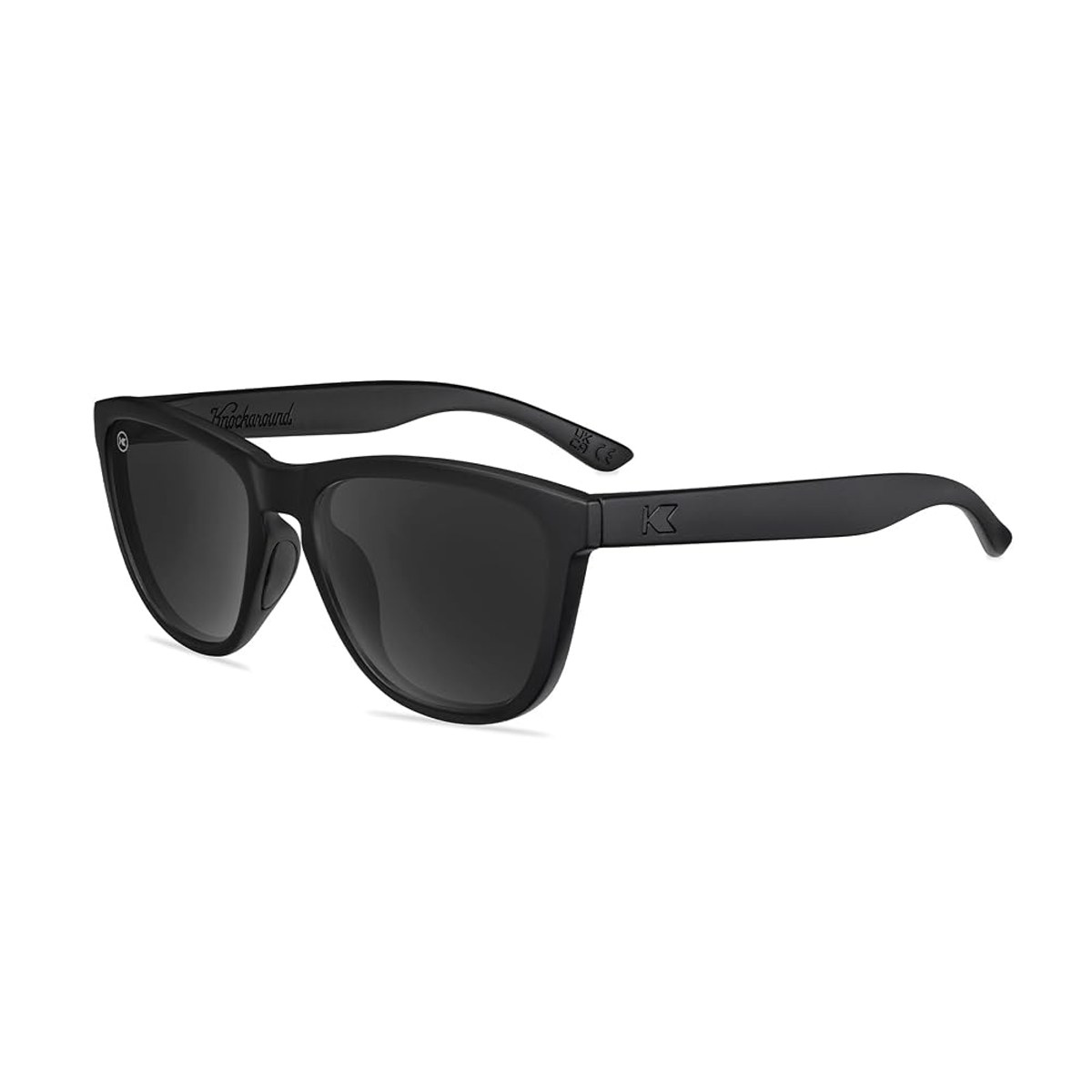
The classic shape, for the price of lunch
Knockaround Premiums
Knockaround’s Premiums are the classic squared-off shape, polarized, in more color combinations than you can count, for the price of a sandwich and a coffee.
They’re the go-to affordable everyday pair, cheap enough to own three of, backed by a real warranty. If you want the goodr price with a more grown-up shape and you aren’t running in them, this is the pick.
Knockaround publishes lens, bridge, temple and a 142 mm total frame width on the product page. That’s more than Persol, Maui Jim, Tom Ford or Prada will tell you, at a twentieth of the price.
Medium to wide.
you want a cheap polarized pair in a classic shape.
you want durability or a premium feel.
The Numbers
The Numbers
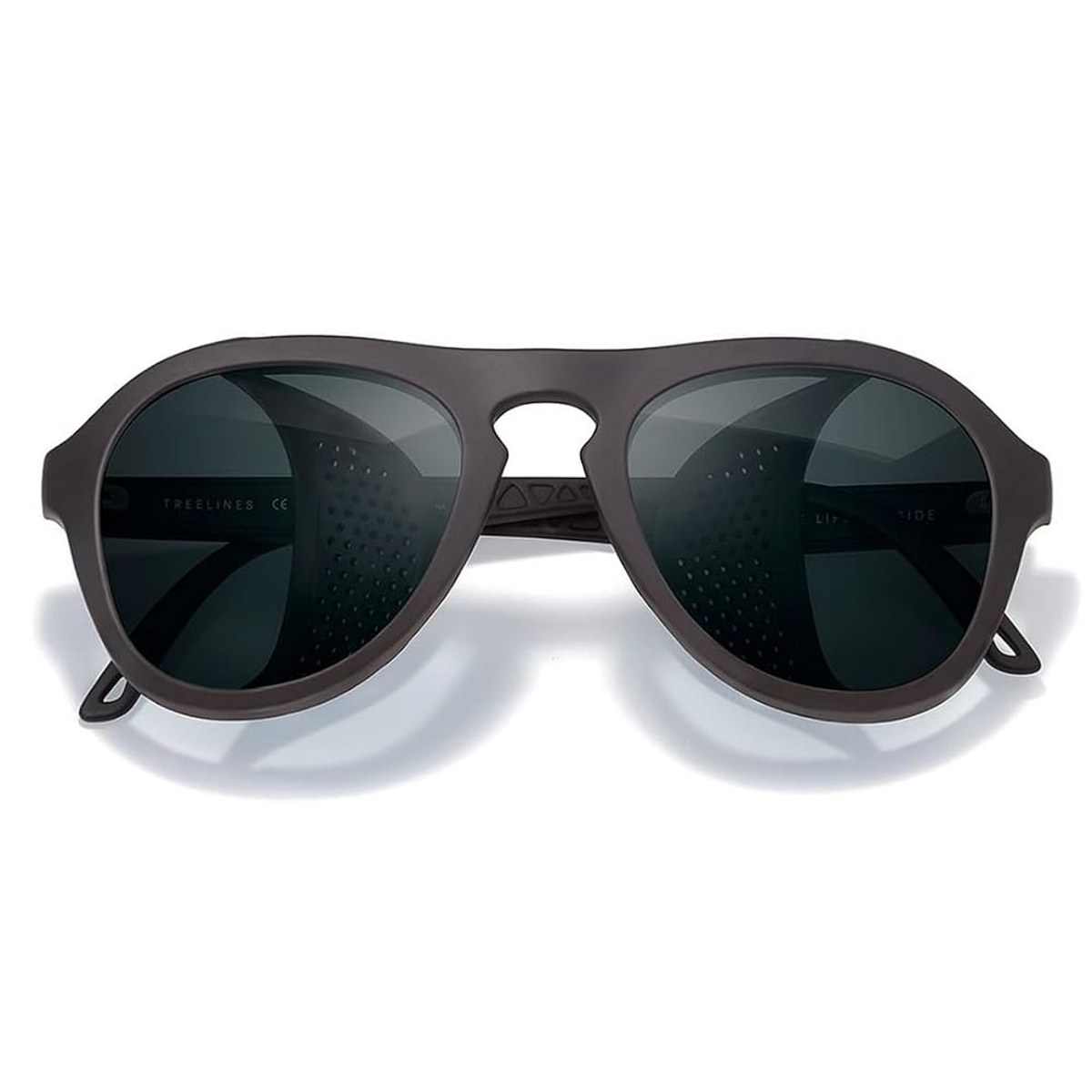
Made from recycled scrap, backed for life
Sunski Treeline
Sunski makes polarized sunglasses from recycled scrap plastic and backs them with a lifetime warranty, so the feel-good part costs you nothing. The Treeline is the do-it-all alpine frame: light, grippy and sharp-looking, equally at home on a hike or a patio.
Sunski also tells you how much light each tint lets through, which most of this page doesn’t, and it sells the Treeline in an extreme-glare version built for the mountains.
The darkest Treeline tint is an extreme-glare lens, the kind the international standard bars from road use. Great on a glacier, not something you should be driving home in.
Medium to wide.
you want sustainable polarized shades that still look good and are covered for life.
you want glass optics or a luxury frame.
The Numbers
The Numbers

Designer looks without the designer markup
DIFF Eyewear Layton
DIFF makes fashion-forward frames with polarized lenses at accessible prices, and it donates glasses with purchases. The Layton is an oversized navigator: a flat-top, aviator-adjacent shape that reads modern and a little bold.
It gives you a designer-inspired look for about sixty dollars, which is roughly a quarter of what the actual designers on this page charge.
Whether the Layton is polarized depends on which colorway you pick. The polarized versions run $69 and the non-polarized $64, and the listings don’t always make it obvious. DIFF publishes no total frame width.
Medium to large. Oversized navigators overwhelm a small face.
you want an on-trend look without paying the designer premium.
you want sport performance or heritage.
The Numbers
The Numbers
The Designer Shelf
You’re buying the design and the name, and that’s a perfectly good reason to buy something.
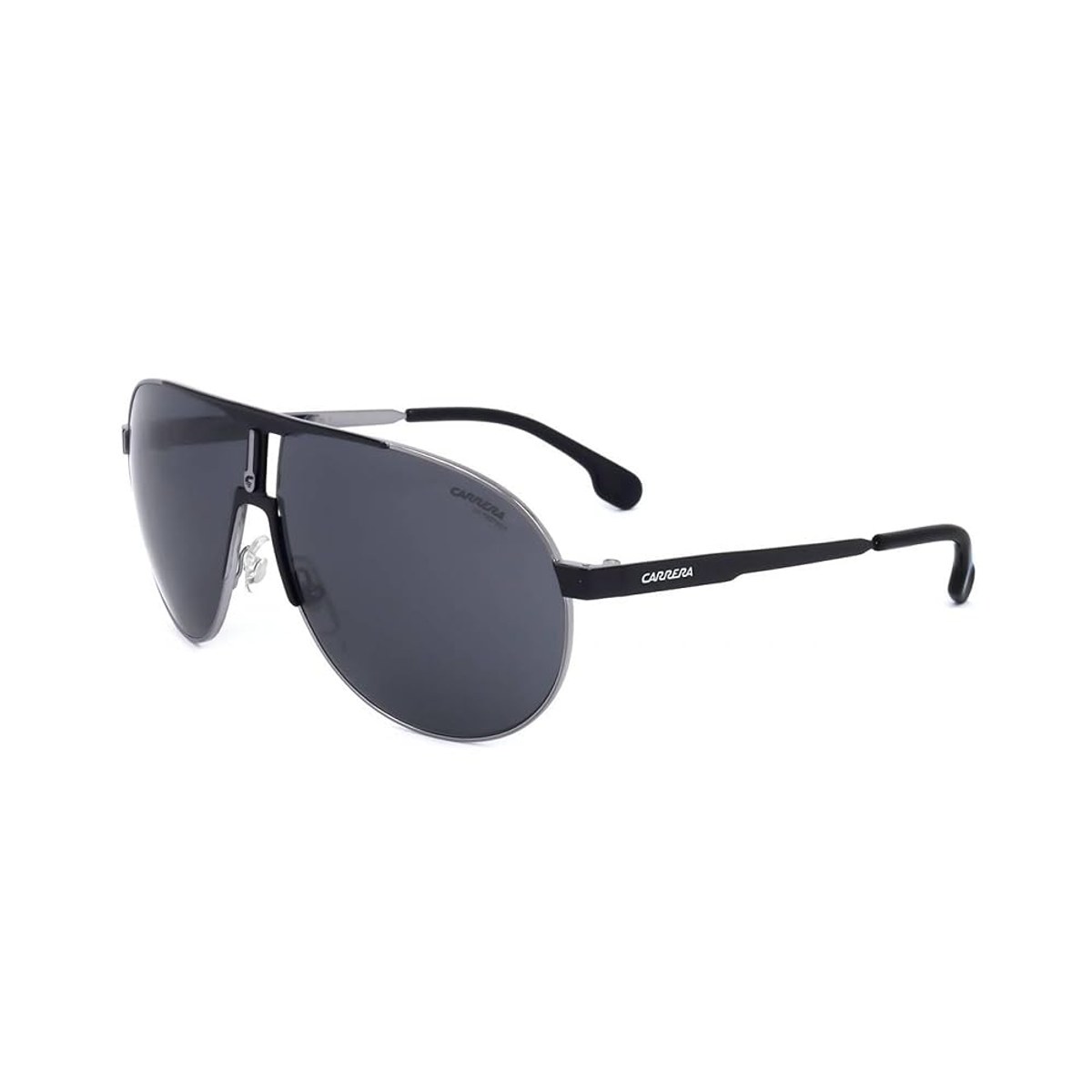
Loud European design, quietly discontinued
Carrera 1005/S
Carrera brings loud, confident European styling at a price the other designers on this page don’t approach. The 1005/S is a modern double-bridge pilot with a sporty-fashion edge: thick temples, bold colorways and a slightly aggressive shape.
It’s a lot of design personality for well under a hundred dollars, and it’s the only frame in the designer group here that a normal person might actually buy twice.
The 1005/S no longer appears anywhere on Carrera’s own site and remaining stock is third-party. That means the price is soft and there’s no brand warranty channel, and it also means the colorway you want may simply be gone. Carrera’s current pilot line starts around $145, so there’s no direct replacement at this price.
Wide. At 141 mm with a 66 mm lens this is a genuinely big frame.
you want head-turning style without a big spend and you don’t mind buying the last of a run.
you want a current model with brand support behind it.
The Numbers
The Numbers
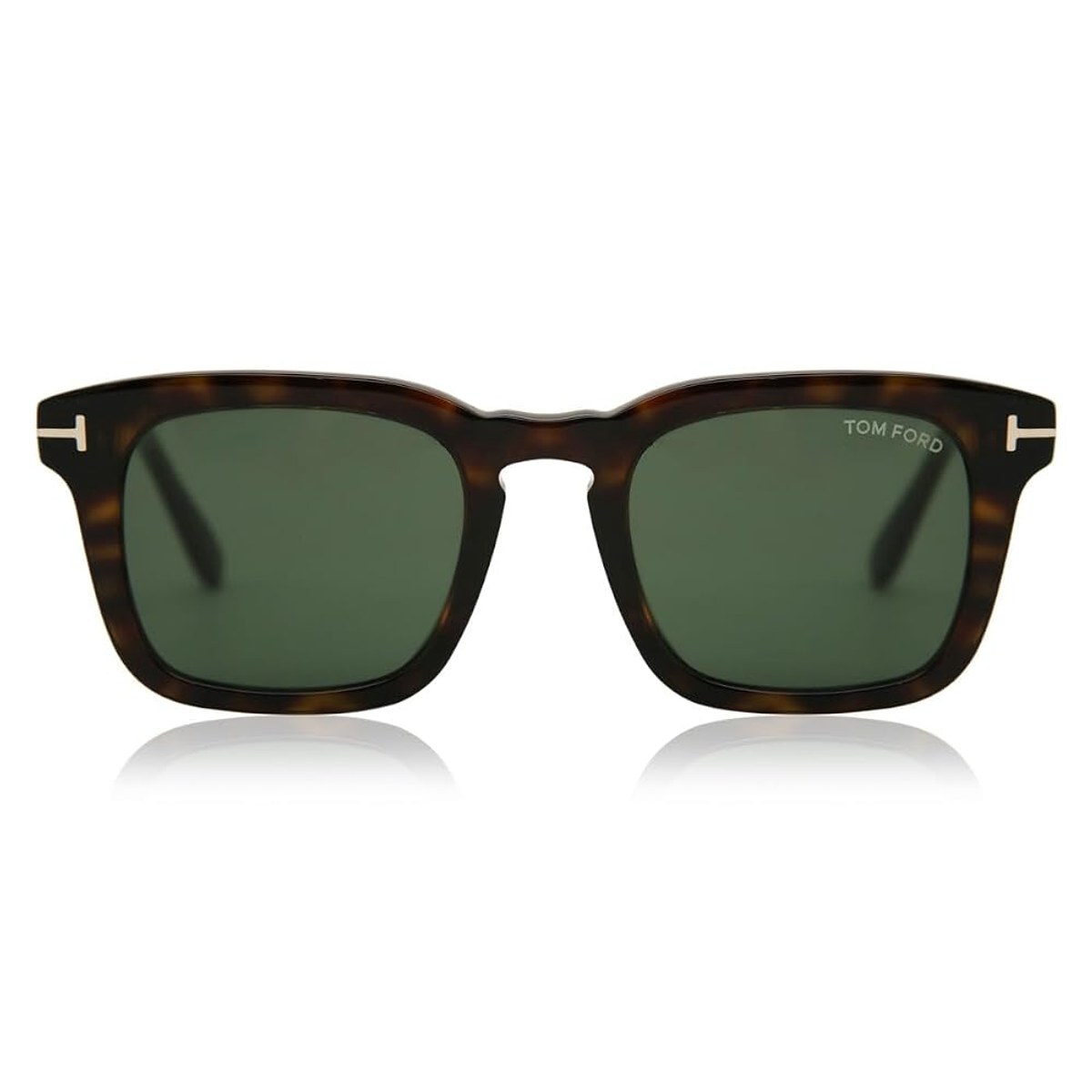
Quiet luxury, and the T on the temple is the whole point
Tom Ford Dax
Tom Ford sunglasses are shorthand for grown-up luxury: thick Italian acetate, a substantial feel in the hand, and the signature metal T on the temple. This square frame is bold without being loud, the kind of pair that signals you spent money without saying so.
It’s the designer pick for someone who is past logos for the sake of logos.
First, the name. The FT0751 is the Dax. The Sebastian is a different frame, the FT0099, and the Sebastian-02 is the FT0736. Plenty of listings get this wrong. Second, the price spread is enormous: authorized retail sits around $480 to $550 and marketplace listings run far below, so know who you’re buying from. Tom Ford publishes no frame width, no weight, and nothing about how dark the lens is.
Medium. The 50 mm lens with a 22 mm bridge sits wider on the face than the lens size suggests.
you want understated designer luxury and you can verify the seller.
you want polarized performance or value.
The Numbers
The Numbers
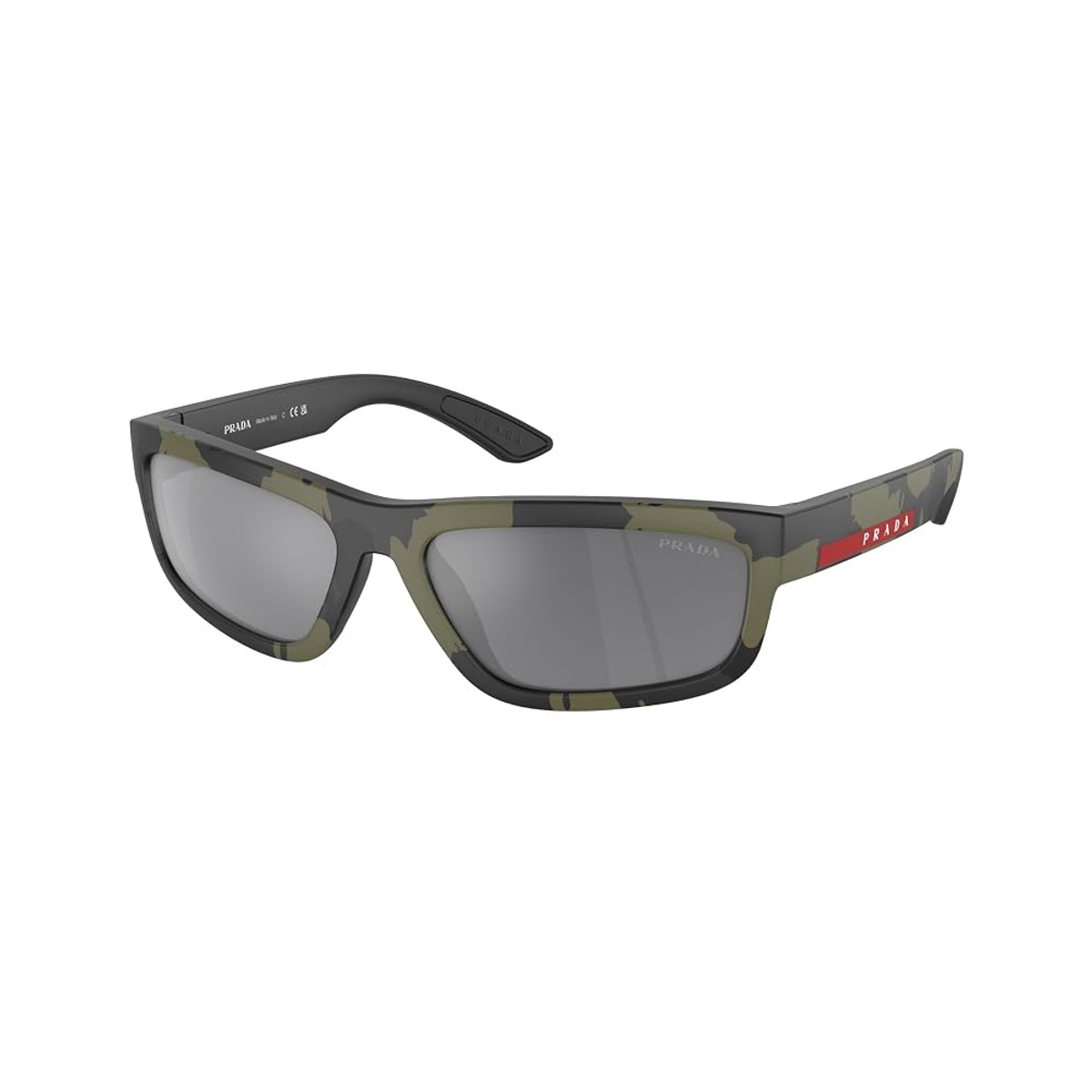
Sport luxury, and the only Linea Rossa that ships polarized
Prada Linea Rossa PS 10WS
Linea Rossa is Prada’s sport-luxury line: the red stripe, athletic but elegant shapes, and the Prada polish. These read modern and fashion-forward, a designer pair with a sporty edge for a guy who wants runway styling without a stuffy frame.
The PS 10WS is the one we would pick out of the line, because it’s the only mainstream Linea Rossa that ships polarized as standard rather than as an upgrade.
Prada’s own site no longer sells any Linea Rossa sunglass under $430, and authorized retail on this model is around $347. Anything in the $140 to $260 range is a discount channel, which is fine if you trust the seller and worth pausing over if you don’t. Prada publishes no frame width and nothing about how dark the lens is.
Medium to large.
you want the current fashion-forward designer look and you want it polarized.
you want heritage or measured performance.
The Numbers
The Numbers
All 24, Sortable
Tap any column heading to sort. Frame width is the column worth sorting on, and the blanks in it are the point.
| Sunglasses ▴▾ | Price ▴▾ | Frame width ▴▾ | Polarized ▴▾ | Lens ▴▾ | Style ▴▾ |
|---|---|---|---|---|---|
| Ray-Ban Aviator Classic | $191 | 136 mm | No | Crystal glass | Aviator |
| Ray-Ban Original Wayfarer | $191 | 135 mm | No | Glass | Wayfarer |
| Ray-Ban Clubmaster | $191 | 137 mm | No | Crystal glass | Browline |
| Ray-Ban Round Metal | $191 | 129 mm | No | Crystal glass | Round |
| Persol 714 Steve McQueen Folding | $511 | Not published | No | Crystal glass | Folding aviator |
| Randolph Aviator | $265 | 143 mm | No | SkyTec mineral glass | Aviator |
| American Optical Original Pilot | $250 | 135 mm | Optional | SkyMaster glass or AOLite nylon | Aviator |
| Shwood Canby | $149 | 144 mm | No | CR-39 | Rectangular |
| Oakley Holbrook | $237 | 132 mm | Yes | Plutonite polycarbonate | Square lifestyle |
| Oakley Sutro | $203 | 134 mm | No | Plutonite polycarbonate | Shield |
| Roka Rory | $155 | Not published | Optional | Polycarbonate | Lifestyle sport |
| Native Eyewear Ridge-Runner | $73 | 139 mm | Yes | Polycarbonate | Sport wrap |
| Costa Del Mar Fantail | $233 | 131 mm | Yes | 580G glass or 580P polycarbonate | Wrap sport |
| Maui Jim Red Sands | $259 | Not published | Yes | MauiPure | Rectangular |
| Smith Lowdown 2 | $217 | 136 mm | Yes | ChromaPop polycarbonate | Square lifestyle |
| Serengeti Melbourne | $140 | Not published | No | Mineral glass, photochromic | Rectangular |
| Blenders Mesa | $59 | Not published | Yes | Polycarbonate | Wrap lifestyle |
| goodr OGs | $25 | 141 mm | Yes | Polycarbonate | Square lifestyle |
| Knockaround Premiums | $35 | 142 mm | Yes | Polycarbonate | Wayfarer-adjacent |
| Sunski Treeline | $64 | 141 mm | Yes | Polarized polycarbonate | Sport lifestyle |
| DIFF Eyewear Layton | $64 | Not published | Optional | Scratch-resistant polymer | Navigator |
| Carrera 1005/S | $69 | 141 mm | No | Not published | Pilot |
| Tom Ford Dax | $219 | Not published | No | Not published | Square |
| Prada Linea Rossa PS 10WS | $146 | Not published | Yes | Not published | Sport wrap |
Frame width is end to end across the front. Where a brand publishes it, that’s the brand’s number. Where it doesn’t, it’s a retailer’s own measurement, and where neither exists the cell is blank rather than estimated.
Face Shape, Honestly
The rule you’ve read a hundred times is contrast. Round or soft face, go angular: Wayfarer, Clubmaster, a squared Holbrook. Square or angular face, soften it: aviators, round metal. Oval face, almost anything works. Heart-shaped, balance a wider brow with something lighter and bottom-heavy.
It’s good advice and we follow it ourselves. It’s also, and you won’t read this anywhere else, a styling convention with no evidence base of any kind behind it. There’s no optics in it, no study, nothing measured. It’s a rule of thumb that got repeated until it started being written as fact, and every guide that states it flatly is overselling what anybody actually knows.
What does have numbers behind it’s scale. Your frame shouldn’t be wider than your face at its widest point, US men average 143.5 mm across the cheekbones, and the frames on this page span 129 mm to 144 mm. So: treat shape as taste and width as fact, and put your number into the Fit Finder before you spend anything.
The Things People Actually Ask
Are polarized lenses worth it?
For most people, yes, but it depends entirely on where you’re wearing them. On water, polarization isn’t a preference, it’s the point: reflected light off a flat surface comes back horizontally polarized, so a vertical polarizer strips the surface glare and leaves the light that came up from underneath. Nothing else in a sunglass does that. On the road it’s more of a trade. The American Academy of Ophthalmology specifically lists car dashboards, ATM screens, phones and some watch faces as things polarized lenses make harder to read, and car makers put the same warning about head-up displays in their own owner manuals. In an aircraft the FAA says flatly not to use them. So: yes for water, snow and beach, your call for driving, no for flying.
How do I know sunglasses actually block UV?
Look for 100% UV protection, UV400, or blocks UVA and UVB on the listing, and know that UV400 isn’t a certification. No standards body defines it, and most sunglass standards stop at 380 nm rather than 400. What’s actually checkable is a stated conformance to ANSI Z80.3 or EN ISO 12312-1 with a lens category number, because those are testable claims. In the US, the FDA treats non-prescription sunglasses as a Class I device and requires impact resistance, not UV performance, so nothing stops an unverified UV claim from reaching a shelf. Price and darkness aren’t proxies either: a cheap lens with a proper UV filter protects better than an expensive dark one without. And a dark lens with no UV filter really is worse than no sunglasses at all, though the usual explanation for that, pupil dilation, isn’t the main mechanism. A 2024 study in Scientific Reports found that field of view and the squint reflex account for far more of the effect.
What sunglasses shape suits my face?
The convention is contrast: round or soft faces look sharper in angular frames, square or angular faces soften with aviators and round metal, and oval faces can wear almost anything. Worth saying honestly, because nobody else in this category will: there’s no evidence base behind any of that. It’s a styling convention, not optics, and it’s repeated as fact everywhere. What does have a number behind it’s scale. US men average about 143.5 mm across the cheekbones, with the 5th to 95th percentile spanning 132 to 155 mm, and the frames on this page run from 129 mm to 144 mm. Use the Fit Finder above, because width is measurable and shape is taste.
Are expensive sunglasses actually better than cheap ones?
Sometimes, and less often than the price gap suggests. What money buys you is lens material, build and design. Glass optics really are sharper than polycarbonate, a $265 Randolph really will outlive a $30 goodr, and a hand-made Italian acetate frame really does feel different in the hand. What money doesn’t reliably buy you is measured performance from a branded contrast tint. No independent peer-reviewed study validates Prizm, ChromaPop, 580 or PolarizedPlus2 against a good ordinary polarized lens, and a 2023 trial found tint color made no measurable difference to catching a cricket ball. A $30 goodr and a $259 Maui Jim both block 100% of UV. Our advice: buy cheap for beaters and sport you might lose, and invest once in a good everyday pair.
Is there a lens that’s illegal to drive in?
There’s a lens that’s barred from road use by the international standard, which isn’t quite the same thing. ISO 12312-1 clause 5.3.2.1 says filters suitable for road use shall be category 0, 1, 2 or 3, which excludes category 4, the very dark 3 to 8% transmittance glacier lenses. The same standard requires that a driving lens pass a signal-light test, at least 80% relative transmittance for red and 60% for yellow, green and blue, so a heavily selective tint can fail even inside category 3. And it says a lens below 75% transmittance shouldn’t be used on the road at twilight or at night, which covers essentially every sunglass on this page. No US law bans dark lenses for driving, but a lens marked as unsuitable for road use is telling you something real.
Amazon or the brand’s own site, where should I buy?
Either works, and we link both where both exist so you can compare price and stock. Amazon is usually fastest and easiest on returns. The brand site often has more colorways, warranty registration and the occasional exclusive, and it’s the only place you can be certain of what you’re getting on the designer frames, where the price spread between authorized retail and marketplace listings runs into the hundreds. Prices move constantly, so it’s worth checking both buttons.
Our Review Process
Twenty four frames, checked against the brands' own published specifications, the international sunglass standard, and the research literature where a claim needed testing.
We check the current model
Every model number and price here was verified against the brand’s own US site in October 2026. That pass found a discontinued frame, three models sold out at the brand, and one product named after the wrong Tom Ford model, which is a mistake that has spread across most of the guides in this category.
We don’t compute a measurement and call it data
Sixteen of these frames have a published end-to-end width. Eight don’t, and across the sixteen that do, the gap between lens plus bridge and actual frame width ranges from nothing to nearly 20 mm. So we could estimate the missing eight. We would rather leave the cell blank and tell you which brands won’t say.
We say when the popular answer is unsupported
Four of the claims in this category don’t survive contact with a source: photochromics working behind a windshield, copper lenses improving depth perception, yellow lenses helping at night, and face shape mapping to frame shape. All four are flagged on this page, with the reason.
