 Skip to content

Most range hoods in American kitchens are not doing the job people think they are doing. A large share of them are recirculating units, which pull air through a charcoal filter and blow it straight back into the room, so the grease is captured and the heat, steam and cooking byproducts are not. A larger share are over-the-range microwaves, which sit too low and too shallow to cover the front burners at all. Over Columbus Day! range hoods ride the appliance calendar, which is one of the four real windows in the year, and the marketplace units are discounted independently on top of that. Prices below are live.

Quick sale picks
The hoods carrying the largest markdowns today. Check the width against your cooktop before the CFM number, because a hood narrower than the burners it sits over misses the front two no matter how much air it moves.

The duct is the appliance
CFM is the number every listing leads with and it is close to meaningless on its own, because it is measured on a test bench with no ductwork attached. What the hood actually moves in your kitchen depends on the duct behind it: diameter, length, the number of elbows, and whether it ends in a proper cap or a flap that barely opens. A 1200 CFM hood squeezed onto a six inch duct with two ninety degree turns moves less air than a 400 CFM hood on a short straight eight inch run. If you are replacing a hood and keeping the existing duct, the duct is the ceiling on your result, and buying a bigger blower does not raise it.
There is a second reason not to chase the biggest number. A hood pulling hard enough on a tightly built house has to get replacement air from somewhere, and if the house cannot supply it, the air can come back down a chimney or a gas water heater flue. This is why residential codes commonly require a dedicated makeup air supply above roughly 400 CFM. If you have gas appliances that vent naturally and you are considering a high output hood, that requirement is the reason to talk to whoever installs it rather than to skip it.
When range hoods actually go on sale
This category sits in two markets at once. Branded hoods follow the major appliance calendar at appliance retailers, and the marketplace import brands follow their own discounting cycle. The two rarely peak together, which is why it pays to check both.
| When | What to expect |
|---|---|
| Black Friday and Cyber Monday | The annual low on both sides of the category at once, which is the only time that happens. Appliance retailers run their deepest ventilation promotions and the marketplace brands cut hardest in the same weeks. |
| Right now, over Labor Day | Genuinely one of the four real appliance weekends alongside Presidents Day, Memorial Day and Black Friday. It also overlaps the model-year changeover, so last year’s hoods clear at appliance retailers rather than at the marketplaces. |
| Presidents Day and Memorial Day | The other two appliance weekends. Reliable and worth watching if you are buying a branded hood as part of a wider kitchen order, since the package discounts appear here. |
| Amazon’s July and October events | Where the marketplace import brands cut hardest, and where the sub-two-hundred-dollar under-cabinet units are cheapest. Little effect on the branded side. |
| March through June | Kitchen renovation season, and the worst pricing of the year. Demand is highest exactly when the fewest promotions are running, and lead times on the nicer hoods stretch out at the same time. |
| Any time, for ducting and filters | Barely move on price. Budget for the duct, the cap and a spare set of baffle filters separately, because those are what make an installed hood work rather than what the box costs. |
What actually counts as a good price
Sort by what the hood has to do and where it mounts before comparing numbers, because the same width can span a very wide price range depending on whether it is a plain under-cabinet unit or a chimney hood that is meant to be looked at.
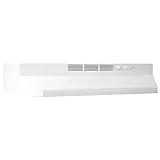
Basic under-cabinet, 30 inch
The plain replacement. Fine when it is ducted to the outside and sized to the cooktop, and close to decorative when it is not. Check that the model can be converted to ducted before buying.
Ducted under-cabinet, 30 to 36 inch
Real airflow, baffle or mesh filters, and lighting that is usable. The sensible default for most kitchens where a cabinet sits above the range.
Wall-mount chimney hood
The one that is meant to be seen, with a deeper capture area than an under-cabinet unit. Worth it when there is no cabinet above the range and the hood becomes part of the room.
Island or pro-style insert
The expensive end, and the one where installation cost rivals the hood. Island hoods have to work without walls to help them, which is why they need more capture area and more airflow.
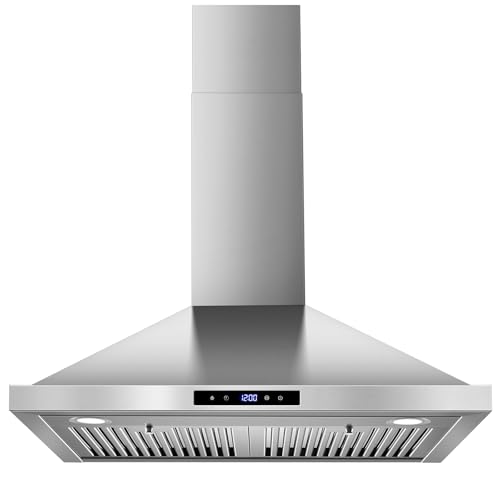
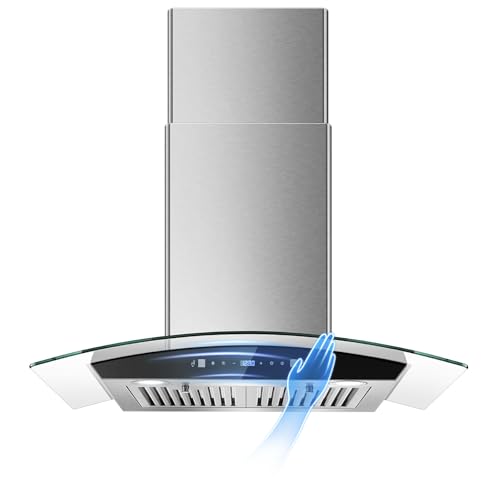
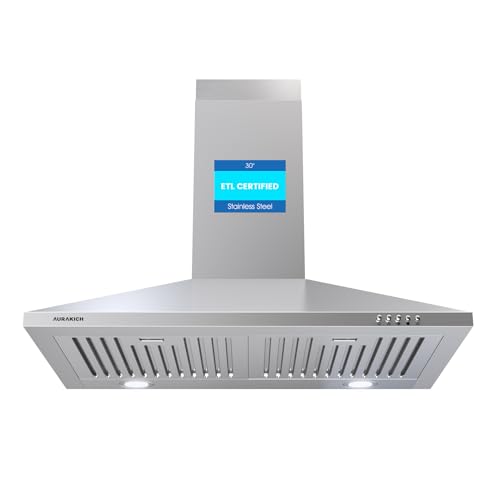
Wall mounted range hoods on sale
The best discounted group on the page and the format that actually performs best, for a structural reason rather than a marketing one. A chimney hood mounted against the wall with no cabinet above it can be deeper and taller than an under-cabinet unit, which gives it a larger capture area, and capture area does more work than airflow. Smoke and steam rise in a plume that spreads as it goes, so the volume sitting above the pan is what catches it. The trade is that the hood becomes a visible object in the kitchen and the duct run has to go up through the wall or the ceiling rather than into the cabinet above.





Broan range hoods on sale
The most consistently discounted named brand here, and the one whose model numbers are worth learning if you are replacing rather than renovating. Broan-NuTone makes an unusually wide range, from the plain white under-cabinet unit that is in millions of rental kitchens up to professional-style inserts, and the practical advantage is that replacement filters, blowers and light covers are easy to find years later. The cheap end is genuinely cheap, so read the specification rather than the brand: some of the entry models are ductless out of the box and convertible only if you buy the kit.


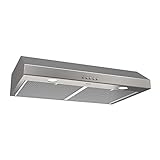
Ductless and recirculating hoods on sale
Cheap, easy to install, and worth being honest about. A ductless hood pulls air through a grease filter and a charcoal filter and returns it to the room, which means it captures grease and reduces odor and does not remove heat, steam or the byproducts of gas combustion at all. The charcoal filter is a consumable that needs replacing every few months and is quietly ignored by most owners, at which point the odor reduction goes too. None of this makes it a bad purchase: if you rent, if you are on an interior wall with no route outside, or if a duct run would mean opening a ceiling, a recirculating hood is the only option available and it is better than nothing. Just buy it knowing what it does, and if there is any realistic route to the outside, take it instead.


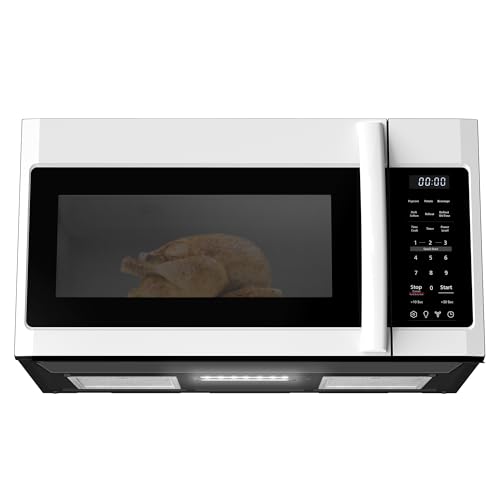
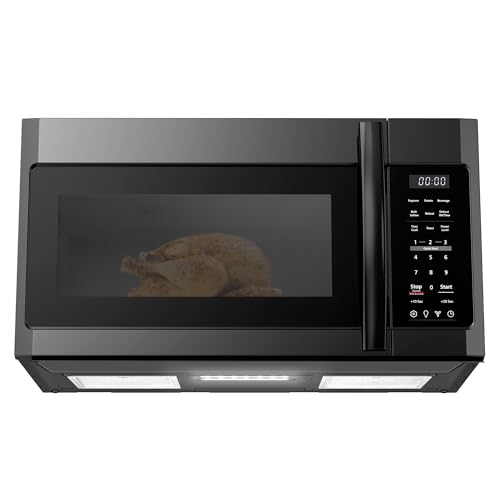
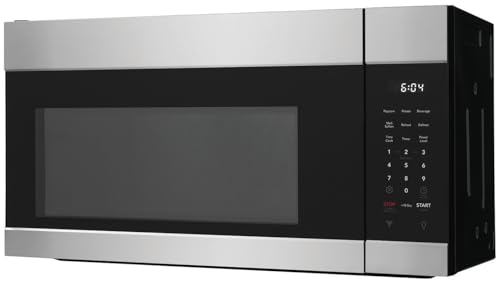
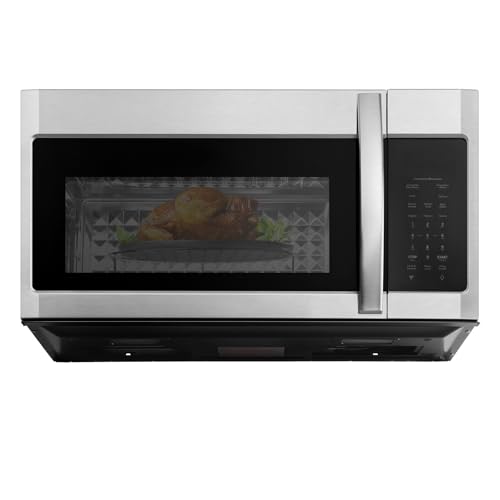
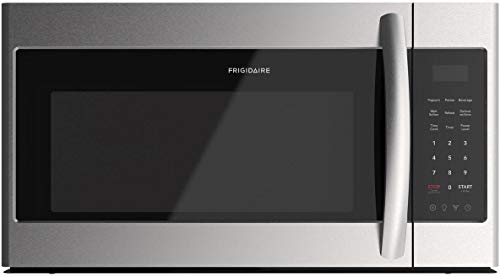
Over-the-range microwaves on sale
The deepest discounting on the page, and the most common range hood in America despite being the weakest one. An over-the-range microwave is an appliance compromise: it recovers the cabinet space above the range and gives you a microwave at a convenient height, and in exchange the ventilation is shallow, mounted low, usually recirculating, and driven by a fan sized to fit inside a microwave. It does not cover the front burners, which is where most cooking actually happens. If the kitchen you have is built around one, replacing it with another is a reasonable purchase and these are well priced right now. If you are choosing freely and you cook seriously, the microwave belongs somewhere else and a real hood belongs over the range.





Where else to check today
Worth checking beyond the marketplaces, because hood dimensions, duct diameter and blower ratings are stated properly on appliance retailer listings and are frequently missing or wrong on marketplace ones. These are the ones worth opening in another tab.
WayfairBest for the widest selection
AJ MadisonBest for real specifications
Best BuyBest for the appliance weekend pricing
Broan-NuToneBest for matching an existing hood
WalmartBest for the lowest prices
How to buy a range hood
Ducted beats every other consideration. If the air goes outside, the hood works. If it comes back into the room through a charcoal filter, it captures grease and does very little else. Before comparing models, work out whether a duct to the outside is possible from where your range sits, because that single answer changes which half of this page is relevant to you.
Match the width to the cooktop, then go wider. A hood the same width as the range is the minimum and a hood three inches wider on each side is meaningfully better, because the plume of steam and smoke spreads as it rises. A narrow hood over a wide cooktop will never catch the front burners regardless of its airflow rating, and that is the most common way an expensive hood underperforms a cheap one.
Read the sone rating, not just the CFM. A hood loud enough to make conversation difficult is a hood that gets run on speed one or not at all, which is the same failure as not having one. Compare noise at the speed you would actually cook on rather than at the lowest setting, since that lowest number is what marketing quotes.
Mount it at the height the manual says. Too high and the plume spreads past the edges before it arrives; too low and it is a burn hazard and a fire risk over gas. The manufacturer specifies a range, commonly around twenty-four to thirty inches above an electric cooktop and higher over gas, and that number is worth following exactly rather than splitting the difference for looks.
Baffle filters over mesh, if the choice exists. Stainless baffles separate grease by making the air change direction, they go in the dishwasher, and they last the life of the hood. Aluminum mesh clogs, holds grease, and eventually gets thrown away and not replaced. It is a small difference in price and a large difference in how the hood behaves in year three.
Turn it on before you cook and leave it running after. Starting the fan before the pan gets hot means the plume never gets ahead of it, and running it for ten minutes after you finish clears the moisture and grease still hanging in the air. This costs nothing and does more for the result than the difference between two adjacent models.
Range hood questions, answered
The bottom line
Work out whether you can duct to the outside before you compare a single model, because that answer decides everything else. If you can, buy the widest hood that fits over your cooktop, mount it at the height the manual specifies, and stop worrying about the CFM number beyond making sure the duct can carry it. If you cannot, buy a recirculating unit knowing it captures grease and not much more, and put the charcoal filter replacement in your calendar. Either way, turn it on before the pan gets hot and leave it running after you are done, which costs nothing and matters more than the difference between two models.
