 Skip to content
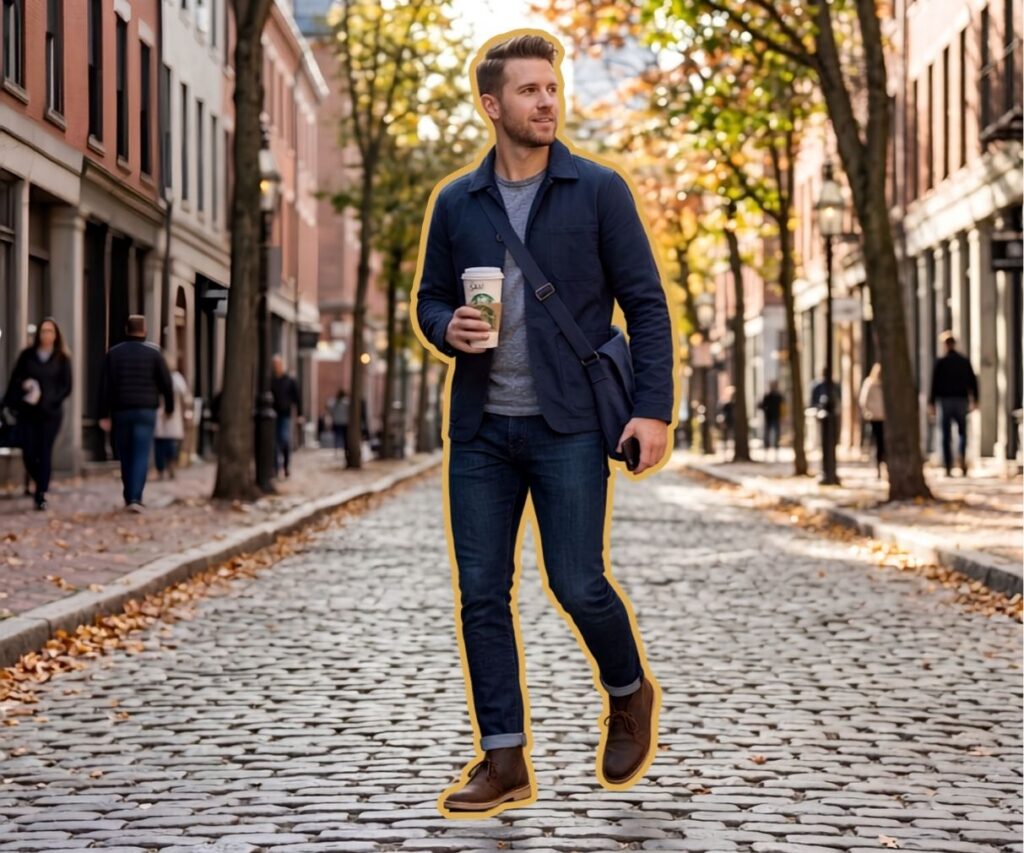
Every desert boot guide shows you the same shape fifteen times. Two eyelets, a short quarter, a rounded toe, suede. They are all, at a glance, the same boot, which is why most of these lists end up being five colors of one Clarks.
The part that actually decides whether you're still wearing the boot in three years is the bit you can't see in the photo: what's under it. Crepe, rubber and leather are three completely different purchases wearing the same silhouette, and the wrong one will sit in your closet. So we sorted all fifteen picks by sole, explained what each one costs you, and built a tool that tells you which one you actually want.
The pale gummy wedge under a classic desert boot is natural crepe rubber, and it's glued on. That means two things. It's slick on wet pavement, and when the wedge compresses and picks up enough grit, no cobbler is going to save it. A welted leather sole on the same silhouette can be rebuilt more or less forever. Same boot, from across the room. Completely different lifespan.
Start here
The three soles
Pick the sole first and the boot second. Get this right and almost any boot in that group will work. Get it wrong and the nicest boot on the page is the one you stop wearing.
Sole one
Crepe
Natural rubber, gummy and pale, moulded into a thick wedge. This is the sole that made the desert boot famous and the one most people picture.
- What it gets rightQuiet, light, soft underfoot from the first hour, and the only sole that gives you the original 1950 silhouette.
- What it costs youSlick on wet pavement, grabs grit and gum permanently, compresses and yellows, and on most boots it's glued rather than stitched.
Dry cities, spring and fall, and men who want the look more than the mileage.
Sole two
Rubber lug
Moulded rubber with actual tread, sometimes over a foam midsole, sometimes stitched to the upper.
- What it gets rightGrip in rain and slush, real cushioning, and on the better ones a seam-sealed waterproof upper to match.
- What it costs youIt reads more casual. A lugged sole under wool trousers fights the trousers.
Anyone who gets a winter, walks to work, or wants one boot to cover most of the year.
Sole three
Leather
A stacked leather sole, usually stitched on with a Goodyear welt, sometimes with a thin rubber topy added.
- What it gets rightThe dressiest option by a distance, it breathes, it moulds to your foot, and a welted one can be resoled for as long as the upper survives.
- What it costs youSlippery when wet, needs a break-in, and costs more up front.
Offices, wool trousers, and men who'd rather buy one boot twice than four boots once.
Sole picker
Which sole do you actually want?
Four taps. We'll tell you which of the three soles fits how you live, why, and the two boots in that group worth looking at first for your budget.
What's winter like where you are?
Where will you wear them most?
How long do you want them to last?
What are you willing to spend?
Sole one
Crepe
Natural rubber, gummy and pale, moulded into a thick wedge. This is the sole that made the desert boot famous and the one most people picture.
Clarks
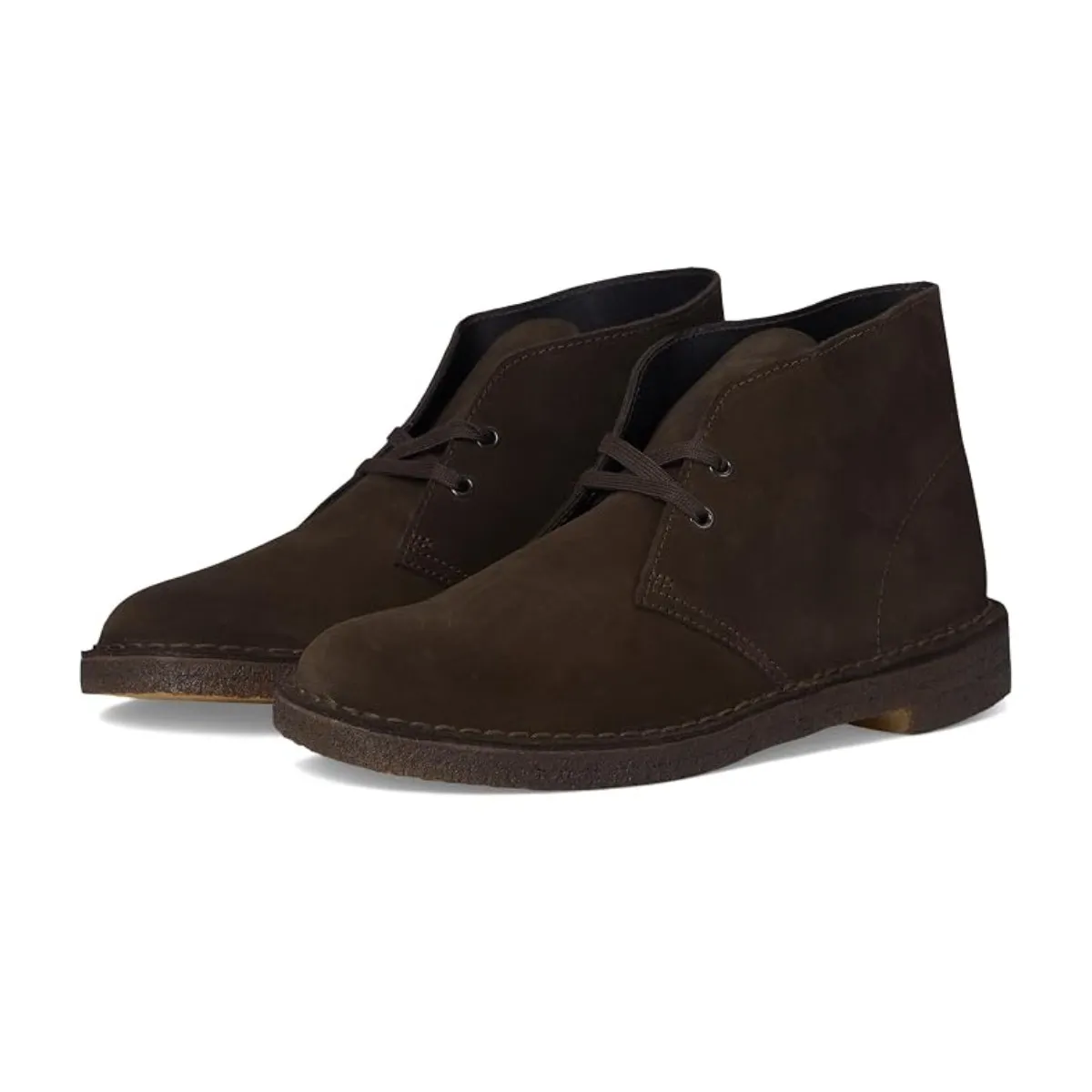
Clarks Desert Boot, Brown Suede
Nathan Clark drew this in Burma in 1950 after watching officers get rough suede boots made in Cairo bazaars, and the shape hasn't needed changing since. Two eyelets, unlined suede, a crepe wedge, no structure anywhere. It's still the cheapest way to own the actual silhouette, and it's still the boot every other maker on this list is quietly referencing.
Clarks
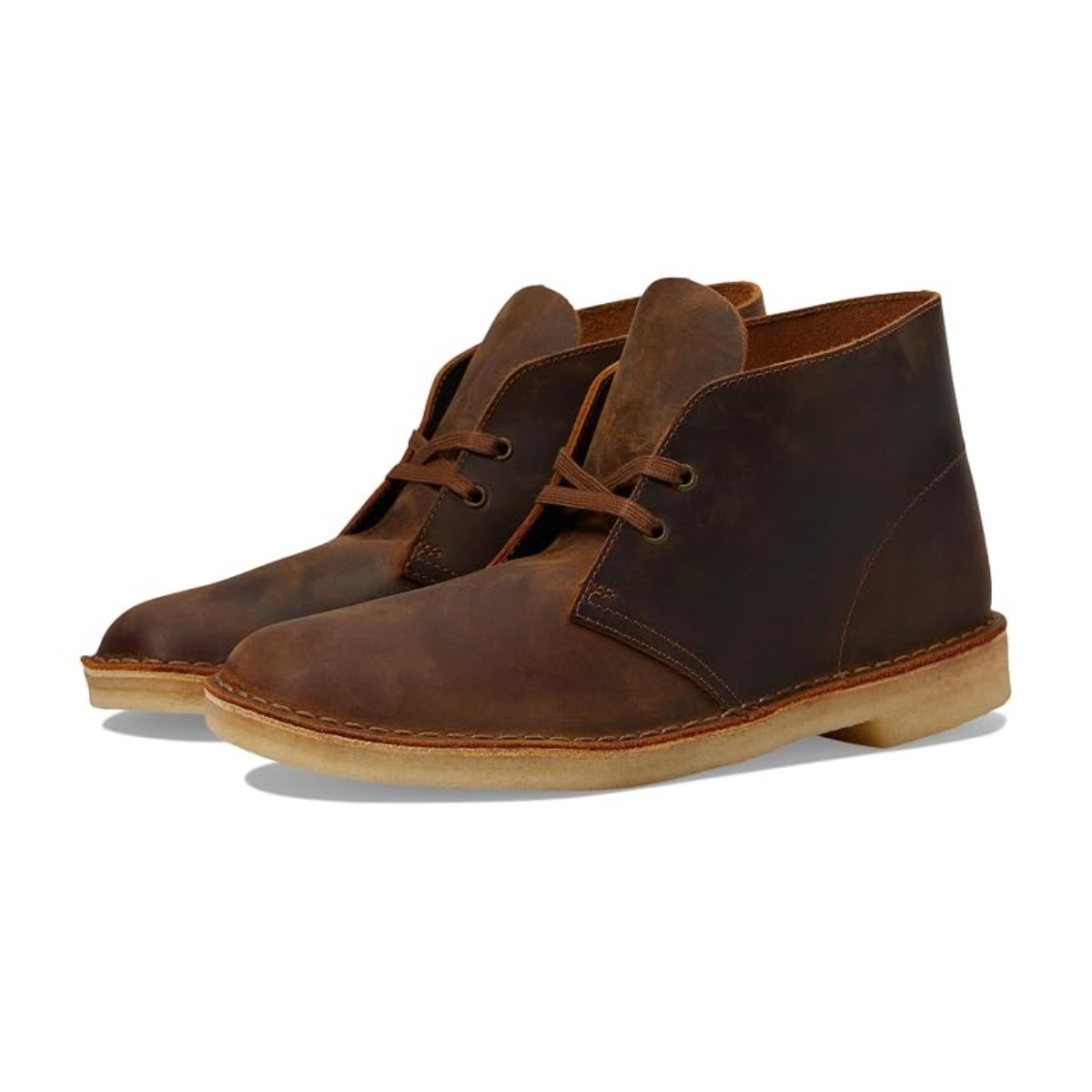
Clarks Desert Boot, Beeswax Leather
The Beeswax is the Desert Boot in a waxy pull-up leather instead of suede, and it solves the single most annoying thing about owning the suede version, which is that a puddle ruins your day. It darkens and scuffs into something better looking over a couple of years, and a damp cloth fixes most of what happens to it.
Johnston & Murphy
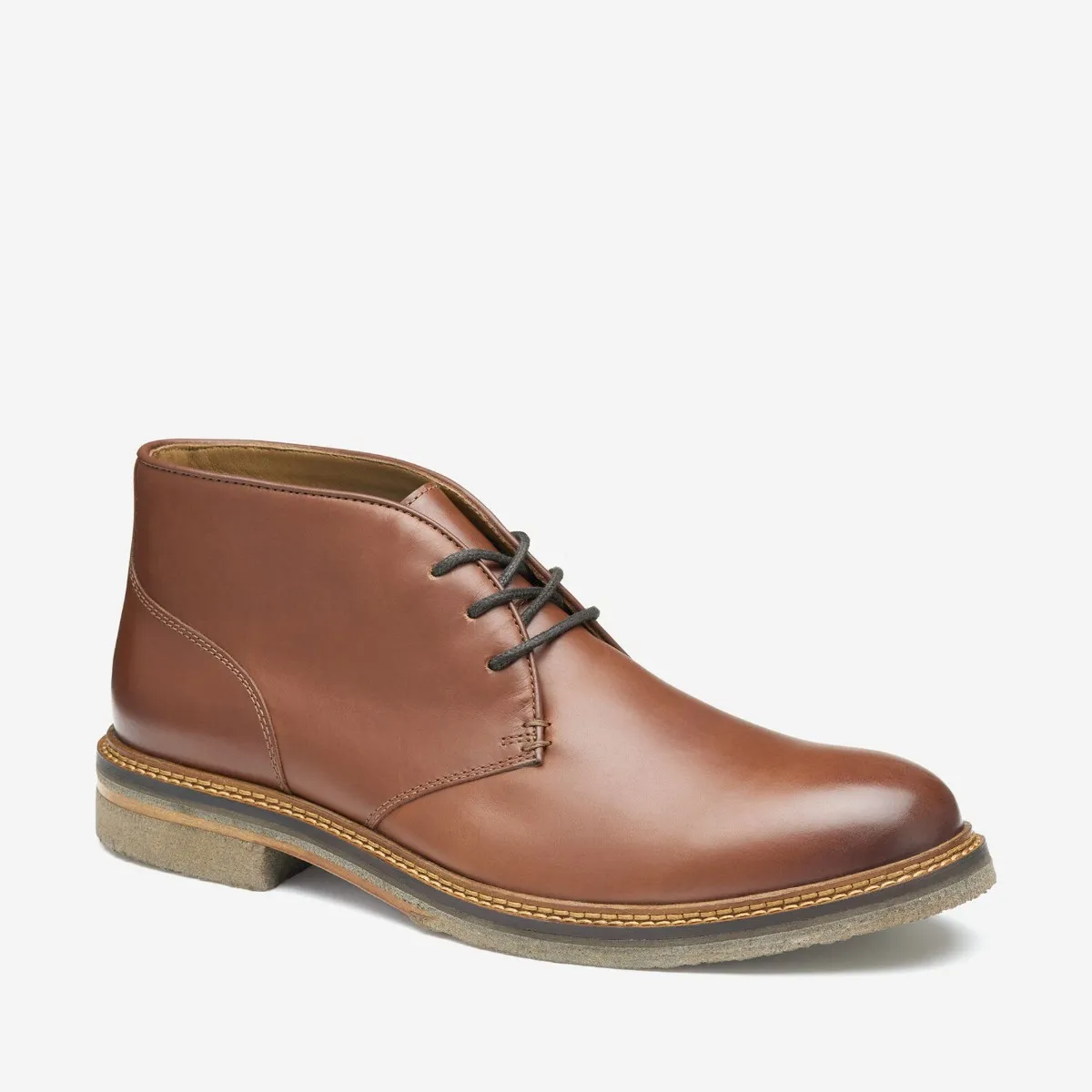
Johnston & Murphy Calder Chukka
The Calder is what happens when someone builds the crepe desert boot for a man with a job. The proportions are trimmer than a Clarks, the oiled suede has more depth to it, and the whole thing reads a little less like a dorm room. It's the one boot here that splits the difference between the original and something you'd wear to a client dinner.
Astorflex
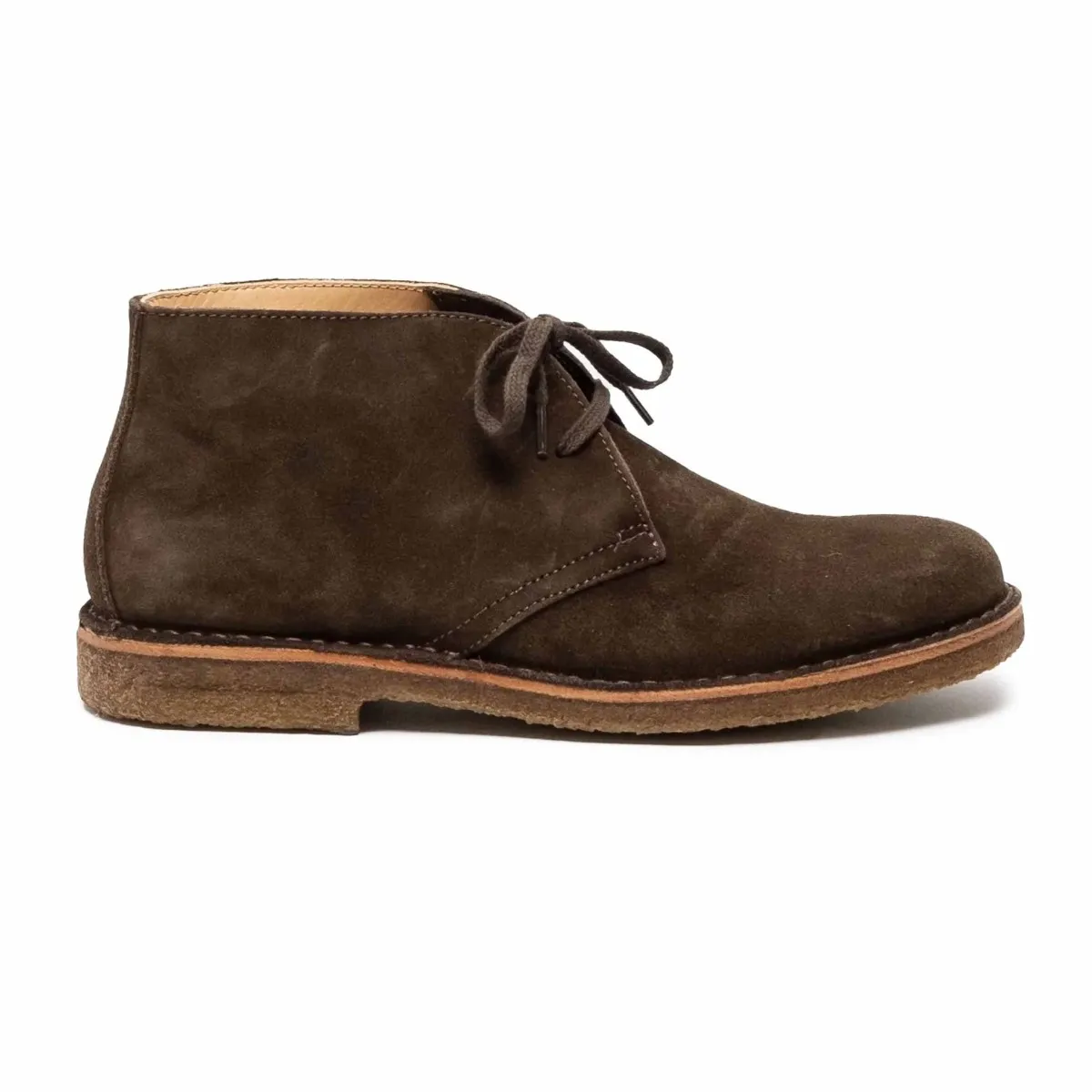
Astorflex Greenflex
Astorflex has been making these in Castel d'Ario since 1816, and the Greenflex is the desert boot done properly: vegetable-tanned Tuscan suede, a natural crepe rubber sole, water-based adhesives, no petrochemical shortcuts anywhere. It costs about $55 more than a Clarks and it looks and feels like it costs three times that. If one boot on this page is the answer to the whole page, it's probably this one.
Astorflex
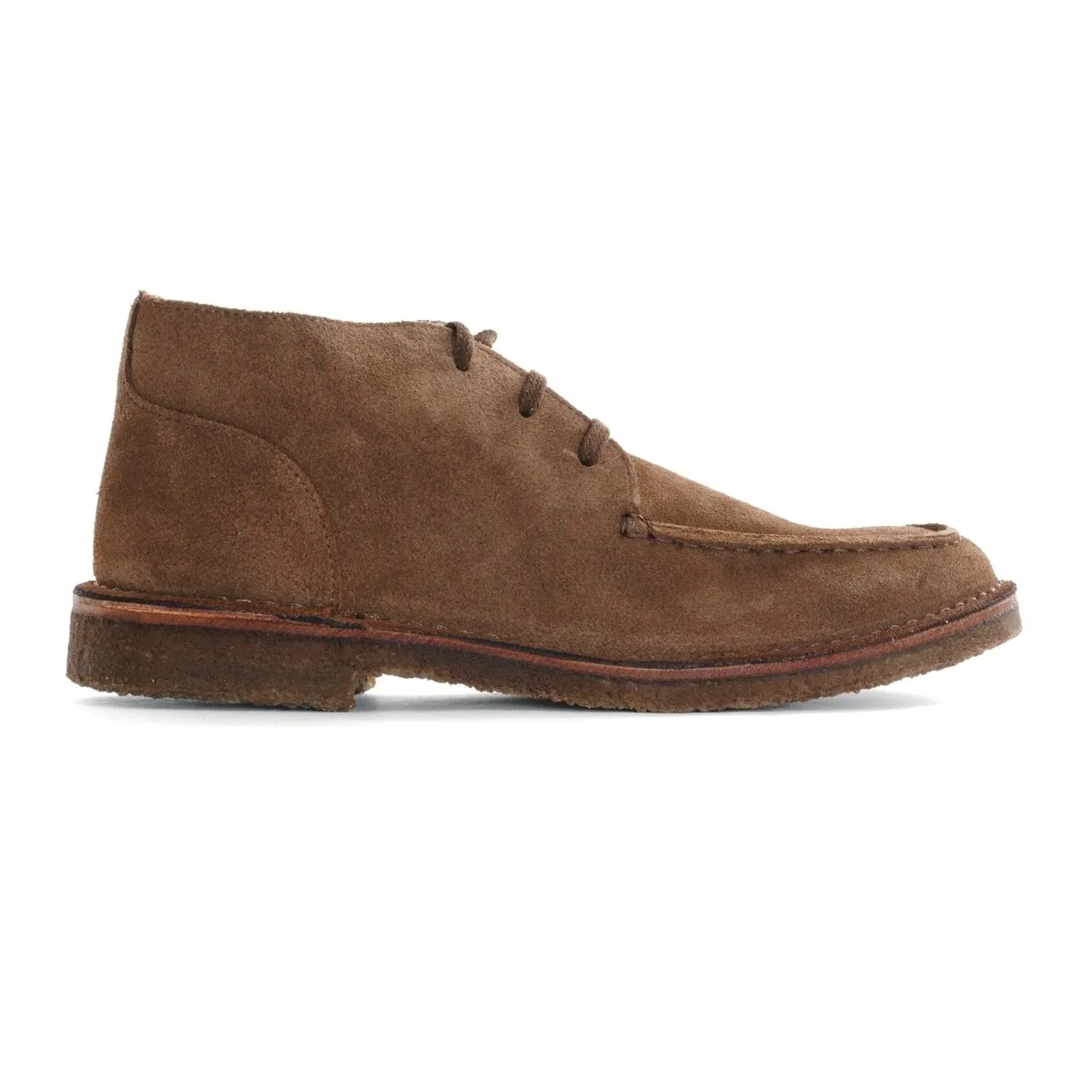
Astorflex Dukeflex
Same factory, same crepe, same vegetable-tanned leather, but the Dukeflex loses the visible apron seam across the toe. That one change moves it a long way toward dress territory, which makes it the easier of the two to wear with anything sharper than jeans. If you find the classic desert boot toe a bit rustic, this is the fix.
Sole two
Rubber lug
Moulded rubber with actual tread, sometimes over a foam midsole, sometimes stitched to the upper.
Florsheim
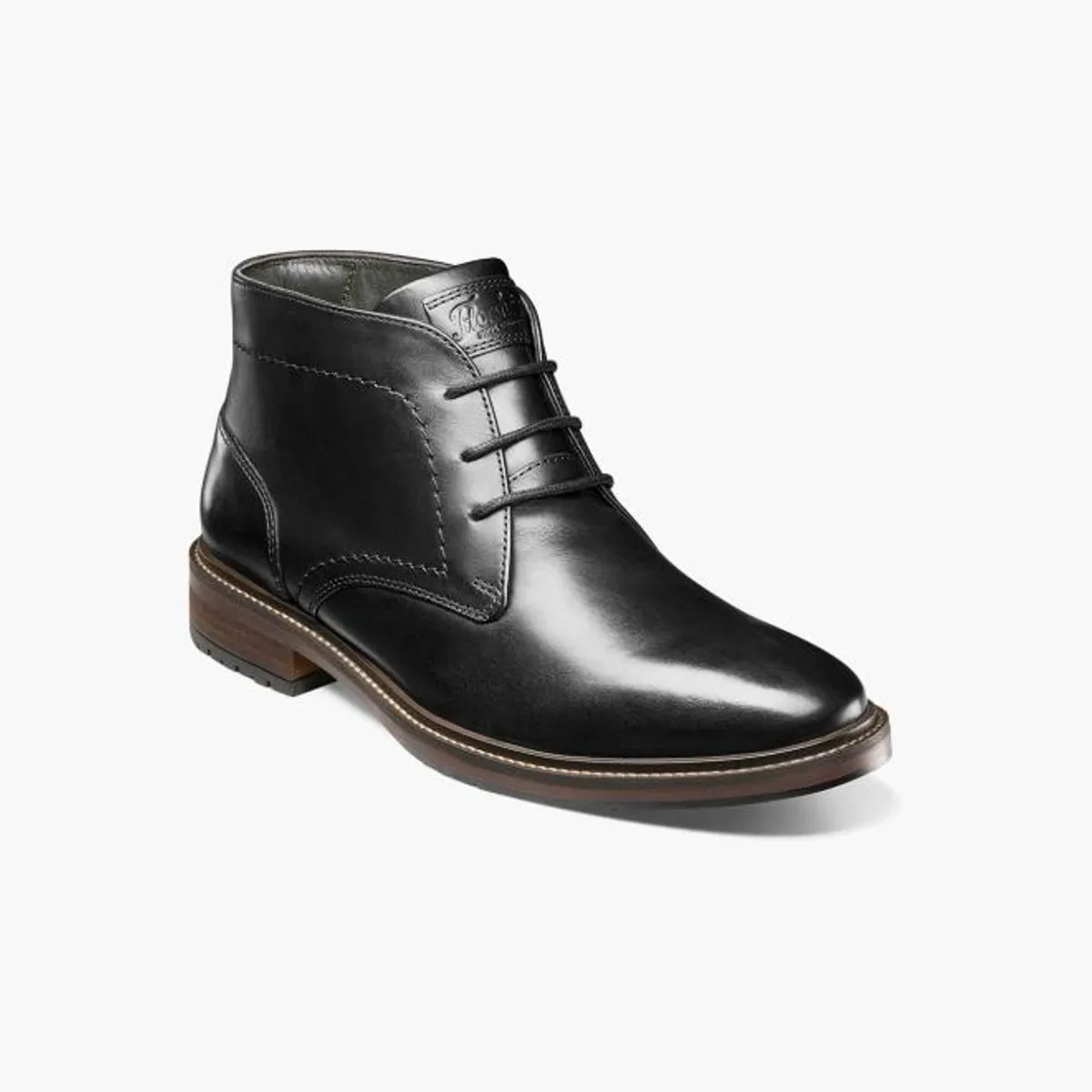
Florsheim Forge Plain Toe Chukka
At $130 the Forge isn't pretending to be an heirloom, and that's fine, because what it is instead is a smooth leather chukka on a grippy rubber outsole that you can wear to work in February without thinking about it. The reason it's on this list rather than a dozen similar boots is the size run: 7 through 14, in both D and 3E.

Timberland
Timberland Heritage Mid Waterproof Chukka
Most boots described as weatherproof have simply had a spray applied to the upper. This one is built with waterproof leather and seam-sealed construction, which means the stitch holes themselves are closed. Combined with the lugged outsole it's the pick on this page for a man who has to walk through actual slush and would like dry socks at the other end.
Amberjack
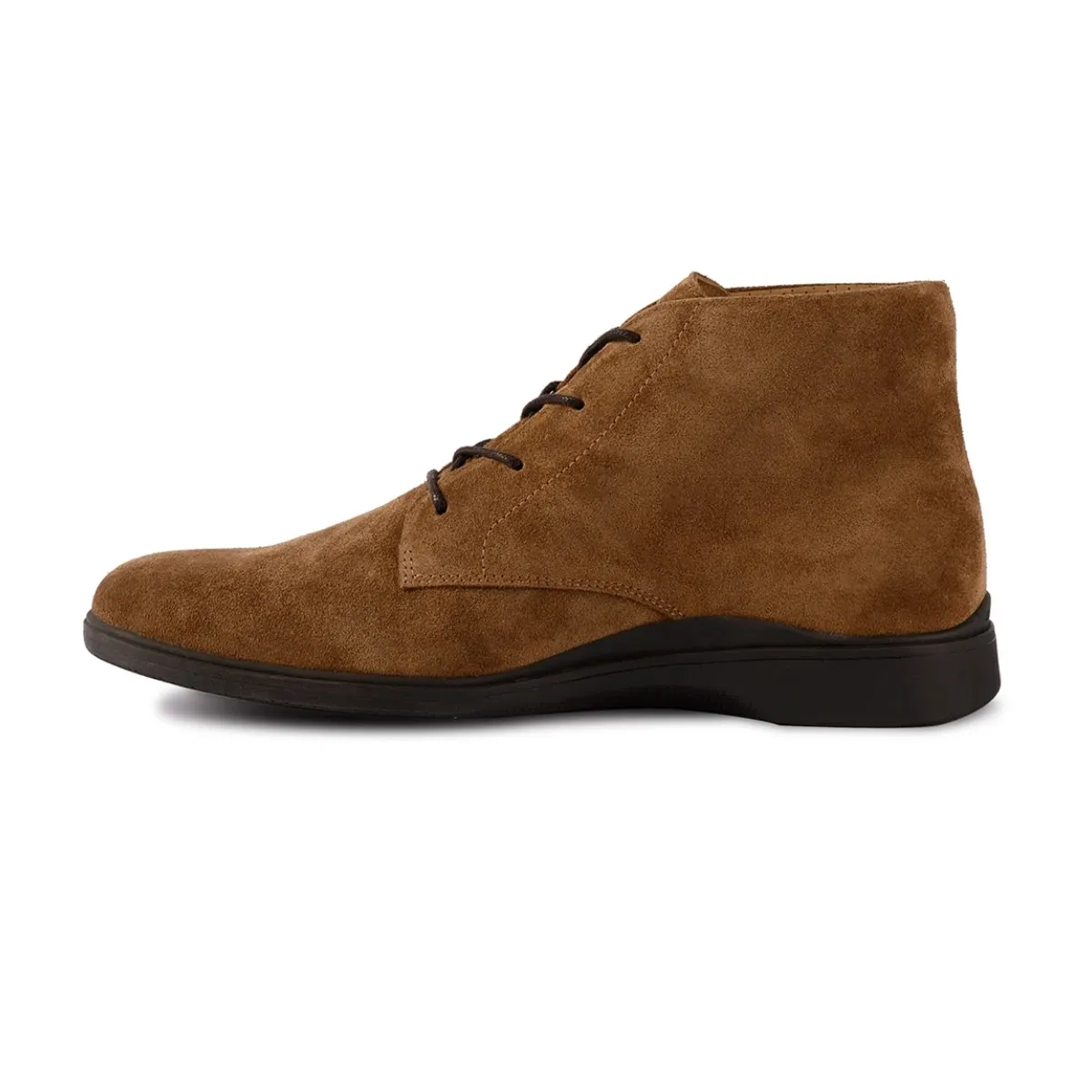
Amberjack The Chukka
Amberjack built their whole business on putting sneaker internals inside dress shoes, and the chukka is the most useful thing they make. You get a cushioned footbed and a flexible rubber sole under an Italian suede upper that still reads as a proper boot. It's the pick if your day involves a commute, a floor, and no opportunity to sit down.
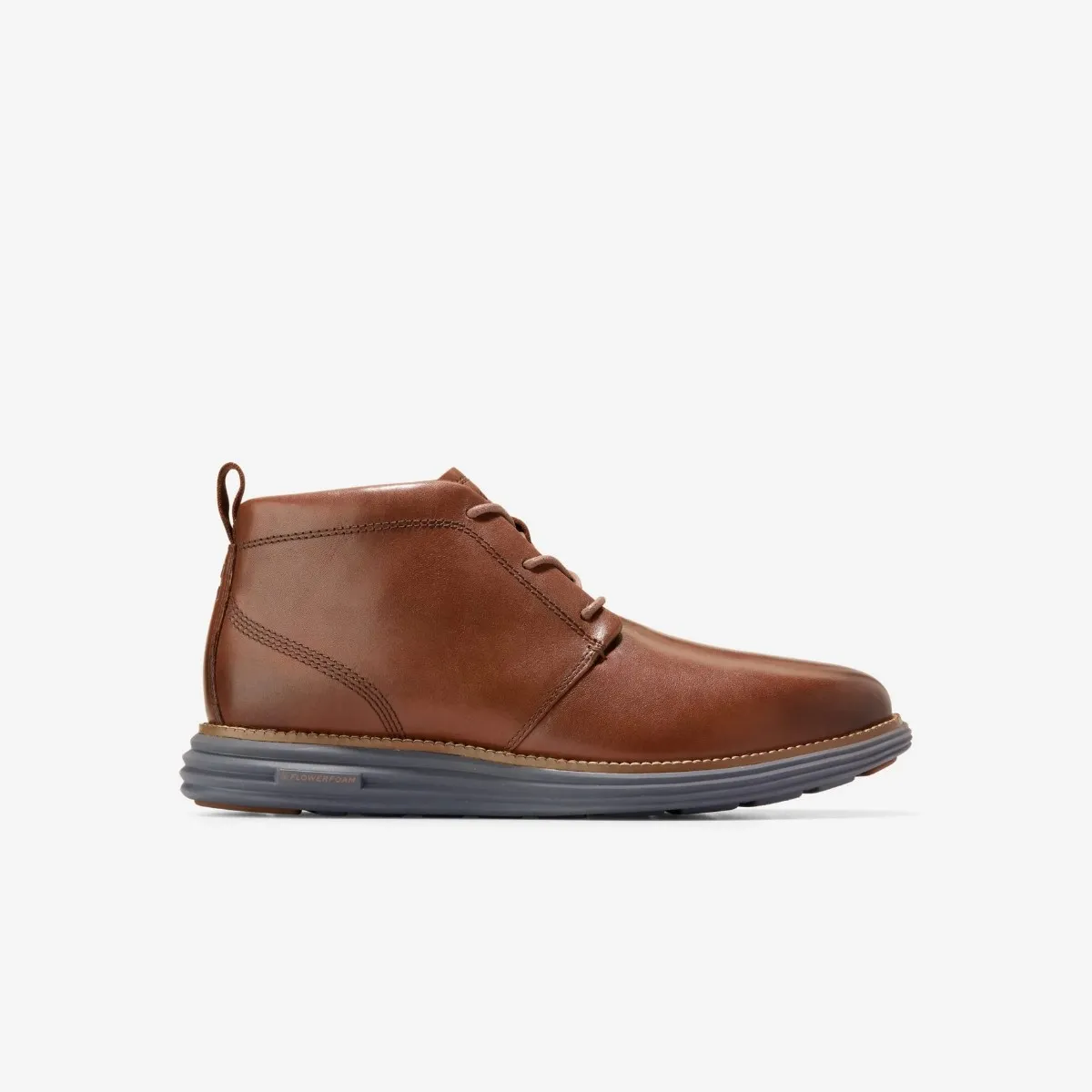
Cole Haan
Cole Haan ØriginalGrand Remastered Waterproof Chukka
The ØriginalGrand line is Cole Haan's long-running experiment in bolting athletic cushioning to a formal shape, and the waterproof chukka is the most practical version of it. The FlowerFoam midsole is genuinely light, the rubber insets at heel and toe give you grip where you need it, and the waterproof leather with sealed seams handles a commute in the rain.
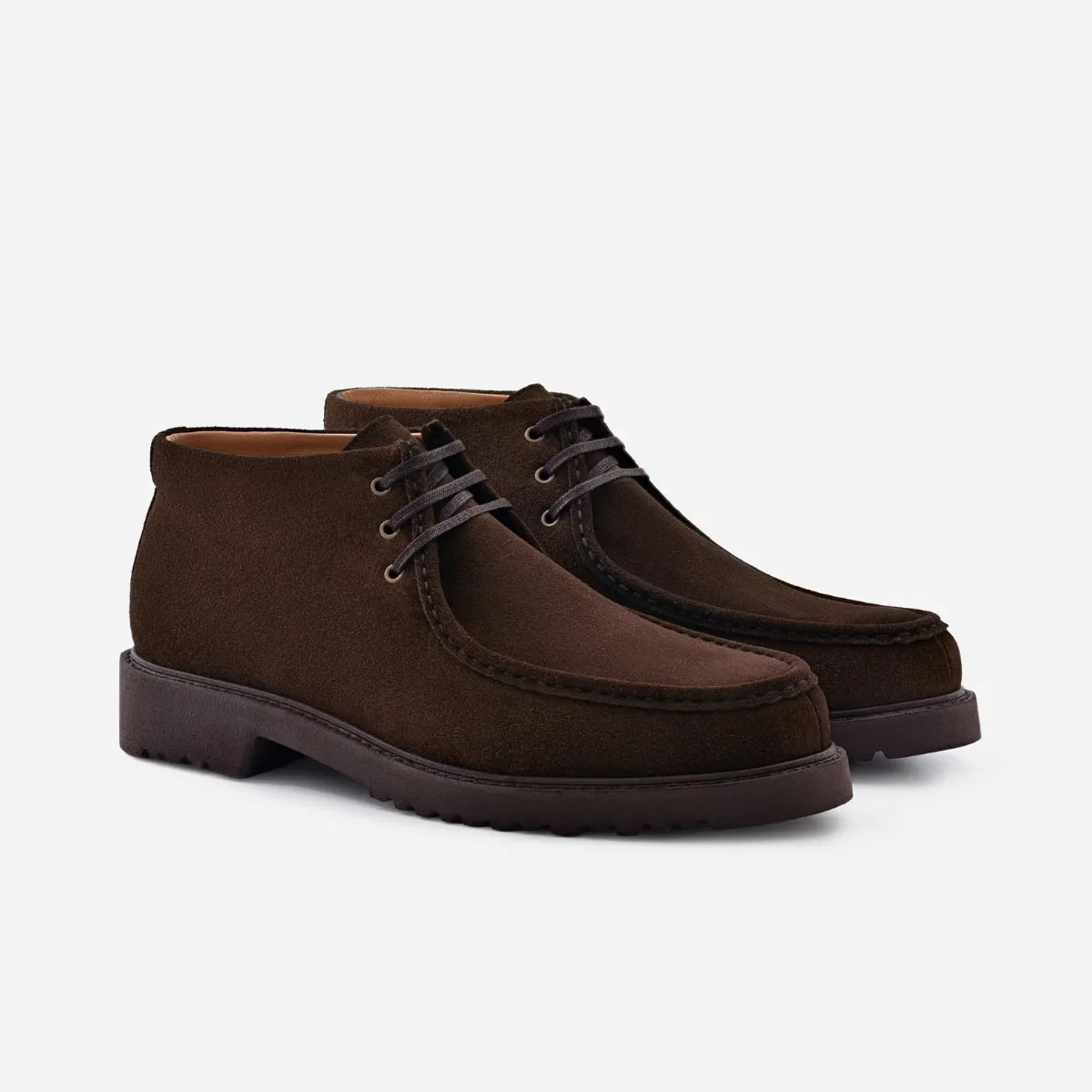
Beckett Simonon
Beckett Simonon Harlan Chukka
Beckett Simonon only cuts leather after the order is placed, which is why a full grain suede boot from their Colombian workshop lands at $269 instead of $450. The Harlan puts that upper on a durable rubber lug outsole and adds a padded ankle collar, so it's the rare made-to-order boot you can wear in bad weather without wincing.
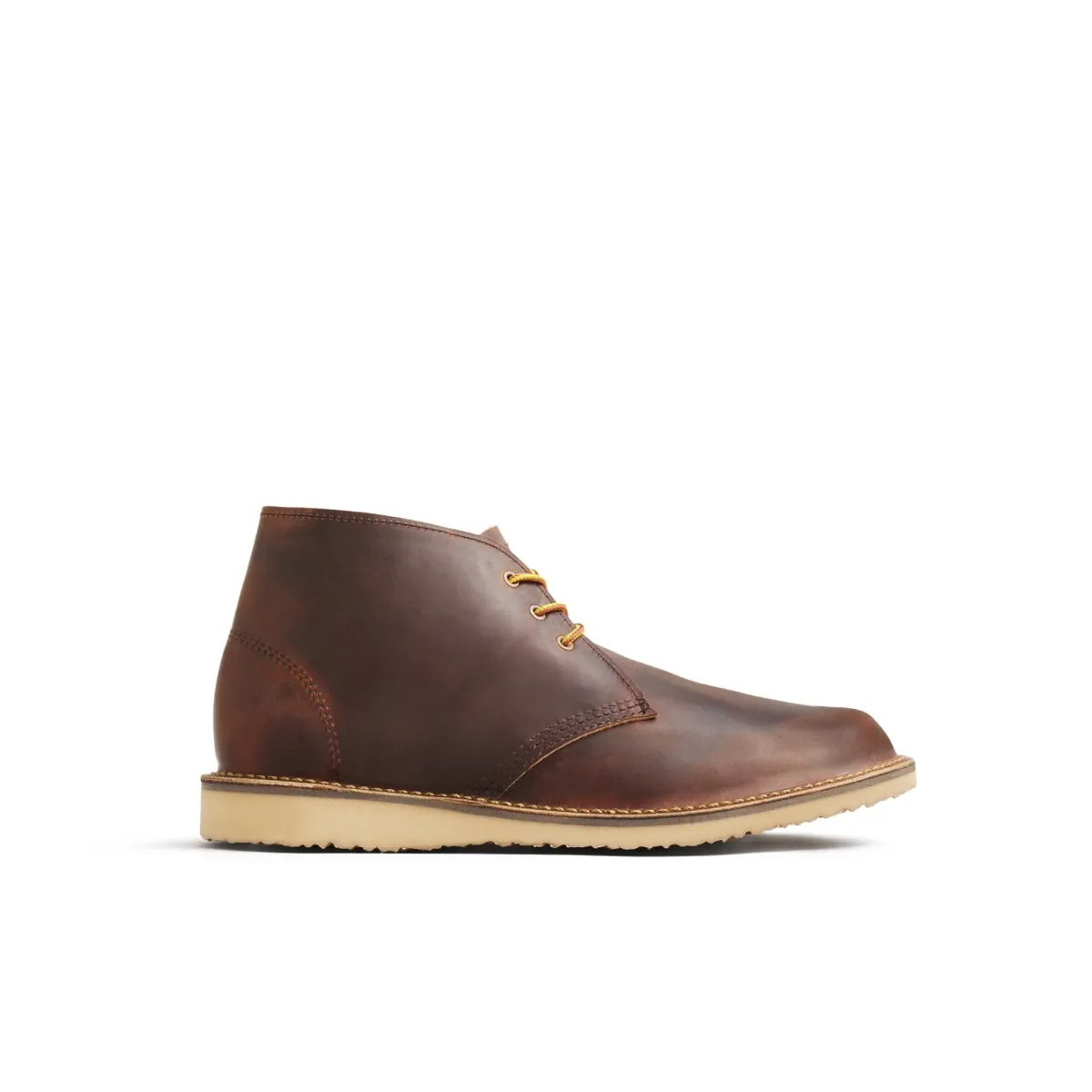
Red Wing Heritage
Red Wing Weekender Chukka 3622
The Weekender is the only boot in this group you can send back to the factory. It's built stitchdown, one of the oldest methods there is, with the upper folded outward and sewn directly to the midsole, and Red Wing's Minnesota repair shop will rebuild it when the outsole wears through. The Copper Rough & Tough leather has no finishing pigment on it, so it scars and darkens into something specific to you.
Sole three
Leather
A stacked leather sole, usually stitched on with a Goodyear welt, sometimes with a thin rubber topy added.

Meermin
Meermin 101468 Chukka, Snuff Suede
Meermin sells Goodyear welted shoes from their own Mallorca factory at roughly a third of what the name-brand Spanish makers charge, because they skip the wholesale layer entirely. The 101468 is their classic chukka on a leather sole, and at $235 it is, by a wide margin, the cheapest genuinely resoleable dress boot you can buy new. Nothing else on this page offers that math.
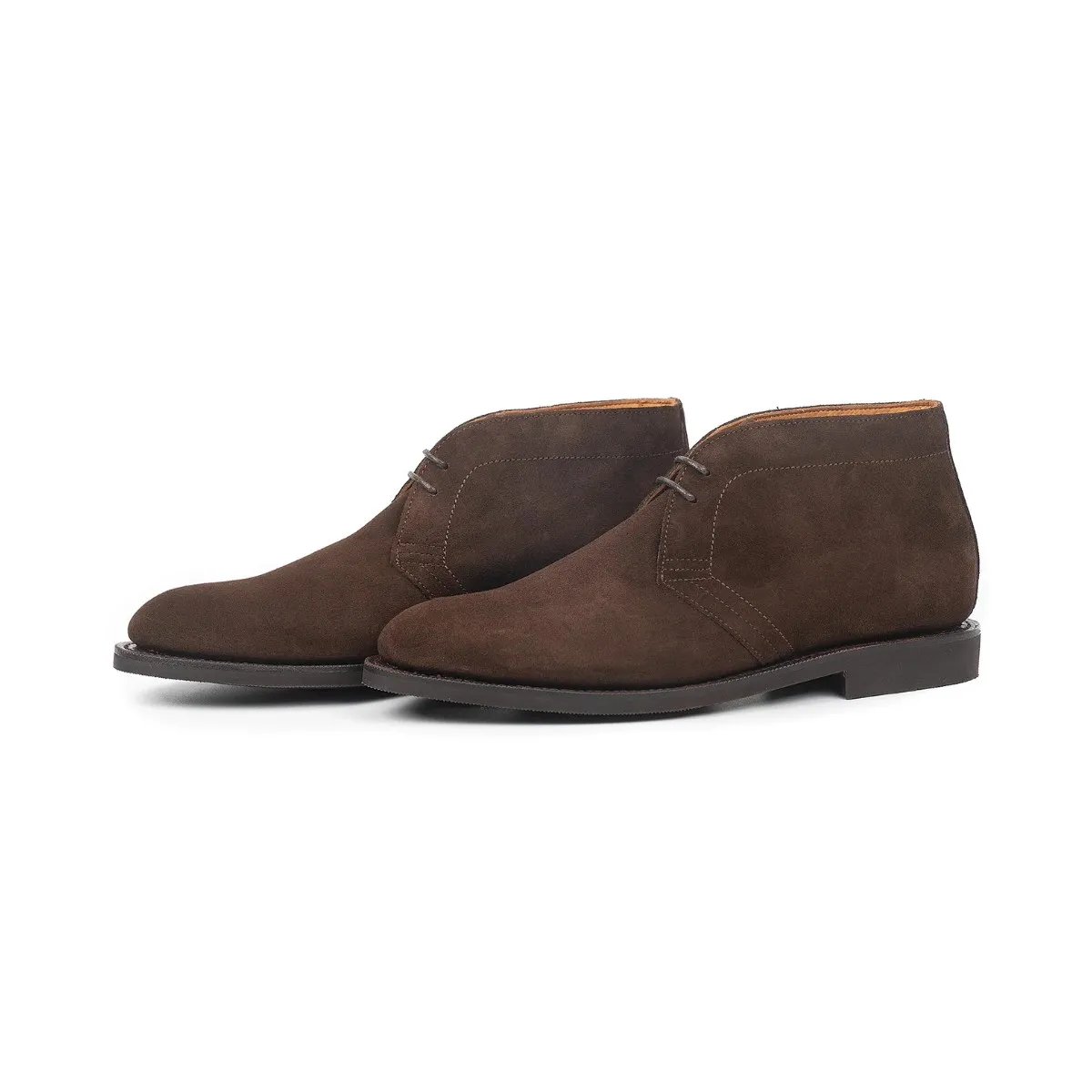
Meermin
Meermin 514460 Chukka, Brown Superbuck
Superbuck is a heavier, more tightly napped brushed leather than standard suede, with a slightly coarser hand that catches light differently and holds its shape better over the years. On a welted chukka it lands somewhere between the softness of suede and the formality of smooth calf, which turns out to be an unusually useful place to be.
Beckett Simonon
Beckett Simonon Ellis Chukka
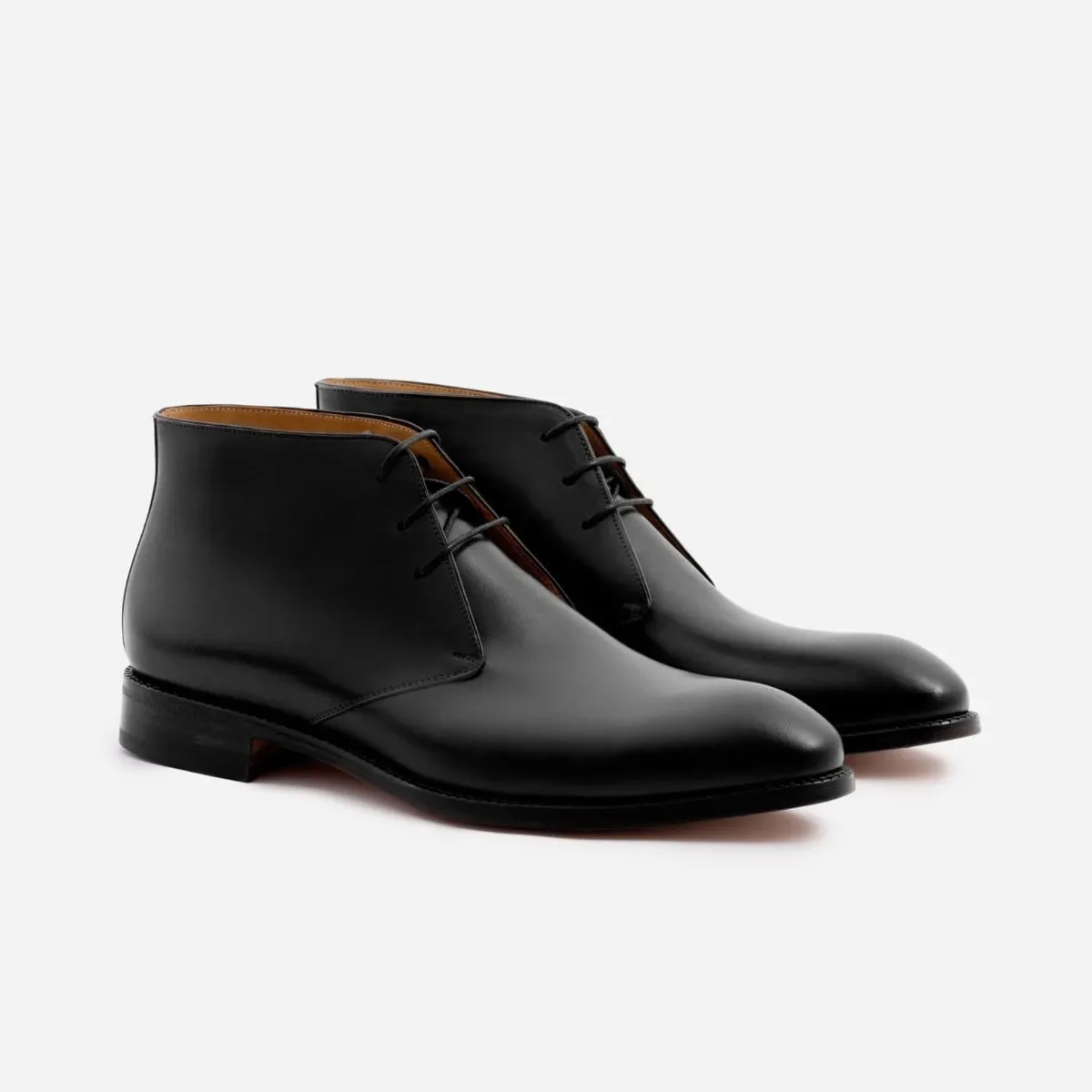
The Ellis is the sharpest shape in this guide. A single layer leather sole keeps it flexible and slim, and the almond toe pulls it closer to a dress shoe than any other boot here. If the job is standing in a room where everyone else is in oxfords and you'd rather be in boots, this is the one that gets away with it.
Meermin
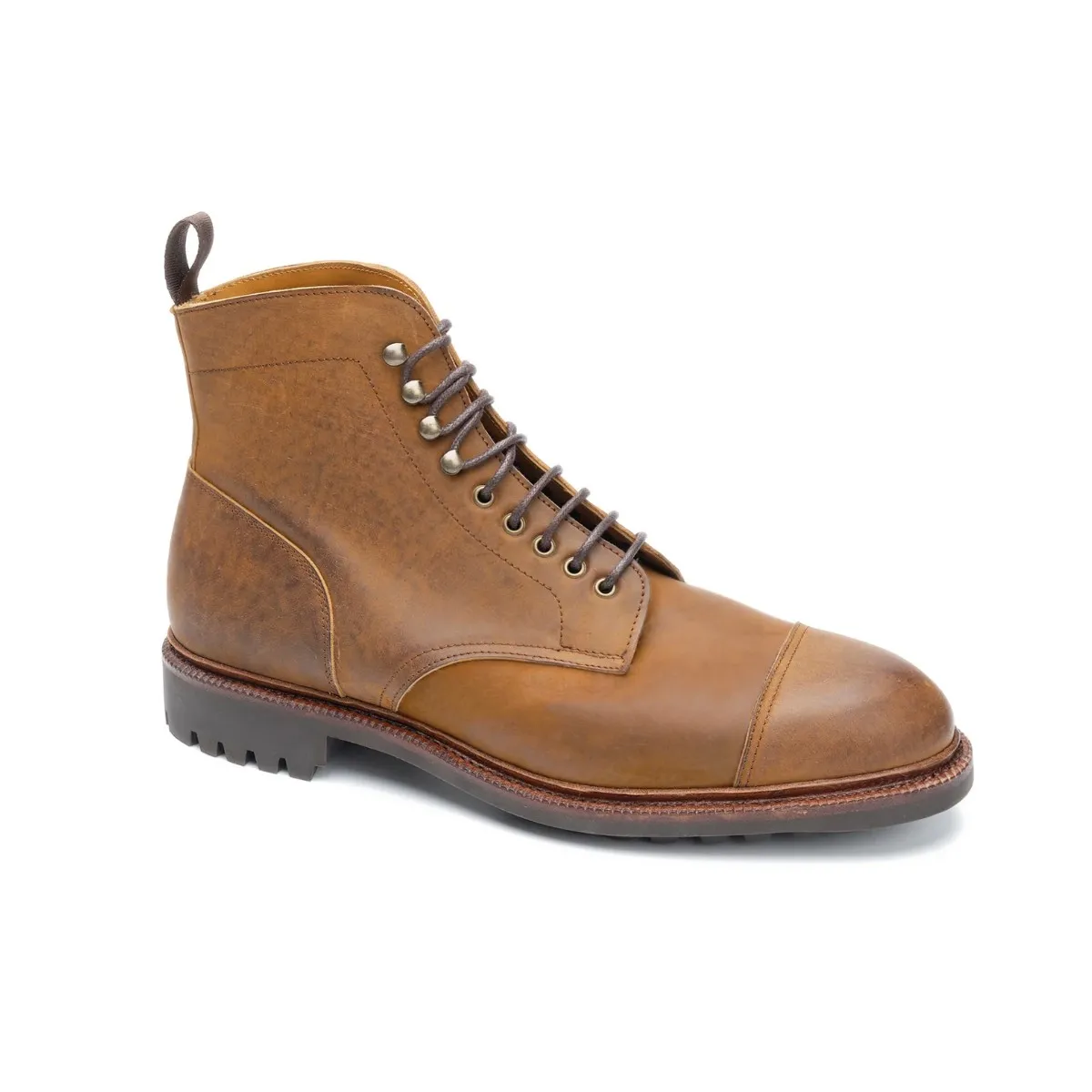
Meermin 116210 Chukka, Shell Cordovan
Shell cordovan is cut from a dense membrane in a horse's hindquarter, it takes months to tan, and it doesn't crease so much as ripple. Most shell boots start around $800. Meermin gets this one to $385 by welting it in their own factory and selling it direct. It will outlast every other boot on this page and it will look better in year eight than it does in week one.
Questions
