Here’s the thing that reframes this whole aisle. The FDA keeps a list of ingredients an over-the-counter shampoo is allowed to use against dandruff, each with a legal strength range: pyrithione zinc, salicylic acid, selenium sulfide, coal tar and sulfur. Tea tree oil isn’t on it.
That doesn’t mean tea tree does nothing. There’s one good trial behind it, 126 people using a 5% tea tree shampoo daily for a month, and itchiness improved. It means a tea tree shampoo is legally a cosmetic, and a cosmetic never has to tell you how much of anything is in it.
So we did the next best thing. Ingredients over roughly 1% have to be listed in descending order, which means where the tea tree sits on the back of the bottle tells you roughly how much is in there. Across the twelve shampoos here it lands anywhere from second on the list to dead last.
Drug Or Cosmetic, And Why It Matters
Two of these twelve have an FDA active in them and a percentage printed on the back. The other ten are legally cosmetics. Both can be good buys, but only one kind had to prove anything.
What’s Actually In The Bottle
An anti-dandruff shampoo is legally a drug and has to print its active and its strength. A tea tree shampoo with no registered active is legally a cosmetic, and doesn’t.
Carries an FDA anti-dandruff active2 of 12
These have a Drug Facts panel on the back with a named active and a percentage, and they have to hit a published standard to make the claim.
Legally a cosmetic10 of 12
No registered active, so no required percentage and no efficacy standard. That doesn’t mean they do nothing. It means nobody had to prove it.
Why Is Your Scalp Actually Itching?
Tea tree is a sensible answer to one of these five and the wrong answer to the other four. Pick the one that sounds like you.
That’s the one tea tree was actually tested on
Oily scalp with yellowish, greasy flakes is the classic picture of dandruff and its louder cousin seborrheic dermatitis. Both are driven by Malassezia, a yeast that lives on everyone’s skin and overgrows on some people. That is the one problem tea tree oil has a real trial behind it for, and it’s also what every FDA active on the back of a bottle is aimed at.
The Trick That Works On Any Bottle
Ingredients above about 1% must be listed in descending order. Below 1% they can be in any order at all. So if a botanical is listed above the fragrance and the preservative, there’s a real amount in there. Below them, it’s a trace. This works in any aisle, on any product.
Where The Tea Tree Sits On Each Label
Read left to right: the further left the marker, the higher up the ingredient list the tea tree appears, and the more of it is in the bottle. None of these is a bad shampoo. They’re just selling you different things.
Twelve Picks, Grouped By What You’re Buying Them For
Every card shows where the tea tree lands on that product’s own ingredient list, and for the two with a drug in them, the number off the Drug Facts panel.
Tea Tree Plus Something That Legally Counts
These carry an actual FDA anti-dandruff active as well as the tea tree, so there’s a number on the back you can hold them to. If your scalp is genuinely flaking, start here.

The only one that’s maxed out on both counts
DermaHarmony 2% Pyrithione Zinc Tea Tree Bar
This is the one pick where the drug and the tea tree are both doing real work. The Drug Facts panel reads pyrithione zinc 2%, which is the ceiling the FDA allows, and the tea tree leaf oil is fifth in the ingredient list, ahead of the water. Nothing else here manages both.
It’s a bar, which throws some people, but a bar is mostly a way of leaving the water out. That’s also why it’s about three dollars an ounce.
Every antifungal shampoo works better if you leave it on for a few minutes instead of rinsing straight away. A bar is easier to leave sitting on your scalp than a handful of liquid, which is a small practical advantage nobody mentions.
your scalp actually flakes and you want the strongest legal version of this.
you can’t get on with bars. There’s no shame in it.
The Numbers
The Numbers

It works, and it’s the zinc that’s doing it
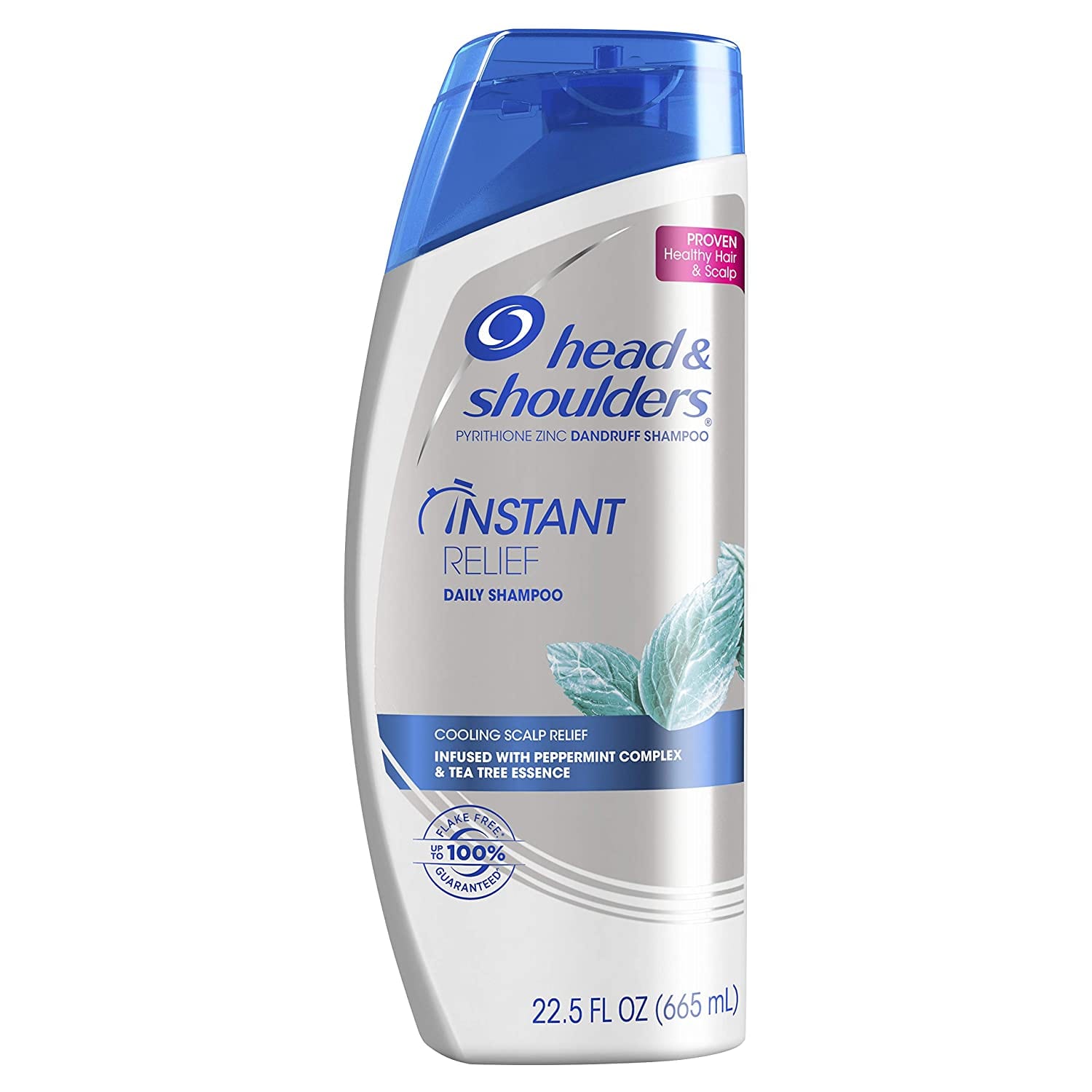
Head & Shoulders Tea Tree Oil 2-in-1
This is an effective anti-dandruff shampoo at forty four cents an ounce, and that’s not a small thing. Pyrithione zinc at 1% is a real drug at a real dose, it’s the most studied ingredient in the category, and this is the cheapest way to get it with a tea tree scent on top.
Worth knowing what you’re buying, though. On the Drug Facts panel the zinc is the active ingredient and the tea tree oil is in the inactive list, seventeenth of nineteen. The tea tree here is the scent and the story. The zinc is the medicine.
Every anti-dandruff shampoo has to print an active ingredient and a purpose. On this one it says pyrithione zinc 1%, anti-dandruff. Anything not in that line, tea tree included, is legally along for the ride. That isn’t a knock on the product. It’s just where the work is being done.
you want something that reliably works on flakes and you’d rather not pay much.
you came specifically for the tea tree. There are better sources of it below.
The Numbers
The Numbers
The Most Tea Tree In The Bottle
No drug active, but the tea tree oil sits high in the ingredient list, which is as close as this category gets to telling you how much you’re getting. If it’s the tea tree itself you want, these deliver the most of it.

Tea tree second on the list, out of forty one ingredients
Roycederm Tea Tree Antifungal Shampoo
Second ingredient. In a category where the tea tree usually turns up somewhere near the dyes, that’s the highest placement of anything we looked at, and it’s the closest you’ll get on a normal shelf to the concentration the one real trial used.
It carries no FDA active, so legally it can’t claim to treat dandruff and we won’t claim it for them. What it can do is put a lot of tea tree on your scalp.
Any cosmetic can print the word antifungal. Only a product with a registered active has to print a percentage and hit a standard. This one is worth buying for the tea tree content, not because of what the front of the bottle says.
you want the most tea tree you can reasonably get.
you have real flaking. Get something with an active in it too.
The Numbers
The Numbers

The best tea tree placement you can buy in a drugstore
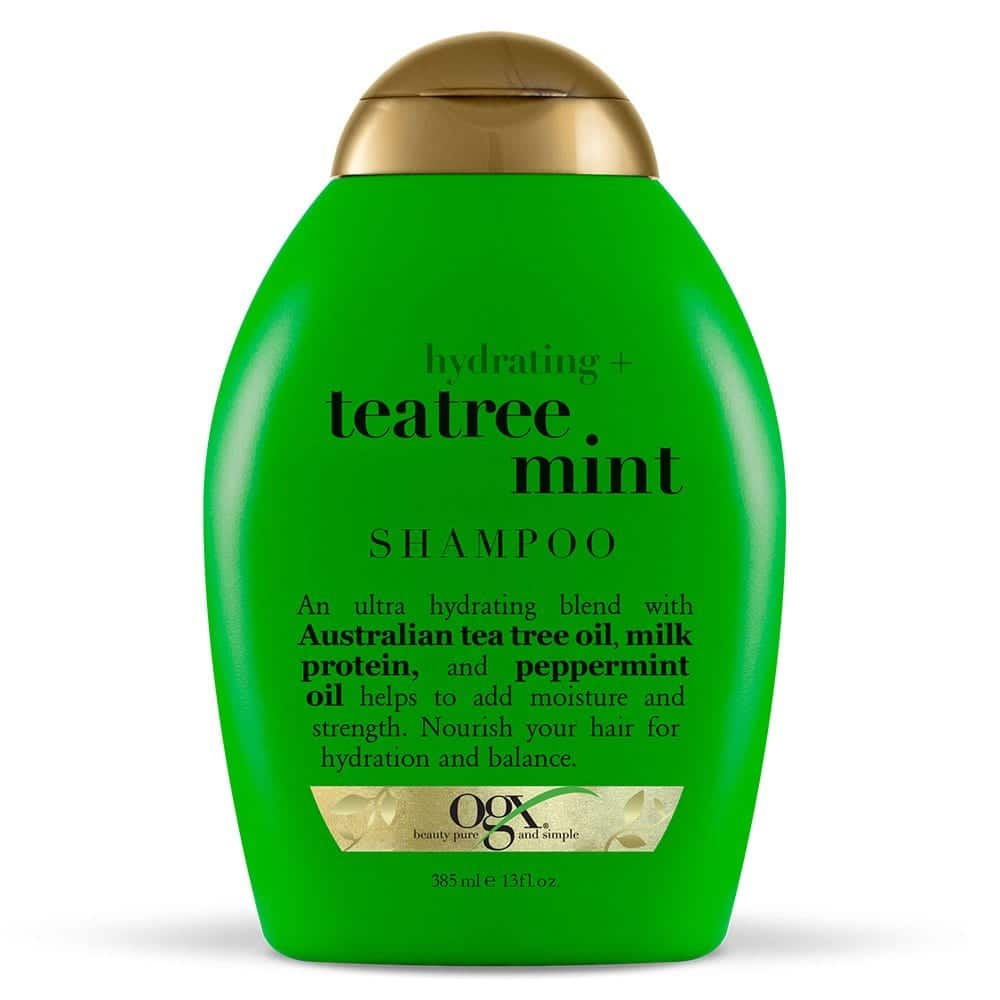
OGX Tea Tree Mint Shampoo
Fourth of twenty three, and here’s the part that matters: it sits ahead of both the preservative and the fragrance. Ingredients above about 1% have to be listed in descending order, so anything above the preservative block is present in a quantity worth naming.
At fifty nine cents an ounce that makes it the value answer for anyone who came here wanting tea tree rather than wanting a drug.
Fragrance is almost always used at well under 1%. So when a botanical is listed above the fragrance, you’re looking at a real inclusion, and when it’s listed below, you’re looking at a trace. It’s the fastest label check in this whole category and it works on any bottle in the aisle.
you want plenty of tea tree without paying salon prices.
you need something fragrance-free. This has plenty.
The Numbers
The Numbers

High tea tree placement with a gentler surfactant base
Avalon Organics Scalp Treatment Tea Tree Shampoo
Eighth of thirty one, which is a genuine inclusion, and the cleansing base is milder than the sulfate-heavy drugstore formulas. If your scalp itches partly because you’re stripping it every day, that combination is the useful one.
It’s the middle of the price range and it behaves like a normal shampoo, which not everything in this category does.
A tight, squeaky scalp after every wash isn’t dandruff, it’s a scalp that’s had its oils taken off it. Swapping to a milder base fixes that on its own, no active ingredient required.
you want tea tree without a harsh wash.
you’re flaking heavily. This has no drug in it.
The Numbers
The Numbers

Real tea tree placement, sensible price
New York Biology Tea Tree Shampoo
Tenth of forty, and well ahead of the preservative block, so the tea tree is really in there. The rest of the list is the usual pile of botanical extras, most of which won’t do much, but the part you came for is present.
Eighty cents an ounce puts it between the drugstore bottles and the salon ones.
Forty ingredients sounds impressive and mostly isn’t. Everything past the preservatives is there in trace amounts. Read the top ten and ignore the rest, on this bottle and every other one.
you want a solid middle option with plenty of tea tree.
you want the cheapest per ounce.
The Numbers
The Numbers
Good Everyday Shampoos
The tea tree is real and it’s somewhere in the middle of the list. These are pleasant daily shampoos with a bit of tea tree in them, which for most people with a slightly itchy scalp is genuinely all they need.

A short, sane ingredient list
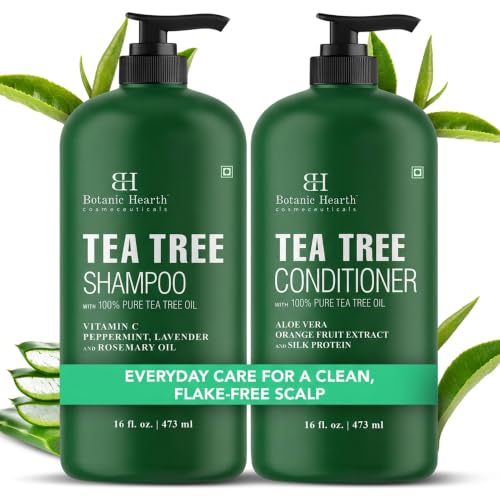
Botanic Hearth Tea Tree Shampoo
Seventeen ingredients total, which is refreshingly short for this shelf, and the tea tree is thirteenth. That puts it below the preservative, so it’s a modest amount rather than a big one.
What it is, is an uncomplicated daily shampoo that leaves your scalp feeling clean and smells like tea tree. For a mild itch that’s often enough.
Below the preservative means under roughly 1%. The trial that started all of this used 5%. So think of this as a pleasant scalp shampoo rather than a treatment, and you won’t be disappointed by it.
your scalp is a bit itchy and you want a nice daily wash.
you’re chasing the trial concentration.
The Numbers
The Numbers

Tea tree leaf extract as the base instead of water
Aromatica Purifying Tea Tree Shampoo
This one does something different. Instead of water first and tea tree somewhere down the list, the base itself is tea tree leaf extract, and the leaf oil turns up separately further down at twenty three.
Extract and oil aren’t the same thing, and an extract base is a marketing-friendly move as much as a chemical one. But it does mean tea tree is in the formula in two different forms, and the shampoo itself is a nice one.
Leaf oil is the concentrated stuff the research used. Leaf water is what’s left after the oil is distilled out. Leaf extract sits somewhere in between depending on how it was made. All three can legally be called tea tree on the front of a bottle.
you like a gentler, better-smelling formula and don’t mind paying for it.
you want the oil specifically, high in the list.
The Numbers
The Numbers

More of a conditioning shampoo than a scalp one
Luseta Tea Tree Shampoo
The tea tree is sixteenth of twenty one, below the fragrance, so it’s a light touch. What this formula is actually built around is conditioning: argan oil and a softer base, aimed at hair that feels rough.
If your scalp itches a bit and your hair is dry, that combination is a reasonable trade.
Most shampoos in this category are trying to do something to your scalp. This one is mostly trying to do something to your hair. Both are fine. Just know which one you’re buying.
your hair is dry and your scalp is only mildly itchy.
the scalp is the actual problem.
The Numbers
The Numbers
The Ones You Came Here For
The famous names. They’re on this list because they’re good shampoos and people love them, and we’ve put the label next to each one so you know which part you’re actually buying.

The one that started the category, and still a great wash
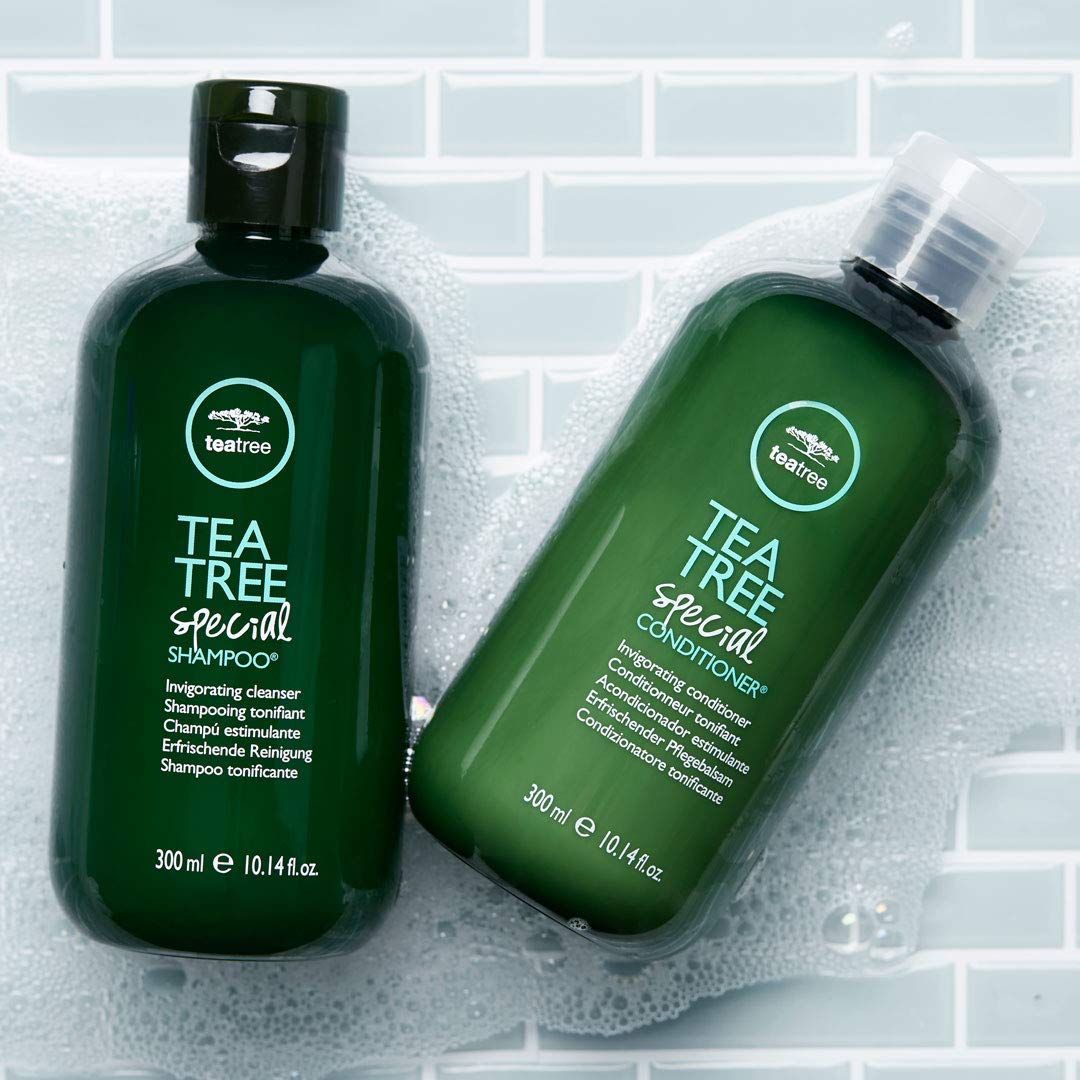
Paul Mitchell Tea Tree Special Shampoo
This is the product that made tea tree shampoo a thing, and the reason people love it is real: the menthol and peppermint tingle, the smell, and a genuinely good clarifying wash that strips out product buildup.
One thing worth knowing if you’re buying it for the tea tree specifically. The current formula lists Melaleuca Alternifolia Leaf Water at position six, not leaf oil. Leaf water is what’s left after the oil has been distilled out. An older version of the formula did list the oil.
That cold rush is menthol and menthyl lactate, both of them further down the same list. It feels like something working, and it’s a big part of why this shampoo is loved, but cooling and antifungal are two different jobs.
you want the classic tingle and a proper clarifying wash.
your skin reacts easily. This one carries MCI and MI, which are common triggers.
The Numbers
The Numbers

Cheap, smells great, cleans well
Old Spice Mens Tea Tree Shampoo
Sixty six cents an ounce for a shampoo that lathers properly and smells the way Old Spice smells. As a daily men’s shampoo it’s completely fine and it’s one of the better-value bottles on this page.
The tea tree is nineteenth of twenty one, below both the fragrance and the preservative, so it’s there as a scent note rather than as an active dose. Buy it because it’s a good cheap shampoo.
Nothing on this bottle claims to treat dandruff, and legally it can’t, because there’s no registered active in it. That’s not a criticism, it’s just the category it’s in. If you need a treatment, the two picks at the top of this page have one.
you want a good-smelling everyday shampoo at a low price.
you’re treating an actual scalp problem.
The Numbers
The Numbers

A well-built men’s daily shampoo
Brickell Daily Strengthening Shampoo
The formula is clean and short, the conditioning agents are good ones, and it’s pitched at men who want one nice bottle in the shower rather than a shelf of them. On that job it does well.
The tea tree is last of eighteen ingredients. If tea tree content is what you’re shopping for, this isn’t where to find it, but as a daily shampoo it’s a good one.
Being in the final position doesn’t mean a trace was added for the label. It means it’s under 1%, same as everything else down there. The point of this page isn’t that low is bad, it’s that you should know where on the list the thing you’re paying for actually sits.
you want a premium-feeling daily shampoo and mint is your thing.
you’re here for tea tree specifically.
The Numbers
The Numbers
You’re Almost Certainly Rinsing It Out Too Fast
The single biggest thing you can change costs nothing and has nothing to do with which bottle you buy. Whatever is in a scalp shampoo needs to be on your scalp for a few minutes to do anything. Most people lather and rinse in about fifteen seconds.
The trial everyone cites ran daily for four weeks. Not two washes. If you want to know whether something works for you, that’s the commitment.
- Leave it on Almost nobody does this and it matters more than which bottle you buy. An antifungal needs contact time with your scalp. Lather, then leave it for three to five minutes before rinsing.
- Scrub the scalp, not the hair The problem is on your skin. Your hair is just in the way. Use your fingertips on the scalp itself and let the rinse take care of the lengths.
- Give it four weeks The trial everyone cites ran daily for four weeks. People try a new shampoo twice, decide it did nothing, and move on. Two washes is not a trial.
- Then keep going Dandruff is managed, not cured. The yeast lives on everyone and comes back when you stop. Most people can drop to a couple of washes a week once it’s under control.
- Rotate if it stops working If a product that worked seems to fade, switching to a different active for a while and then back is the standard advice from dermatology, and it costs nothing to try.
Six Things You’ve Been Told That Aren’t Quite True
Each one is checkable against a regulation, a labeling rule or a published study, and each is sourced.
A 2002 study in the Journal of the American Academy of Dermatology put 126 people on either a 5% tea tree oil shampoo or a placebo, daily for four weeks. The tea tree group improved 41% on the severity score against 11% for placebo, and itchiness improved too. That’s a real result and it’s why this page exists. It’s also single-blind rather than double-blind, and more than twenty years later it’s still essentially the only trial anyone cites. One good study is a reason to be interested, not a reason to be certain.
Source: Satchell et al, J Am Acad Dermatol 2002Ingredients above roughly 1% have to be listed in descending order of how much is in there, and everything below 1% can be listed in any order at all. So the position of the tea tree tells you something even when the percentage isn’t printed. On the twelve shampoos on this page, the tea tree lands anywhere from second on the list to dead last. Same two words on the front, very different bottles.
Source: FDA cosmetic labeling rules, 21 CFR 701.3The FDA keeps a list of what an over-the-counter shampoo is allowed to use against dandruff: pyrithione zinc, salicylic acid, selenium sulfide, coal tar and sulfur, each with its own legal range. Tea tree oil is not on that list. That doesn’t mean it does nothing, and the trial suggests it does something. It means a tea tree shampoo is legally a cosmetic, and a cosmetic doesn’t have to prove it works.
Source: 21 CFR 358.710That cold rush most of these shampoos give you is menthol or menthyl lactate, and it’s a sensation on your nerve endings rather than anything happening to the yeast. It’s genuinely pleasant and it’s a big part of why people repurchase, so there’s no reason to avoid it. Just don’t read it as evidence.
Source: the products’ own ingredient listsAnything from 0.3% up to 2% pyrithione zinc can legally call itself a dandruff shampoo. But to claim seborrheic dermatitis, the rules require at least 0.95%, which is more than three times the dandruff floor. Same ingredient, same phrase on the front, and the only way to tell where a given bottle sits is the Drug Facts panel on the back.
Source: 21 CFR 358.710Essential oils are chemically busy, and tea tree is one of the ones that shows up in patch testing. It gets more allergenic as it oxidizes, which is what happens to an old bottle that’s been open in a warm bathroom for a year. If a tea tree product starts stinging after months of being fine, an old bottle is a likely explanation.
Source: published contact dermatitis literatureAll 12, Sortable
Tap any column to sort. Sorting by tea tree place is the interesting one, and worth reading next to the FDA active column, because the two things do different jobs.
| Product ▴▾ | Price ▴▾ | Per ounce ▴▾ | FDA active ▴▾ | Tea tree place ▴▾ | Form ▴▾ |
|---|---|---|---|---|---|
| DermaHarmony 2% Pyrithione Zinc Tea Tree Bar | $12.41 | $3.10 | Pyrithione zinc 2% | 5th of 16 | Oil |
| Head & Shoulders Tea Tree Oil 2-in-1 | $12.47 | $0.44 | Pyrithione zinc 1% | 17th of 19 | Oil |
| Roycederm Tea Tree Antifungal Shampoo | $19.95 | $2.49 | None, it’s a cosmetic | 2nd of 41 | Oil |
| OGX Tea Tree Mint Shampoo | $14.95 | $0.59 | None, it’s a cosmetic | 4th of 23 | Oil |
| Avalon Organics Scalp Treatment Tea Tree Shampoo | $20.57 | $1.47 | None, it’s a cosmetic | 8th of 31 | Oil |
| New York Biology Tea Tree Shampoo | $13.46 | $0.80 | None, it’s a cosmetic | 10th of 40 | Oil |
| Botanic Hearth Tea Tree Shampoo | $14.95 | $0.93 | None, it’s a cosmetic | 13th of 17 | Oil |
| Aromatica Purifying Tea Tree Shampoo | $22.37 | $1.66 | None, it’s a cosmetic | 1st of 25 | Extract |
| Luseta Tea Tree Shampoo | $15.92 | $0.94 | None, it’s a cosmetic | 16th of 21 | Oil |
| Paul Mitchell Tea Tree Special Shampoo | $20 | $1.97 | None, it’s a cosmetic | 6th of 35 | Water |
| Old Spice Mens Tea Tree Shampoo | $15.94 | $0.66 | None, it’s a cosmetic | 19th of 21 | Oil |
| Brickell Daily Strengthening Shampoo | $20 | $2.50 | None, it’s a cosmetic | 18th of 18 | Oil |
Tea tree place is its position in that product’s own published ingredient list. Lower down the list means under about 1%, because that’s where the ordering rule stops applying.
The Things People Actually Ask
Does tea tree oil actually stop scalp itch?
In the one controlled trial that exists, yes, itchiness specifically improved. 126 people used a 5% tea tree oil shampoo daily for four weeks and rated their own itchiness lower than the placebo group did, alongside a 41% improvement in a scored severity measure against 11% for placebo. The caveats are that it was single-blind and that it’s still the only trial anyone cites more than twenty years later.
How much tea tree oil should a shampoo have?
The trial used 5%. Almost no shampoo on the shelf tells you its percentage, because as a cosmetic ingredient it doesn’t have to. What you can do is look at where it sits in the ingredient list. Ingredients over about 1% are listed in descending order, so if the tea tree appears above the preservative and the fragrance, there’s a meaningful amount in there. If it’s below them, it’s under 1%.
Is tea tree oil better than pyrithione zinc?
They aren’t really competing. Pyrithione zinc is an FDA-recognized active with a legal dose range and decades of evidence behind it. Tea tree oil is a cosmetic ingredient with one good study. If your scalp genuinely flakes, the zinc is the more reliable choice, and there are shampoos that carry both.
Why does my scalp itch when I don’t have dandruff?
Most often because something you’re putting on it is irritating it. Fragrance is the most common trigger and the preservatives MCI and MI are the next, and both turn up constantly in scalp products. Itch without much visible flaking is the pattern that most often turns out to be a reaction rather than a condition. Two weeks on something plain and unscented will usually tell you.
Can tea tree oil cause an allergic reaction?
Yes. It’s a recognized contact allergen and it becomes more allergenic as it oxidizes, so an old bottle that’s been sitting open in a warm bathroom is more likely to cause trouble than a fresh one. If something you’ve used happily for months starts to sting, replacing the bottle is worth trying before you blame your scalp.
How long before I know if it’s working?
Four weeks of consistent use, which is what the trial ran. Most people give a new shampoo two washes. If you want to know whether something works, you have to actually run it for the month, leaving it on for a few minutes each time rather than rinsing it straight back out.
Our Review Process
Twelve products, every tea tree position read off the product’s own published ingredient declaration rather than off its advertising.
We read the ingredient list on every one
Every position on this page was counted from that product’s own published declaration. Where a brand’s site and a retailer disagreed we went with the brand, and where a formula had clearly changed we say so on the card rather than quoting an old list.
We checked the two claims everything rests on
The FDA’s list of permitted anti-dandruff actives comes straight from the regulation, and the trial figures come from the study itself rather than from the dozens of pages that quote it. Both are linked at the bottom.
We rebuilt the list from scratch
The previous version of this page recommended one product twice under two different listings, one shampoo with no tea tree in it at all, and two products that no longer exist. None of them survived.